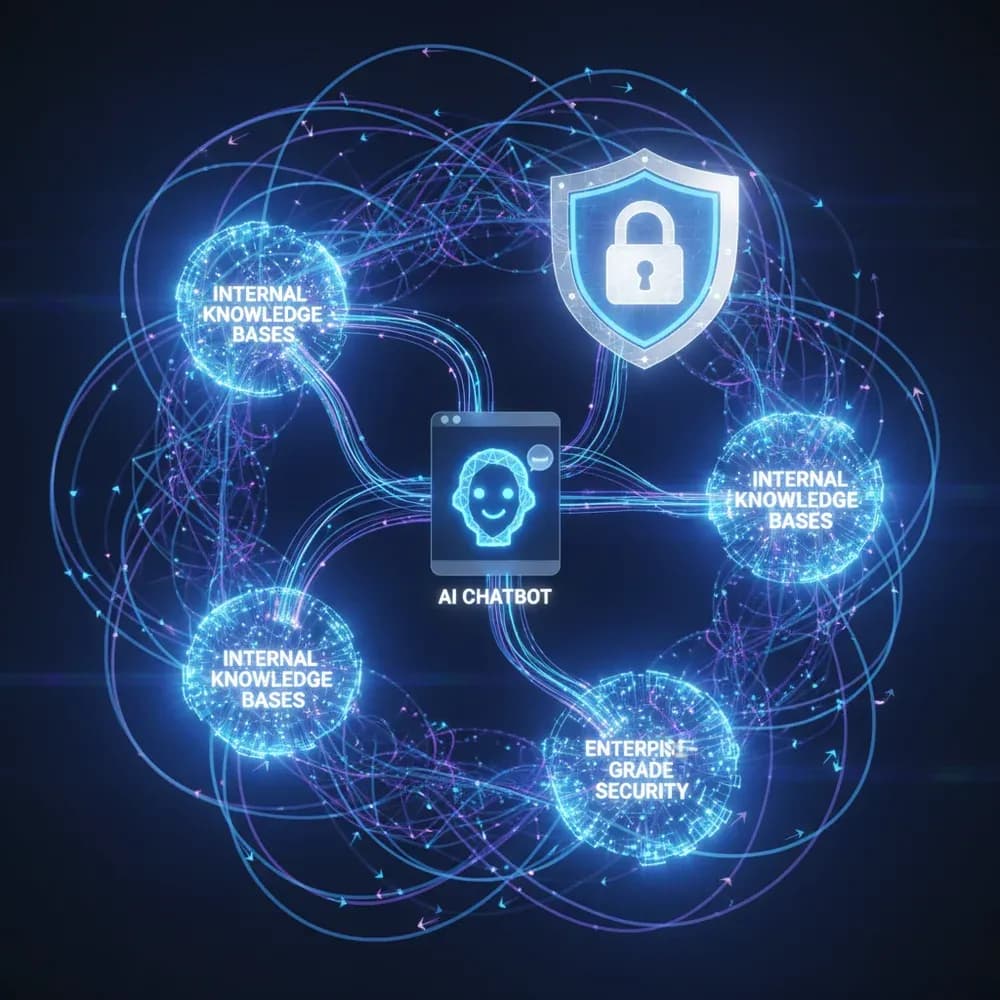

Introduction: Navigating the Data Deluge with AI Agents
The world of artificial intelligence has just experienced another tectonic shift. The recent announcement of the DeepSeek-V4 model is not just another iteration; it marks the beginning of a paradigm shift. Its 1 million token context window and 1 trillion parameter Mixture-of-Experts (MoE) architecture fundamentally change how enterprises view and interact with their data.
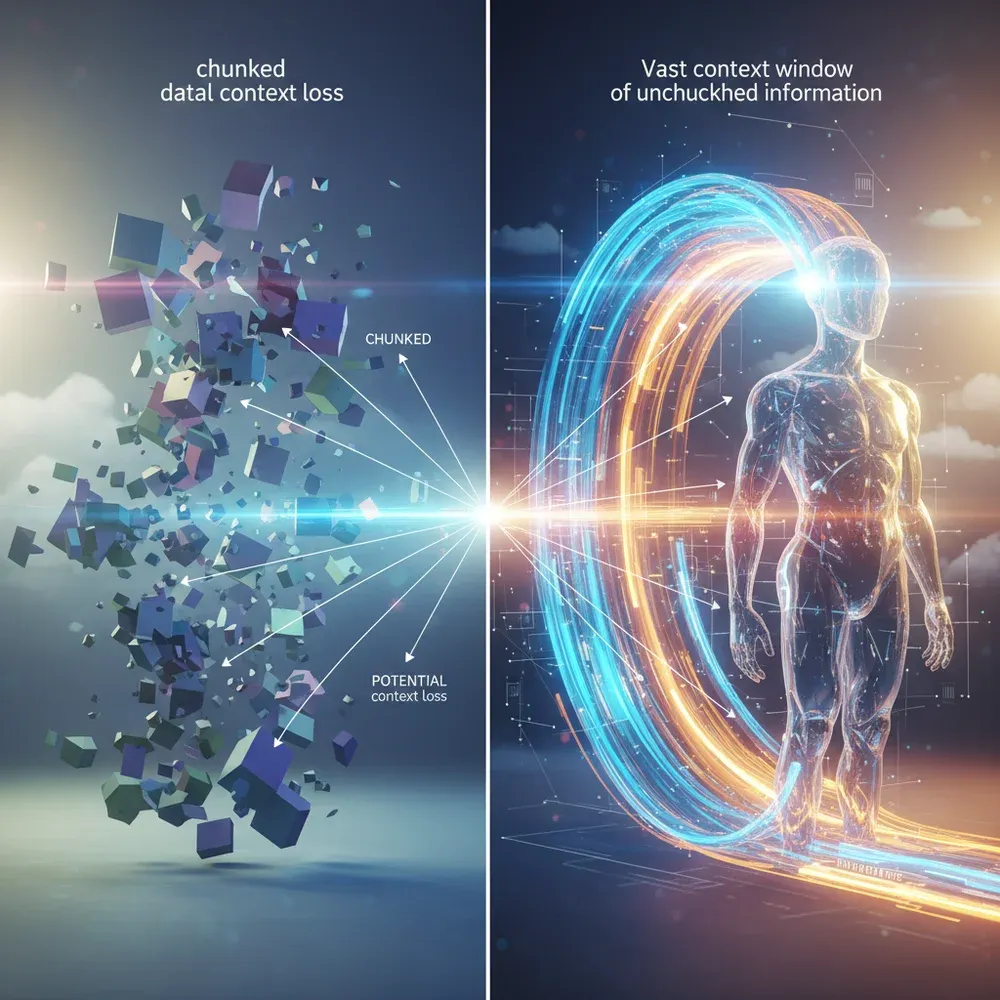
Until now, CTOs and data architects have fought a constant battle against information fragmentation. Traditional AI approaches, such as basic RAG AI chatbots, faced severe limitations when trying to extract insights from thousands of pages of documents. Context was inevitably lost during the chunking process.
Today, the question is no longer how to search through data, but how to act upon it. The era of data processing AI agents has arrived. These systems no longer merely answer questions; they proactively analyze the entire enterprise knowledge base and trigger autonomous workflows.
In modern enterprise environments, data volume is growing exponentially. Processing unstructured data—emails, PDFs, log files, customer service audio—manually is now impossible. This is where advanced AI agents step in, capable of bringing order to the chaos.
In this article, we will deeply examine what the DeepSeek-V4 breakthrough means in practice. We will show why traditional chunking is becoming obsolete and how you can build a future-proof architecture that maximizes efficiency and ROI.
What are Data Processing AI Agents? A Paradigm Shift in Enterprise Automation
Definition: Data Processing AI Agent
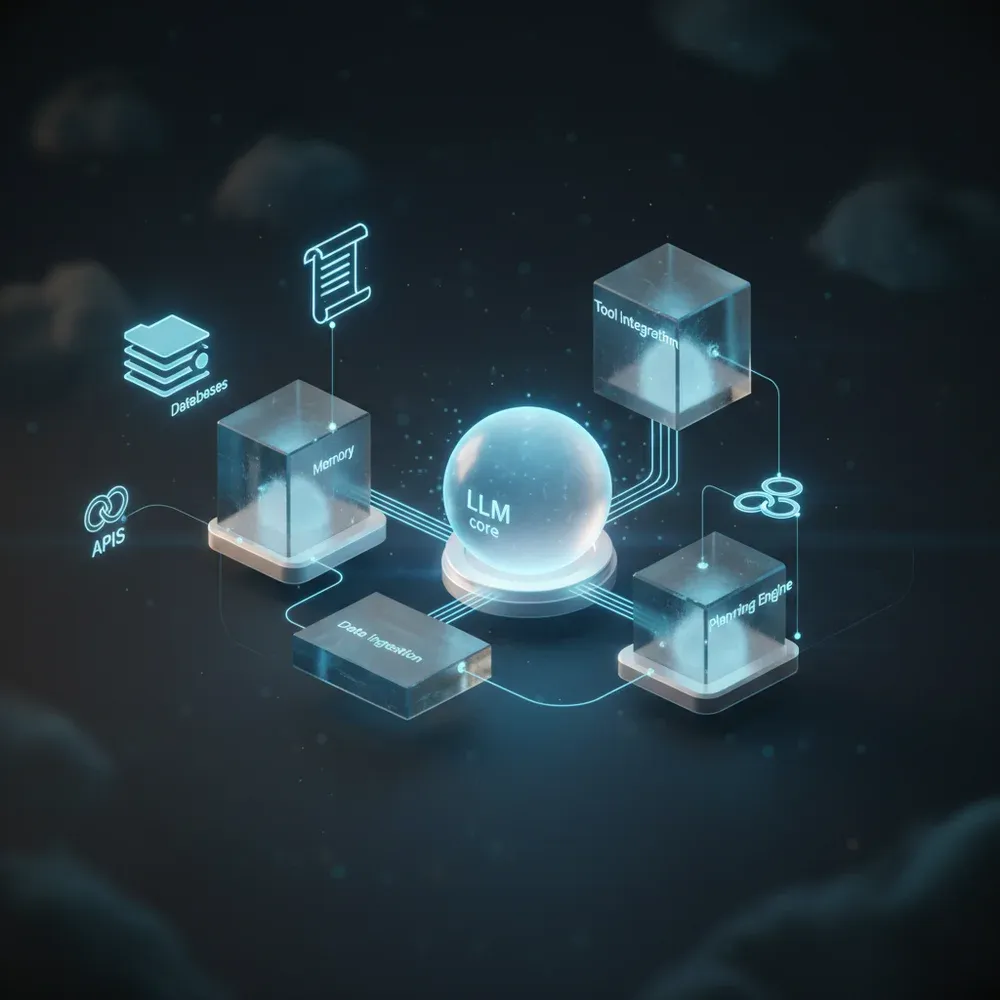
A data processing AI agent is an autonomous software entity that uses the cognitive capabilities of a Large Language Model (LLM) to understand complex datasets, plan actions, utilize toolsets (APIs, databases), and make independent decisions without human intervention.
Traditional automation scripts are rigid. If the input data format changes, the script breaks. In contrast, data processing AI agents are dynamic. They can interpret context, recognize errors, and autonomously correct the process.
The architecture of a modern AI agent consists of several key components. The brain is the LLM itself (like DeepSeek-V4), responsible for natural language understanding and logical reasoning. This is complemented by a memory module, which can be short-term (for the current task) and long-term (vector databases for historical context).
The most crucial difference is the ability to plan and execute. Agents can break down a complex problem into subtasks (using Chain-of-Thought or Tree-of-Thoughts methodologies). For example, if a financial report needs analyzing, the agent first retrieves raw data, then calls a Python script for statistical analysis, and finally generates an executive summary.
This level of autonomy is essential for custom automation. Enterprises are no longer satisfied with static dashboards; they want systems that proactively alert them to anomalies and immediately suggest solutions.
The DeepSeek-V4 Breakthrough: 1 Million Tokens and MoE Architecture
Technical Highlight: DeepSeek-V4
DeepSeek-V4's 1 million token context window (approx. 3000 pages of text) and 1 trillion parameter Mixture-of-Experts (MoE) architecture drastically reduce computational costs while enabling unprecedented depth of contextual understanding.
The announcement of DeepSeek-V4 shocked the tech industry. Not just because of its raw power, but its efficiency. The core of the 1 trillion parameter MoE (Mixture-of-Experts) architecture is that the model doesn't activate its entire neural network for every request. Instead, a 'router' network decides which 'expert' module is needed for the specific task.
This approach drastically reduces inference costs and latency. For an AI phone customer service, for example, millisecond response times are critical. The MoE architecture allows the system to react lightning-fast while having a gigantic knowledge base available in the background.
However, the most significant breakthrough is the 1 million token context window. To put this in perspective: 1 million tokens roughly equals 750,000 words. This is enough for the model to read the entire Harry Potter series at once, or more importantly for enterprises: the source code of an entire software project, years of financial reports, or complex legal litigation files.
This massive context window fundamentally changes the rules of context engineering. Instead of trying to guess which piece of information to pass to the model, we simply pass everything and let the AI agent filter out the relevant data itself.
From RAG to 'Context-to-Action': Why Chunking Becomes Obsolete
Traditional RAG (Retrieval-Augmented Generation) systems have been the cornerstone of enterprise AI in recent years. The method involves cutting large documents into smaller pieces (chunks), vectorizing them, and passing only the most relevant chunks to the LLM based on the user's query.
However, this approach struggles with severe limitations. During chunking, semantic boundaries and cross-document relationships are lost. If a definition on page 2 of a legal contract is referenced on page 45, a RAG system often fails to connect the two because the information ended up in different chunks.
DeepSeek-V4's 1 million token context window brings forth the 'Context-to-Action' paradigm. Here, complex chunking strategies and vector databases are no longer needed for most tasks. The data processing AI agent simply loads the entire documentation into its memory and can act immediately.
Imagine a scenario where, instead of a RAG AI chatbot, we use a Context-to-Action agent. The agent receives the full API documentation, the user's bug report, and the server logs all at once. Because it sees everything together, it can instantly identify the root cause of the error and even write the patch code.
This doesn't mean vector databases will disappear entirely. They will still be necessary for managing multi-terabyte archives. However, during active, complex problem-solving, chunking is replaced by massive, simultaneous context processing.
Architecting Enterprise Data Agents: Design Principles and Implementation
Best Practices: Architecture Design
- Modular Design: Separate planning, execution, and memory modules.
- Tool Use: Integrate agents with existing APIs and databases in a secure environment.
- Human-in-the-Loop (HITL): Build in approval checkpoints for critical decisions.
Designing an enterprise-grade data processing AI agent is a serious engineering task. CTOs and AI infrastructure engineers must move beyond simple API calls. The foundation of a robust architecture is the establishment of agentic workflows.
The first step is providing the right tools. The agent must be able to run SQL queries, perform web searches, or communicate with internal ERP systems. These tools must be secured with strict Role-Based Access Control (RBAC) to prevent security incidents.
Memory management is the next critical point. Although DeepSeek-V4's context window is huge, the agent needs to remember past interactions and user preferences. This is solved with a hybrid memory system, where short-term memory lives in the context window, and long-term memory resides in a structured database.
In agentic AI custom automation, error handling is also essential. Agents must be able to recognize if an API call fails and develop an alternative strategy. This self-healing capability is what makes them truly autonomous.
Transformative Use Cases: Where Data Processing AI Agents Excel
Moving from theory to practice, where do these advanced systems deliver real, measurable value? One of the most prominent areas is the financial sector and fraud detection. Traditional rule-based systems are slow and generate many false positive alerts.
A data processing AI agent can analyze thousands of transactions in real-time, comparing them against historical patterns, global market news, and the customer's profile. If it detects suspicious activity, it doesn't just send an alert; it can immediately freeze the account and generate a report for the compliance team.
In the legal sector, the due diligence process can take weeks. With DeepSeek-V4's 1 million token context, an agent can read through an entire M&A documentation package in seconds. It highlights hidden risks, contradictory clauses, and compares them against industry standards.
Logistics and supply chain optimization is another excellent example. Agents continuously monitor weather forecasts, port traffic, and warehouse inventory. If a storm delays a shipment, the agent autonomously reroutes the transport, notifies partners, and adjusts the manufacturing schedule.
These systems are also revolutionizing software development. Imagine an agent that monitors GitHub repositories, detects performance bottlenecks, and autonomously optimizes code, much like AI data processing agents in Spark optimization do.
Challenges and Considerations for Enterprise Adoption
Warning: Security and Compliance
Deploying autonomous agents carries significant security risks. Excessive permissions can lead to data loss. A Zero Trust architecture and strict GDPR/HIPAA compliance are mandatory.
Every revolutionary technology brings challenges. For data processing AI agents, the biggest hurdles are trust and security. If we grant a machine autonomy over enterprise data, we must guarantee it won't make catastrophic decisions.
Hallucination remains an issue, although the massive context window significantly reduces its likelihood. Nevertheless, for critical business processes, a 'Human-in-the-Loop' (HITL) approach is mandatory. The agent prepares the decision, but a human gives the final approval.
Integration with existing, often legacy systems is a major engineering challenge. Many enterprises still use old mainframes that lack modern APIs. Here, website development and custom middleware creation are crucial for connecting agents with older systems.
Compute costs can also be significant. While the MoE architecture is more efficient, processing 1 million tokens is still resource-intensive. Enterprises must carefully plan their cloud infrastructure and consider on-premise execution options for data privacy.

Measuring Impact and ROI: Quantifying the Value of Advanced AI Agents
With technology investments, the ultimate question is always Return on Investment (ROI). For data processing AI agents, measuring ROI happens across multiple dimensions. The first and most obvious is direct cost reduction. Automating manual data entry and analysis tasks saves significant labor hours.
Take an example: a mid-sized company spends 500 hours a month reconciling invoices and contracts. An advanced AI agent performs this task in seconds with 99.9% accuracy. This not only reduces payroll costs but also minimizes financial losses stemming from human error.
The second dimension is revenue growth. Agents can discover hidden patterns in customer data, leading to more personalized marketing campaigns and higher conversion rates. Through faster decision-making, companies can react to market changes sooner, gaining a competitive edge.
Defining Key Performance Indicators (KPIs) is critical. You must measure the percentage of tasks successfully resolved by agents, response times, system uptime, and user satisfaction. This data helps in continuously fine-tuning the agents and defining strategic directions.
The Future Landscape: Enterprise AI with Ultra-Large Context Models
DeepSeek-V4 is just the beginning. In the future, context windows will continue to grow, reaching tens of millions of tokens. This will allow models to interpret not just a company's current state, but its entire history, every email ever written, and every line of code simultaneously.
Multi-Agent Systems will be the next big leap. Here, specialized agents—for example, a legal, a financial, and a technical agent—will collaborate towards a common goal, debating and reaching a consensus, just like a human executive team.
Continuous Learning will also become a reality. Agents won't just be static models; they will learn in real-time from their own mistakes and environmental changes. This level of adaptability will be essential in a rapidly changing global market.
Companies that invest in these technologies now will gain an insurmountable advantage. They are not merely automating; they are building a new, intelligent operating system around their business.

Expert Insights & Industry Benchmarks: What the Data Says
Technology analysts and industry experts agree that agentic AI is the most important trend of the next decade. Gartner predicts that by 2026, 80% of large enterprises will use some form of autonomous AI agents in their critical processes.
The release of DeepSeek-V4 has accelerated this process. Benchmark tests (like MMLU or HumanEval) show that models with MoE architecture are not only faster but often outperform much larger, traditional models in complex logical tasks.
Industry feedback is clear: companies are tired of 'out-of-the-box' AI solutions that don't fit their specific workflows. Custom agents, fine-tuned on proprietary data and operating with massive context, are the solution to real business problems.
Ready to Transform Your Data Strategy? Partner with Us for AI Agent Excellence
The revolution of data processing AI agents is already underway. The question is not whether you should adopt these technologies, but when and how. Delaying means losing competitiveness in a market where speed and data-driven decision-making are paramount.
At AiSolve, we don't just follow trends; we shape them. Our expert team helps you design, develop, and integrate state-of-the-art AI solutions, whether it's deploying data processing AI agents or complex custom automation.
Don't let your data sit idle. Contact us today, and let's transform the future of your enterprise together with the power of intelligent automation!
Frequently Asked Questions (FAQ)
What is the typical cost of implementing data processing AI agents in an enterprise environment?
Costs depend heavily on project complexity, the number of systems to integrate, and the models used. DeepSeek-V4's MoE architecture significantly reduces operational (API) costs. Implementing a basic system can start from a few thousand dollars, while a full enterprise transformation can be much higher, but ROI is typically achieved in 6-12 months due to drastic efficiency gains.
Are data processing AI agents compliant with enterprise data privacy regulations like GDPR and HIPAA?
Yes, but it requires the right architecture. Systems developed by AiSolve are built on Zero Trust principles. Data is anonymized before processing, and there are options for on-premise or private cloud LLM execution, ensuring sensitive data never leaves the company's closed network, guaranteeing GDPR and HIPAA compliance.
How do advanced AI agents integrate with existing legacy enterprise systems?
Integration is achieved through the development of custom middleware layers and API bridges. AI agents can collaborate with RPA (Robotic Process Automation) tools, allowing them to communicate with old systems that lack modern APIs. The agent practically 'uses' the legacy software through the UI or connects directly to the database.
Does DeepSeek-V4's 1M token context window truly make RAG obsolete for all enterprise data tasks?
Not for all tasks, but yes for complex analysis. Vector databases and RAG will still be needed for searching multi-terabyte archival data. However, for active tasks where a project's entire documentation, code, or a long legal file needs to be understood as a whole, the 'Context-to-Action' approach yields much more accurate results because cross-chunk relationships aren't lost.
What technical skills are required to build and manage data processing AI agents effectively?
Development requires deep knowledge of Python, LLM frameworks (like LangChain or LlamaIndex), cloud architectures, API integration, and cybersecurity. Additionally, 'Context Engineering' and designing agentic workflows demand new, specific expertise. This is why it's highly recommended to choose an experienced partner for implementation.
What are the first steps an enterprise should take to explore and adopt data processing AI agents?
The first step is a comprehensive AI audit and strategy formulation. You must identify bottlenecks and data-intensive processes where automation yields the highest ROI. This is followed by launching a Proof of Concept (PoC) project on a well-defined task, allowing the enterprise to test the technology risk-free and assess real business value.