Introduction: Navigating the New Era of Telco Customer Service with AI
As we enter 2025, the telecommunications industry is undergoing a quiet but radical transformation. Announcements at MWC Barcelona and the NVIDIA AI Summit—particularly regarding the AI-RAN Alliance and the "AI-on-5G" concept—have made it clear: the future telco is not just a data pipe, but an intelligent platform providing compute capacity.
For CTOs, this paradigm shift has immediate implications for customer service strategy. The days of traditional IVR (Interactive Voice Response) systems and static scripts are numbered. Customers no longer tolerate "press 2 for billing" menus when the devices in their pockets (like ChatGPT or Gemini) are capable of complex conversations. The new expectation is immediate, context-aware, and autonomous problem resolution.
This article goes beyond the superficial "chatbot hype." We dive deep into the technological architectures that enable an AI agent to not just chat, but autonomously diagnose network faults, modify billing plans, and do so at the edge of the existing 5G infrastructure, minimizing latency and maximizing data security.

The Strategic Imperative: Why Telcos Must Embrace AI Call Center Automation Now
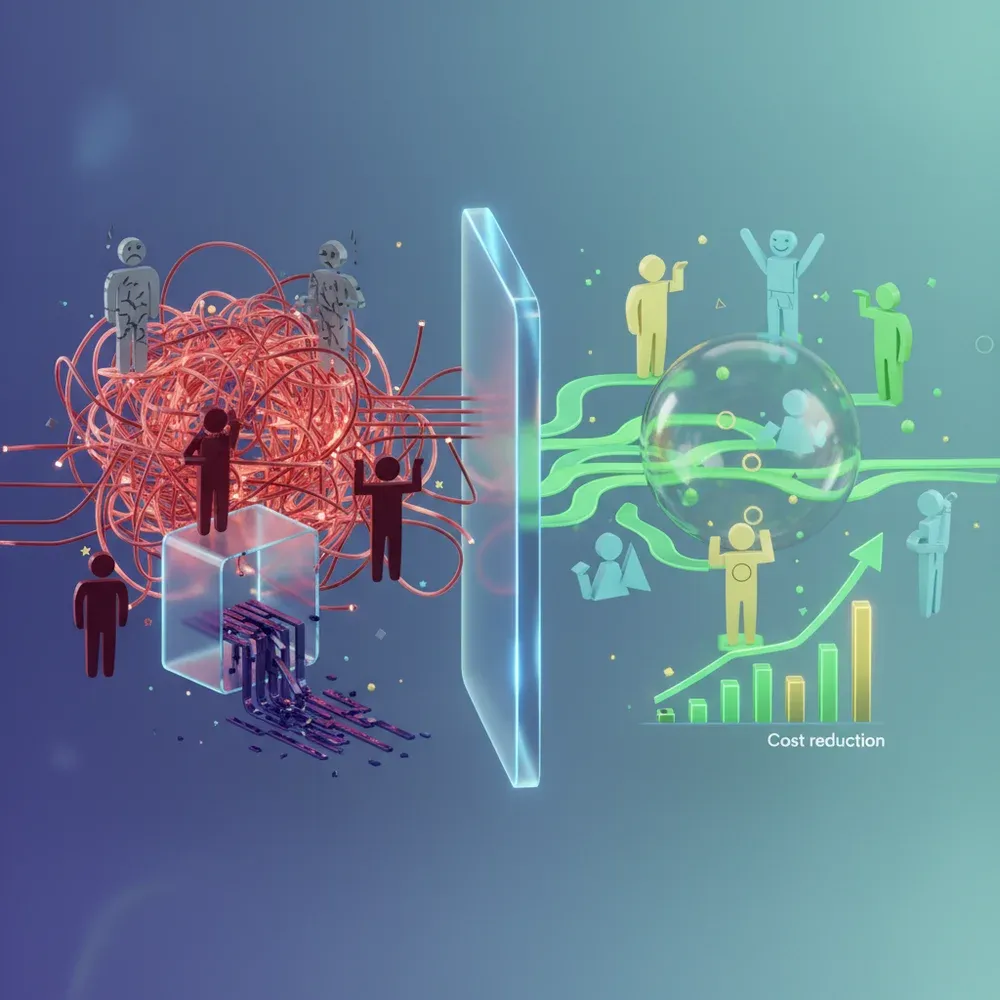
In the telecom sector, fighting churn and increasing ARPU (Average Revenue Per User) are the top strategic goals. However, traditional call centers face a paradox: pressure to cut costs reduces live workforce numbers, while the complexity of networks and services (5G, IoT, smart home devices) exponentially increases the complexity of incoming calls.
Implementing a modern AI Call Center is not just about efficiency; it's about survival. Statistics show that 60-70% of calls are routine (balance checks, basic troubleshooting), yet these consume the majority of human agents' time, leading to burnout and high turnover. AI can handle this volume scalably: in the event of a mass outage due to a storm, the AI system scales up immediately, whereas a human call center would collapse under the load.
The strategic advantage isn't just on the cost side. AI can analyze caller sentiment and past interactions in real-time, making personalized offers that a tired agent wouldn't have the capacity for. This proactivity is what converts a frustrated customer into a loyal subscriber.
Deconstructing AI Call Center Automation: Core Technologies and Capabilities
A modern AI call center is not a single piece of software, but a tight integration of several advanced technologies. CTOs need to understand the processes under the "hood" to select the right vendor.
- STT (Speech-to-Text) and TTS (Text-to-Speech): The entry point. Today's models (like OpenAI Whisper v3 or Google Chirp) can handle noisy lines, dialects, and jargon with ultra-low latency.
- LLM (Large Language Model) and NLP: The "brain." This interprets intent. In the telco sector, using RAG (Retrieval-Augmented Generation) technology is critical, allowing the AI to work from the company's own closed knowledge base (e.g., current T&Cs, troubleshooting manuals), avoiding hallucinations.
- Voice Gateway & SIP Trunking: The technical bridge. The AI must connect directly to the telephone network (PSTN/VoIP) to conduct real-time, full-duplex conversations where the AI can stop speaking if the customer interrupts.
Infobox: RAG vs. Fine-tuning
Many decision-makers mistakenly believe that the AI model needs to be "trained" (fine-tuned) with company data. In reality, RAG (Retrieval-Augmented Generation) is the correct approach for customer service. While fine-tuning refines the model's style and behavior, RAG allows the AI to search company documents (PDFs, SQL databases) in real-time, always providing the latest information (e.g., a roaming fee changed yesterday) without retraining the model. Read more about RAG technology here.
Revolutionizing Telco Operations: The Power of NVIDIA's Agentic AI in Call Centers
NVIDIA's latest developments, particularly the concept of "Agentic AI," are fundamentally rewriting the rules. Until now, chatbots were passive: they answered but didn't act. Agentic AI, by contrast, can autonomously execute complex sequences of tasks.
Imagine a scenario: A customer calls because their internet is slow. A traditional bot would say "restart your router." However, Agentic AI running on NVIDIA foundations:
- Detects the call and identifies the customer.
- Initiates an API call to the network diagnostic system in the background.
- Sees there is a tower fault in the area.
- Automatically credits 500 MB of data as compensation.
- Sends an SMS notification about the expected repair time.
This level of autonomy is what must be considered during the architectural design of AI agents. NVIDIA's AI-RAN platform allows these AI models to run on the same server as the mobile network itself (vRAN), so diagnostics and responses happen in milliseconds.

Building an Intelligent Customer Hub: A Phased Implementation Guide for AI Call Centers
"Big bang" implementations are rarely successful. Experience suggests a phased approach that minimizes risk and allows for continuous learning.
Phase 1: Assessment and Data Strategy
Before writing a single line of code, map out call types. What are the most common, well-structured questions? These will be the first targets. In parallel, start cleaning data (knowledge base, past call transcripts). Data processing AI agents can play a key role here in organizing unstructured data.
Phase 2: Pilot (The "Co-Pilot" Model)
Don't unleash the AI on live customers with full autonomy immediately. In the first step, let the AI act as a "prompter": listening to the conversation and suggesting answers to the live operator on screen. This trains the model and builds agent confidence.
Phase 3: Autonomy and Integration
After a successful pilot, the AI can take over routine calls (Tier 1 support). Here, deep integration with CRM and ERP systems (Salesforce, SAP, custom telco systems) is critical. Custom automation and API connectors ensure the AI doesn't just speak, but can read/write customer data.
Beyond Basic Support: Advanced Use Cases for AI in Telco Customer Service
Once the base system is stable, the true power of the technology shines in advanced use cases:
- Predictive Maintenance Notification: AI analyzes network telemetry and calls (or messages) affected VIP customers before they even notice the fault, proactively offering a solution.
- Intelligent Upsell/Cross-sell: During a conversation, the AI detects the customer complaining about data limits. The system calculates a personalized offer for a larger plan in real-time, which can be activated immediately.
- Fraud Detection: Using voice biometrics and behavioral analysis, AI instantly filters out suspicious calls (e.g., SIM-swapping attempts), protecting customer data. We wrote more about this in our article on security aspects of autonomous agents.

Quantifying Success: Measuring ROI and Key Performance Indicators for AI Call Centers
Technology investments must pay off commercially. In the telco sector, AI ROI is typically realized within 6-12 months if the right KPIs are monitored.
Primary KPIs:
- FCR (First Call Resolution): AI drastically improves this metric as it has immediate access to all knowledge, eliminating the need to "transfer to a colleague."
- AHT (Average Handle Time): While AI conversations can sometimes be longer due to natural language use, human agent AHT decreases because they only receive complex, pre-screened cases.
- Cost per Call: The cost of an AI call is a fraction of a live agent call (often 10-20 cents vs. 5-10 dollars).
A hypothetical example: A medium-sized telco handles 100,000 calls monthly. If AI automates 40% of these (40,000 calls) and the saving per call is $4, that's $160,000 in direct monthly savings, not counting the lower churn resulting from improved customer experience.
Addressing the Hurdles: Data Privacy, Security, and Ethical AI in Telco Call Centers
Telecom providers are considered critical infrastructure, so security is not an option but a baseline requirement. The biggest concern when implementing AI is handling PII (Personally Identifiable Information).
The solution is a "Privacy-by-Design" architecture. AI models (whether cloud-based or on-premise) must not store raw conversation data for training unless explicitly permitted. Modern systems can anonymize data in real-time (e.g., replacing credit card numbers or names with placeholders) before it leaves the company's security zone. Furthermore, ethical AI principles require transparency: the customer must always be informed at the start of the call that they are speaking with a digital assistant.

The Future Vision: Hyper-Personalized & Autonomous Customer Experiences in Telecom
Where are we heading? The future is the "Autonomous Telco." This is a state where the network and customer service merge into a single, self-healing, and self-optimizing system. AI doesn't just respond to complaints; it anticipates them.
Imagine a customer's smart home signaling the network that bandwidth is insufficient for 8K streaming. The network (AI-RAN) dynamically reallocates resources (network slicing), while the customer service AI agent sends a push notification: "We detected increased demand and have temporarily optimized your network for a cinema experience at no extra cost." This kind of hyper-personalization is the new level of competitive advantage.
Choosing the Right Partner: Essential Considerations for Your AI Call Center Solution
Due to the complexity of the technology, most telcos choose partnership over "build" in the "build vs. buy" question. But how to choose?
- Telco-specific experience: Does the partner understand the difference between 4G and 5G core networks? Do they know the logic of BSS/OSS systems?
- Integration capability: A good chatbot isn't enough. Can the partner integrate deeply into legacy systems? AiSolve's custom development experience offers a guarantee in this specific area.
- Data sovereignty: Can they run the solution on-premise or in a private cloud, complying with local regulations?
Conclusion: Empowering the Autonomous Telco Through Advanced AI Customer Service
Implementing AI-based call center automation is no longer an innovation experiment, but a fundamental operational requirement for telecommunications companies. CTOs who act now and integrate Agentic AI into their network and customer management processes will not only save costs but create a completely new, proactive customer experience.
Don't let technical debt or fear hold you back. The tools are available, and the results are measurable. Contact AiSolve experts, and let's design your future-proof, autonomous customer service together.
What is the typical cost of implementing AI call center automation for a telecommunications company?
Costs vary greatly depending on system complexity, call volume, and integration needs. A basic pilot project can start from a few tens of thousands of euros, while a full-scale enterprise implementation can reach hundreds of thousands. However, it's important to look at ROI: most projects break even within 6-12 months through reduced operational expenses (OPEX).
What are the main data privacy and security challenges when using AI in customer service?
The main challenge is protecting personal data (GDPR). Our solutions use PII (Personally Identifiable Information) filtering, so the AI model never "sees" or stores raw sensitive data. Additionally, private cloud or on-premise solutions are available to guarantee data sovereignty.
How does AI impact the role and responsibilities of human customer service agents?
AI does not replace humans but complements them. Repetitive, boring calls (tier 1 support) are handled by AI, allowing human agents to focus on complex cases requiring empathy. This increases employee satisfaction and reduces turnover, while agents become "AI supervisors."
What key metrics should telcos consider when measuring the ROI of AI call center automation?
Key KPIs include First Call Resolution (FCR), Average Handle Time (AHT - though interpreted differently with AI), Cost per Contact (CSAT) scores.
How long does it typically take to implement a comprehensive AI call center system?
An MVP (Minimum Viable Product) or pilot system can be launched in as little as 4-8 weeks. Full integration, including CRM/ERP systems and complex workflows, typically takes 3-6 months, with continuous fine-tuning.
How does NVIDIA's Agentic AI fit into broader telco customer service strategies?
NVIDIA Agentic AI allows the AI to not just answer but act (e.g., modify settings via API calls). Combined with AI-RAN architecture, this means the customer-facing AI can run on the same high-performance edge infrastructure as the network, minimizing latency and maximizing intelligence.
What are the benefits of proactive customer service enabled by AI in telecommunications?
Proactive AI can predict network faults or billing anomalies and notify the customer before a complaint arises. This drastically reduces incoming call volume, increases customer trust, and reduces churn, as the customer feels the provider is taking care of them.
Készen állsz a saját weboldaladra?
Ingyenes konzultáció során átbeszéljük, hogyan segíthetünk vállalkozásodnak növekedni egy modern, gyors és konverzióoptimalizált weboldallal. 14 nap alatt kész, 0 Ft induló költséggel.