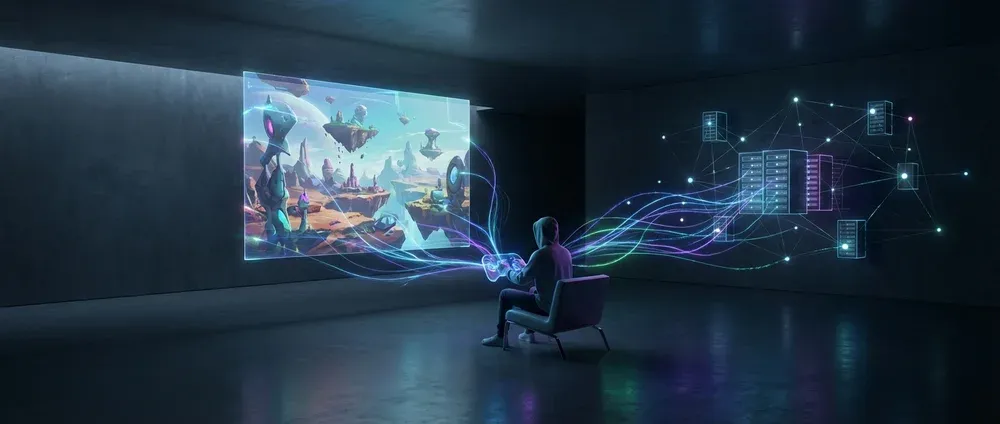
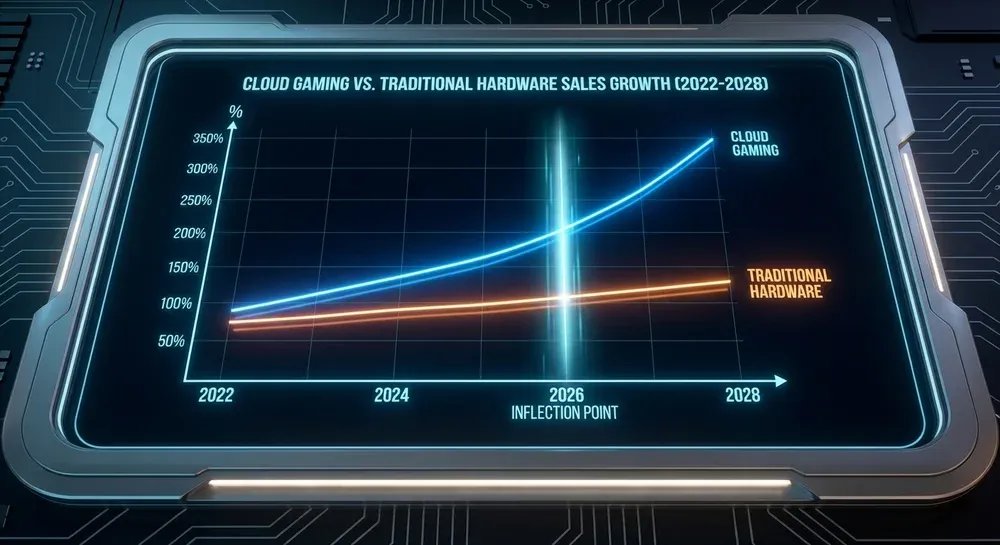
As 2026 dawns, the gaming industry is on the verge of a quiet revolution, driven not by a new generation of consoles, but by the power of the cloud. Services like GeForce NOW, now bolstering their arsenals with RTX 5080 graphics cards, promise to make high-end gaming accessible to everyone, without hardware limitations. Industry analyses predict the cloud gaming market will exceed $15 billion by 2026. However, this growth is about much more than raw computing power. The real breakthrough lies in the perfect harmony of hardware, software, and, most importantly, the user experience. While GPUs work under the hood, users enter this world through a sophisticated digital platform. That's why modern, professional website creation has become crucial for providers to not only attract but also retain gamers. This article explores how technology and user-centric design are shaping the future of gaming.
| Terület / Area | Kulcsfontosságú Megállapítás / Key Insight |
|---|---|
| Hardware Revolution | Integrating RTX 5080 GPUs into cloud services enables graphical quality and performance that rivals high-end local PCs, eliminating hardware barriers. |
| Importance of Infrastructure | The secret to a seamless gaming experience lies not just in the GPU, but in globally distributed CDN networks that ensure low latency and minimize input lag. |
| User Interface (UI/UX) | The key to user retention is an intuitive, fast, and responsive web platform. Professional website creation is essential for a successful cloud gaming service. |
| Market Shift | Cloud gaming lowers the entry barrier for gamers, leading to market democratization and a transformation of traditional console and PC sales models. |
| Digital Ownership | With the rise of service-based models, gamers face the issue of digital ownership, as access to games depends on a subscription rather than possession. |
The New Standard: What RTX 5080 Means for Cloud Gaming
The arrival of NVIDIA's RTX 5080 GPUs in cloud data centers is not just an incremental upgrade; it's a paradigm shift. Previously, cloud gaming involved a compromise: in exchange for accessibility, you sacrificed graphical quality or frame rates compared to local hardware. By 2026, this compromise will virtually disappear. The power of the RTX 5080 enables full, real-time path tracing, DLSS 4 (or even more advanced) AI-powered upscaling, and reflex-level response times, all at 4K or even 8K resolution with stable frame rates above 120 FPS. This means users on a simple laptop or even a smart TV will get a visual experience previously reserved for high-end gaming PCs costing thousands of dollars.
Beyond sheer performance, this technology opens up new possibilities for game developers. They can create complex worlds and physics simulations without being constrained by the diversity of end-user hardware. Development can focus on a single, extremely powerful platform: the cloud. This results in a more consistent experience, fewer optimization issues, and ultimately, better, more ambitious games. The AI capabilities running in the cloud can also dynamically shape the game world based on player behavior, creating a level of interactivity previously unimaginable. Cloud-based processing enables the use of data processing AI agents to analyze user behavior and personalize the gaming experience.
Beyond the GPU: The Unseen Infrastructure of Cloud Gaming
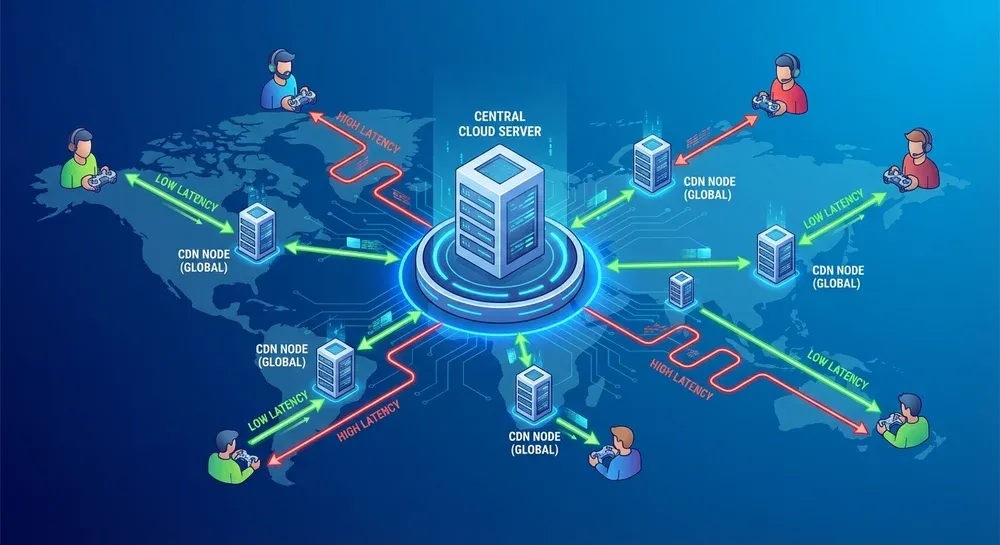
An RTX 5080 GPU is worthless if there's a second of delay between a player's command and the frame arriving from the server. The real key to cloud gaming's success is the invisible but essential network infrastructure. This is where Content Delivery Networks (CDNs) come in. Traditional CDNs cache static content (images, videos) on servers close to users for faster loading. However, cloud gaming involves a much more complex, real-time, two-way data stream.
Modern cloud gaming platforms use a global edge network optimized for extremely low latency. When a player starts a game, they don't connect to a distant, central data center, but to the geographically closest edge server. This server is responsible for receiving input signals (controller movements) and sending back the rendered video stream. By minimizing the distance, the dreaded "input lag" is drastically reduced. Providers like GeForce NOW invest billions of dollars to have data centers in every densely populated region of the world, ensuring the physical distance between users and servers is as short as possible.
Strategic Insight: When launching a cloud gaming service, network optimization is just as important as server-side hardware. The key to success is using data centers closest to users and advanced network protocols to minimize latency.
Furthermore, significant developments are happening on the software side. Adaptive bitrate technologies continuously monitor the quality of the player's internet connection and adjust the stream's resolution and compression in real-time to ensure a smooth experience. This ensures the game remains playable even under fluctuating network conditions, avoiding stuttering and connection drops. This complex, invisible system is what allows the power of the cloud to truly reach players' screens.
The Digital Storefront: The Critical Role of the User Experience
The world's most powerful cloud gaming infrastructure is doomed to fail if users have to access it through a slow, cumbersome, and opaque interface. In the 2026 competition, the provider that offers the best user experience (UX) will win. This is where high-end technology and professional website creation meet. The user interface—be it a website, a desktop application, or a TV app—is the gateway, the storefront, and the central nervous system of the service.
A successful cloud gaming platform must offer the following:
- Instant loading and responsiveness: A user shouldn't have to wait minutes for the game browser to load. Thanks to modern web technologies, the experience should feel like a native application.
- Intuitive navigation: Finding your way through a huge game catalog must be simple and fast. Advanced filtering, search, and personalized recommendation systems are essential.
- Seamless integration: The platform must easily handle user accounts, subscriptions, friend lists, and connections to existing game stores (e.g., Steam, Epic Games).
- Consistency across all devices: The user should get the same high-level experience whether they are playing on a PC, tablet, or smart TV. This requires the highest level of responsive and adaptive design.
Quality professional website creation is not just an aesthetic issue; it's the foundation of user trust and engagement. A well-designed platform suggests that the provider pays attention to details and takes its users seriously. This care is what turns a casual visitor into a loyal, long-term subscriber. In the background, custom automation solutions ensure smooth user account management and billing processes.
Cloud Gaming vs. Traditional Consoles: The 2026 Showdown
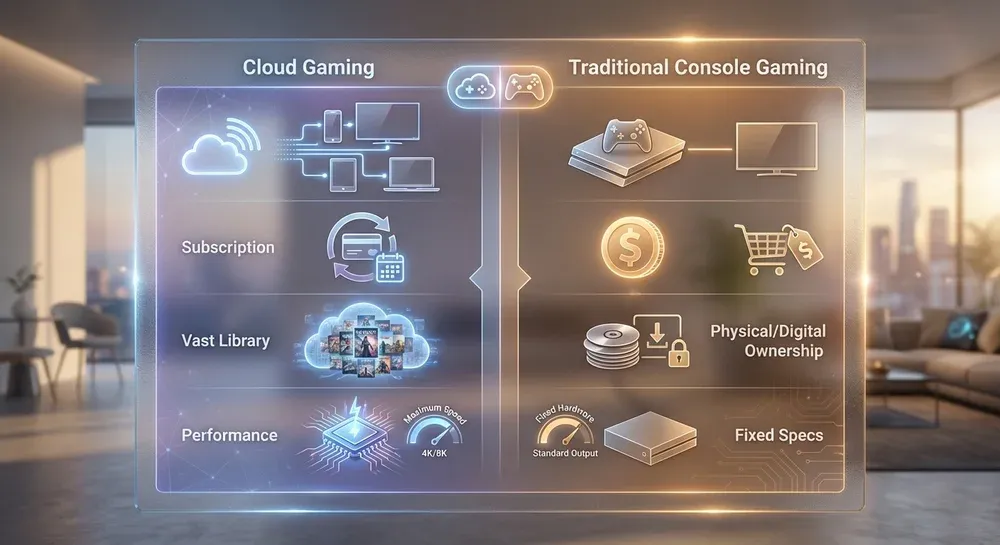
In 2026, gamers will face a clear choice: invest in an expensive, stationary console or PC, or opt for a flexible, subscription-based cloud gaming service? Both models have their pros and cons, but the balance is clearly shifting towards the cloud. Consoles will continue to offer a guaranteed, "plug-and-play" experience, independent of an internet connection (after downloading games), and many people are attached to physical media and the feeling of owning hardware.
Cloud gaming, on the other hand, prioritizes accessibility and cost-effectiveness. There's no need for expensive hardware; games are instantly available without updates or installations. Players can continue their game on any compatible device from where they left off. This flexibility is particularly attractive to the younger, more mobile generation that consumes content on multiple screens. While consoles represent a closed ecosystem, cloud gaming platforms are increasingly integrating with existing PC libraries, allowing players to play games they already own in the cloud.
| Feature | Cloud Gaming (2026) | Traditional Console (2026) |
|---|---|---|
| Initial Cost | Low (subscription fee only) | High (price of console + games) |
| Hardware Requirement | Minimal (any modern screen) | Dedicated, stationary hardware |
| Performance | High-end (RTX 5080 level), constantly updated | Fixed, becomes outdated by the end of the generation |
| Accessibility | Anywhere, on any device | Mainly tied to a TV or monitor |
| Game Library | Huge, instantly accessible catalog | Per-game purchase, requires installation |
| Dependency | Requires a stable, fast internet connection | Offline playability (after installation) |
The Business Model Evolution: Subscriptions, Accessibility, and Market Growth
Cloud gaming is fundamentally changing the economics of the gaming industry. The traditional model based on product sales (games and consoles) is being replaced by a service-based model, similar to Netflix or Spotify. For a monthly subscription fee, players get access to a huge game catalog and the necessary computing power. This model dramatically lowers the barrier to entry, as players don't have to invest hundreds of thousands of forints in hardware at once.
This democratization attracts new user segments to the world of gaming: those who couldn't afford expensive devices before, or casual gamers who didn't want to commit to a single platform. Providers will offer different tiers, from a basic 1080p package to a premium 4K/8K RTX 5080-level experience. Competition among providers will be not just on price, but on the size of the catalog, exclusive content, and the quality of the user interface. Here again, it shows how important excellent professional website creation is in gaining a competitive advantage and converting users. After all, most users will first encounter the service through the website, and the first impression made there can be decisive.
Implementation Advice: The most effective way to acquire new subscribers is through a seamless, few-click registration and onboarding process. Optimize your web interface for maximum conversion.
Challenges and Limitations on the Horizon
Although the future of cloud gaming looks bright, the technology's adoption will not be without challenges. The most obvious obstacle remains internet infrastructure. While high-speed, low-latency internet is available in major cities, the network quality in many parts of the world, especially rural areas, is not yet sufficient for stable 4K streaming. Data caps imposed by internet service providers can also be a serious problem, as cloud gaming can generate tens of gigabytes of data traffic per hour, quickly exhausting a monthly allowance.
The Question of Digital Ownership
Another, deeper issue is that of digital ownership. When we play a game through a cloud gaming service, we don't actually own it. We are merely licensing access for the duration of our subscription. If the provider loses the license rights to a game or discontinues the service, players can lose access to their games and the progress they've made in them. This uncertainty can deter many who are used to owning their games, either physically or digitally in their own accounts. Providers must find ways to build trust and guarantee the security of users' investments (time and money).
Furthermore, the complexity of licensing agreements between game publishers and platforms can still lead to fragmented catalogs. Players may need to subscribe to multiple different services to access all their favorite games, leading to "subscription fatigue." The lack of interoperability and unified libraries between platforms is still a problem to be solved in the 2026 market.
Strategic Recommendations for Businesses Entering the Gaming Space
The revolution marked by cloud gaming holds enormous opportunities not just for gamers, but for businesses as well. Companies entering this market now, or looking to expand their existing services, should focus on the following strategic points for success:
- Focus on User Experience (UX): As emphasized earlier, technology alone is not enough. The key to success is a flawless, intuitive, and engaging user platform. The very first and most important investment should be in professional website creation that makes the entire user journey, from registration to launching a game, seamless.
- Target Niche Markets: Instead of competing with the major players (NVIDIA, Microsoft, Sony) for the entire market, smaller businesses can succeed by targeting specific segments. This could be a service specializing in retro games, indie developers, or a particular genre (e.g., strategy games).
- Develop Hybrid Models: Businesses can combine cloud gaming with other services. A hotel chain, for example, could offer a premium cloud gaming service in its rooms. A telecommunications company could bundle high-speed internet with a cloud gaming subscription.
- Build Partnerships: Good relationships with game developers and publishers are essential for success. Securing exclusive content or early access can be a major draw for users.
- Data-Driven Decision-Making: Collect and analyze data on user behavior. Which games are the most popular? Where do users get stuck in the interface? This information is invaluable for continuously improving the service and increasing user engagement.
A thoroughly planned digital presence is essential for market entry. A modern, scalable, and secure platform, built according to the best practices of professional website creation, forms the foundation of all future business success in this dynamically evolving industry.
Conclusion: On the Cusp of a New Era in Gaming
The year 2026 is truly a watershed moment for the gaming industry. The proliferation of RTX 5080-level performance in the cloud permanently removes hardware barriers, transforming high-end gaming into a service accessible to all. This technological leap, however, is only half the story. Success lies in the details: in global, low-latency networks, in adaptive streaming technologies, and above all, in the user experience.
The battle will be won by companies that understand that the user is not just connecting to a GPU, but to a carefully designed ecosystem. A seamless, intuitive, and aesthetically pleasing digital platform is at least as important as the raw power in the servers. Professional website creation is no longer just a marketing tool, but the core of the service, the interface where user loyalty is decided. As we enter the golden age of cloud gaming, the perfect symbiosis of technology and design will define the champions of the future.
Are you ready to unlock the potential of high-tech digital platforms for your business? Whether it's a complex service portal or the realization of an innovative idea, the foundation of success is a professionally designed and executed web presence.
Start Your Project With Us![Article generated by AiSolve AI Content System]
Frequently Asked Questions
What is cloud gaming?
Cloud gaming is a technology that allows games to run on remote servers and stream the video feed to a user's device over the internet. This eliminates the need for expensive local hardware (like a PC or console) to run the latest games, requiring only a stable internet connection and a compatible screen.
What internet speed is needed for cloud gaming in 2026?
While a 25-50 Mbps connection might be sufficient for 1080p gaming, a stable, low-latency wired (fiber optic) internet connection of 100 Mbps or more is recommended for a 4K or 8K experience with RTX 5080-level graphics. More important than speed is the stability of the connection and a low ping (latency).
Do I actually own the games in cloud gaming services?
It depends on the model. In most cases (e.g., Xbox Cloud Gaming), you are renting access to the games as part of your subscription. With other services (e.g., GeForce NOW), you can play games you already own on other platforms (like Steam). In the latter case, you still own the game, but the ability to run it in the cloud depends on your subscription.
Why is website creation important for a cloud gaming company?
The website or application is the user's first and most important point of contact with the service. It's where registration, subscription management, game browsing, and launching happens. A slow, complicated, or poorly designed interface can deter users before they even have a chance to try the excellent technology. Professional website creation ensures a positive first impression and long-term user satisfaction.
Készen állsz a saját weboldaladra?
Ingyenes konzultáció során átbeszéljük, hogyan segíthetünk vállalkozásodnak növekedni egy modern, gyors és konverzióoptimalizált weboldallal. 14 nap alatt kész, 0 Ft induló költséggel.