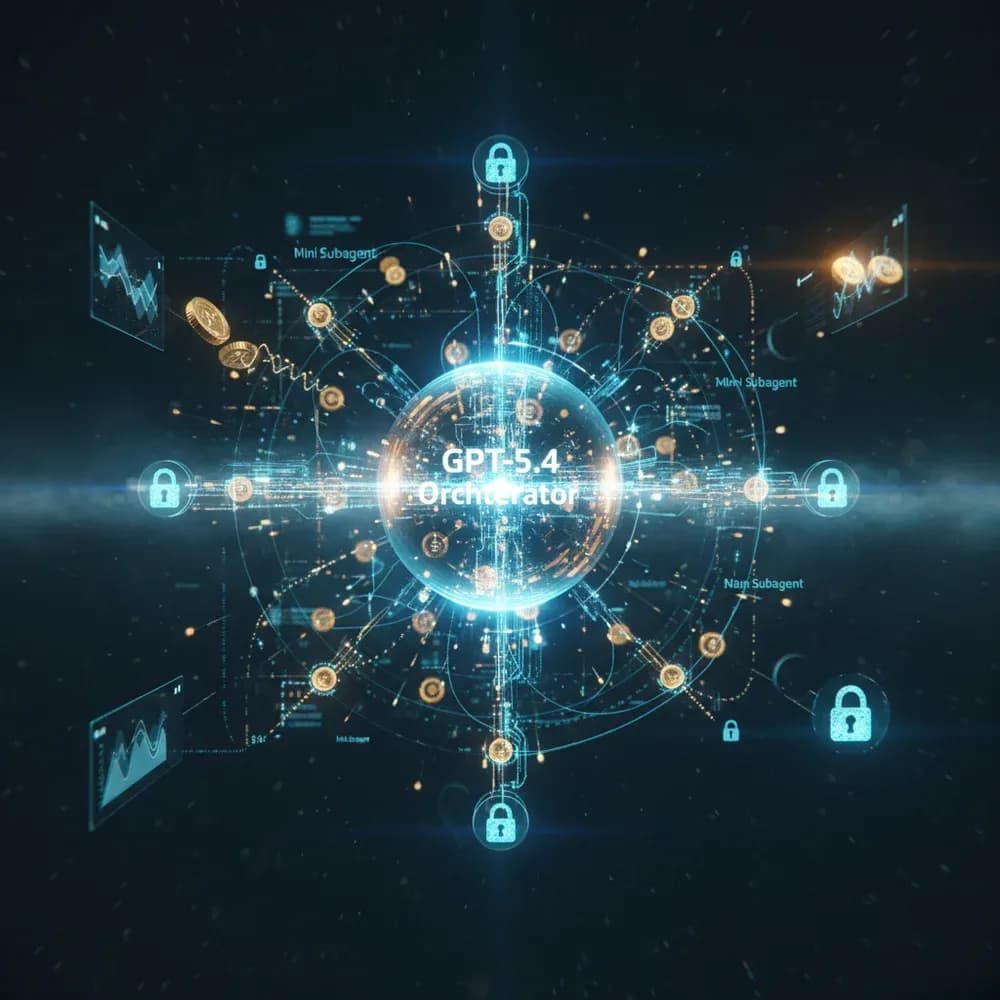

Introduction: Solving Full-Stack Development Complexity with Custom Automation
Anthropic's latest research and the industry breakthroughs surrounding Claude Code have highlighted a critical problem: the traditional software development life cycle (SDLC) is stretched to its limits. Modern full-stack applications have reached a level of complexity where developers spend a significant portion of their time context-switching, debugging, and managing infrastructure, rather than creating actual value.
Traditional, single-step AI code generators (like early Copilot versions) are useful for writing boilerplate code, but they fail when they need to comprehend the architecture of a multi-module system spanning thousands of lines. This is where custom automation and the new generation of autonomous AI agents step in.
For CTOs and Lead Engineers, the biggest challenge today is no longer writing the code itself, but ensuring the scalability and maintainability of the systems. AI-driven custom automation, particularly multi-agent systems, offers a revolutionary solution to these pain points, enabling a drastic reduction in development time.
What is Custom Automation in Software Development?
Custom automation in software development means more than just setting up CI/CD pipelines. It involves building an intelligent, AI-driven ecosystem where autonomous agents can understand business logic, design architecture, write code, and automatically test it. This approach eliminates manual, repetitive tasks and allows development teams to focus on high-level problem-solving.
What is the Three-Agent Architecture? Anthropic's Pioneering Approach
The "Three-Agent Harness" concept introduced by Anthropic represents a true paradigm shift. Instead of expecting a single massive Large Language Model (LLM) to write perfect code based on a single prompt, the task is broken down among three communicating, specialized agents.
This approach mirrors the operation of real development teams: there is a software architect who designs the system, a developer who writes the code, and a QA engineer who verifies it. Autonomous AI agents replicate this exact dynamic, but with the speed and precision of a machine.
The essence of the system is that these agents can execute complex, multi-hour software development tasks without continuous human intervention. The revolution of multi-agent AI workflows lies precisely in this specialization and structured communication between them.

Pillars of the Autonomous Development System: Planner, Generator, Evaluator
To understand the power of this system, we must delve deeper into the operation of its three main components. Each agent possesses a unique prompting strategy, context window, and toolset.
The Planner Agent: Strategy and Guidance
The Planner agent is the brain of the system. When it receives a high-level business requirement (e.g., "Build a user authentication module with JWT and Redis caching"), the Planner doesn't start coding immediately. Instead, it analyzes the existing codebase, understands the architecture, and creates a detailed, step-by-step execution plan.
This plan includes necessary database schema modifications, API endpoint definitions, and security considerations. The Planner can analyze Abstract Syntax Trees (AST) to understand dependencies, thus avoiding breaking existing systems.
The output of the Planner is a structured JSON or Markdown document containing precise instructions for the next phase. This strategic planning is what distinguishes a professional website development process from hobby projects.
The Generator Agent: Coding and Implementation
The Generator agent is the "muscle" of the system. After receiving the detailed blueprint created by the Planner, it begins the actual coding. Because the task is already broken down into smaller, well-defined units, the Generator is much less likely to hallucinate or drift off-topic.
This agent is responsible for writing frontend components (e.g., React or Next.js), backend logic (e.g., Node.js or Python), and the necessary unit tests. The Generator can execute changes across the full stack, keeping database migrations in sync with API endpoints.
The Claude Code developer workflow is an excellent example of how such a generator agent can edit multiple files in parallel while maintaining code conventions and style guidelines.
The Evaluator Agent: Quality Assurance and Iteration
The Evaluator agent is the critical quality assurance checkpoint of the system. It's not enough to generate code; it must also work, be secure, and meet performance expectations. The Evaluator runs the generated code and tests in an isolated, sandbox environment (e.g., Docker containers).
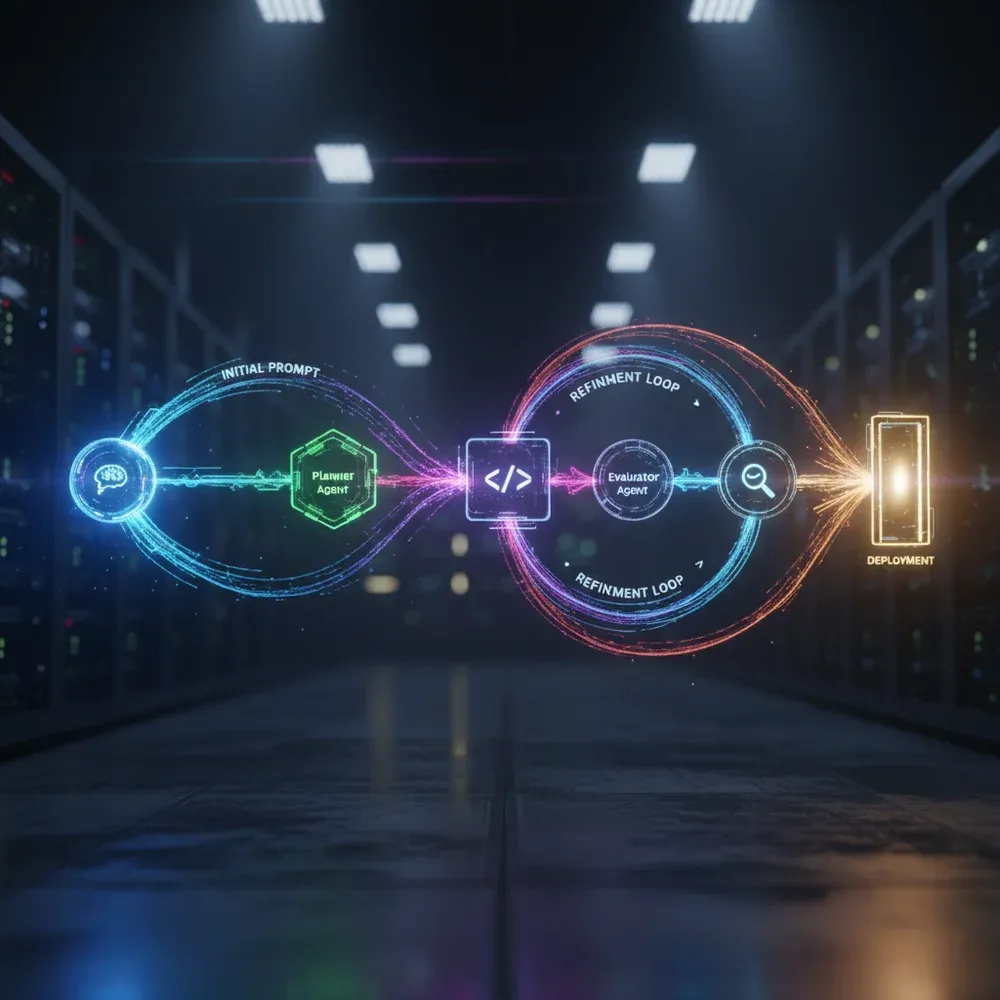
If a test fails, or if static code analysis reveals a security flaw (e.g., an SQL injection vulnerability), the Evaluator doesn't just throw an error. Instead, it sends a detailed error message and a suggested fix back to the Generator. This feedback loop repeats until the code passes all checks.
This iterative process guarantees that the final result is production-ready. The Evaluator's strict rule set ensures that the system does not accumulate technical debt despite the rapid development pace.
Minimizing Context Loss and Hallucinations: The Key to Long-Duration Tasks
One of the biggest plagues of Large Language Models (LLMs) is context loss. When a model needs to comprehend a 100,000-line codebase, it easily "forgets" the initial instructions, or worse, begins to hallucinate and call non-existent functions.
The three-agent architecture solves this problem through shared memory and structured communication. The agents do not communicate in a single endless chat stream. Instead, they access a central state space where the current state of the project, solved problems, and remaining tasks are recorded.
This method allows the system to carry out complex development sprints lasting days or weeks without losing focus. The autonomous AI agents representing the future of software development rely precisely on this robust context management.
Ready to revolutionize your development processes?
Don't let context loss and manual debugging slow down your team. Implement custom AI automation today.
Request a Free ConsultationBenefits of Custom Automation in Software Development: Time, Cost, Quality
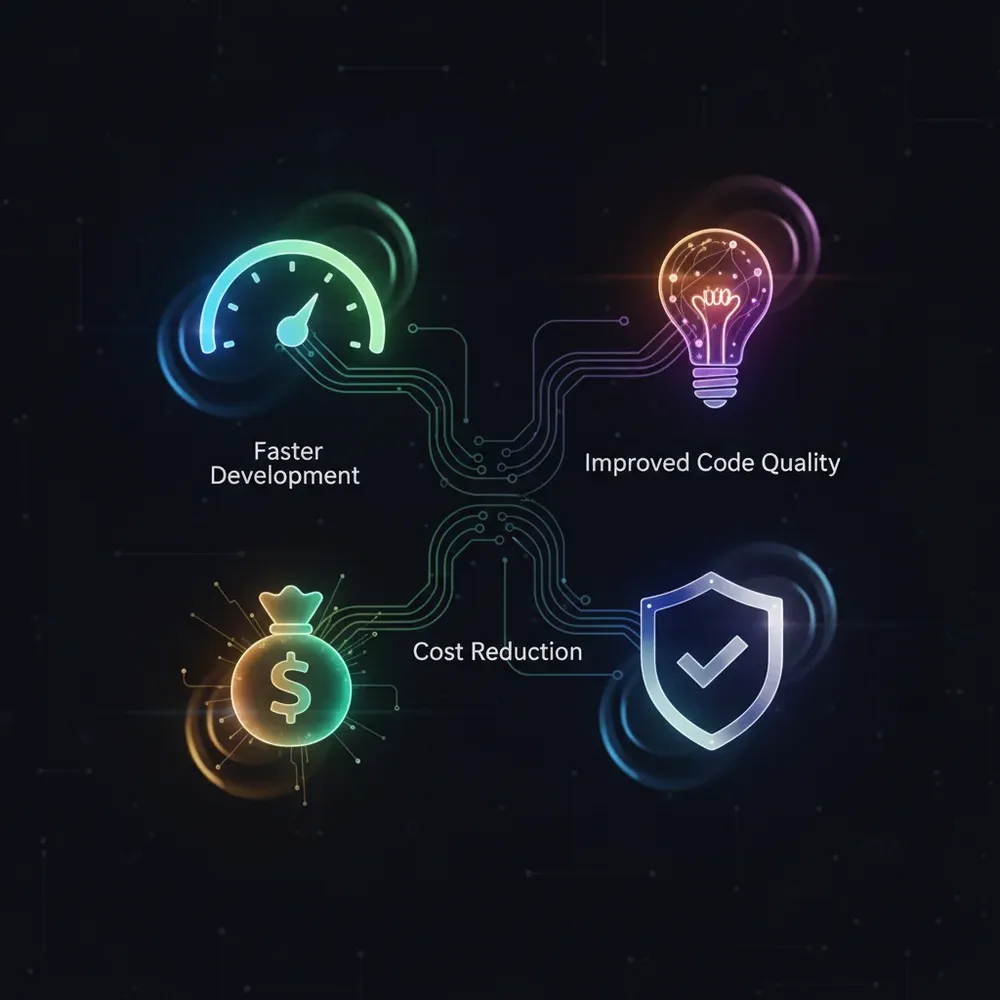
Implementing custom automation based on the three-agent architecture is not just a technological upgrade; it's a strategic business decision. The most obvious benefit is the drastic reduction in development cycles (Time-to-Market). What previously took weeks for a development team, the autonomous system accomplishes in days or even hours.
The cost savings are also significant. Although running AI models incurs API costs, this is dwarfed by the hourly rates of senior developers. Furthermore, the system can work 24/7, including weekends and holidays, continuously delivering new features and bug fixes.
Regarding quality, due to the strict checks of the Evaluator agent, code consistency and test coverage often exceed the levels achieved by human teams. Through AI-driven custom automation, companies can deliver not only faster but also more stable software.
Implementation Strategies: How to Build an Autonomous Development System?
Building such a complex system requires careful planning. CTOs and AI Architects must make several critical decisions during implementation. The first step is always accurately defining the project scope and assessing the existing infrastructure.
Selecting the Right Foundational Models and Tools
Not every LLM is suited for code generation or complex planning. The Planner agent requires a model with strong logical capabilities, such as Claude 3.5 Sonnet or GPT-4o. For the Generator agent, models specifically fine-tuned for coding are ideal.
In terms of tools, a robust orchestration framework is needed (e.g., LangChain, AutoGen, or custom-built solutions) that can handle communication between agents and state management. Selecting the right technology stack is critical for success.
Agent Orchestration and Communication
Designing the communication protocols between agents is the heart of the system. It must be defined in what format the Planner passes instructions to the Generator (e.g., JSON schemas), and how the Evaluator structures its feedback.
It is also important to incorporate a "Human-in-the-Loop" mechanism, especially in the early stages of deployment. This allows lead engineers to review the Planner's decisions before the Generator begins mass code generation.
Testing, Fine-tuning, and Continuous Improvement
An autonomous development system is never completely "finished." Continuous fine-tuning is required based on data from real projects. The testing strategy should include measuring the performance of the agents (e.g., how many times the Evaluator had to reject the code).
The system must be able to learn from its own mistakes. If the Generator consistently writes a certain type of database query incorrectly, the system should automatically update the Generator's prompts or context to prevent future errors.
Case Studies and Real-World Applications: Where is Autonomous Development Already Working?
Autonomous development systems are no longer just theoretical concepts; they are actively used across various industries. An excellent example is rapid prototyping. A startup looking to launch a new SaaS product can build a working MVP (Minimum Viable Product) in days using autonomous agents, including the frontend, backend, and database architecture.
Another critical use case is the modernization of legacy systems. Imagine a decades-old, monolithic banking application. The Planner agent can analyze the old codebase and design a transition to a microservices-based architecture. The Generator then rewrites the modules step-by-step in modern languages, while the Evaluator ensures the business logic remains intact.
Bug fixing at scale is also an area where AI agents shine. The Evaluator agent can continuously monitor error logs, the Planner designs the fix, and the Generator automatically creates the Pull Request. This level of automation drastically reduces IT operational costs.
Challenges and Considerations in Adopting Autonomous Systems
Every revolutionary technology brings challenges, and autonomous software development is no exception. One of the primary concerns is security. If an AI agent autonomously generates and deploys code, there is a risk of introducing vulnerabilities (e.g., using outdated libraries, improper data handling) into the system.
To avoid this, strict security gates must be built into the Evaluator agent's workflow, and regular, human-conducted security audits are essential. Integration with the existing technology stack can also be a complex task, especially in the case of older, closed systems.
The initial investment—both in time and resources—can be significant to build and train such a system. However, the long-term Return on Investment (ROI) amply compensates companies. The key is gradual implementation and utilizing appropriate expert support.
Struggling with modernizing legacy systems?
Our experts help safely integrate autonomous AI agents, minimizing risks and maximizing efficiency.
Speak with an ExpertThe Future of Code: AI's Role in Software Development and Human-AI Collaboration
The future of software development is not about completely replacing human programmers, but about a new level of synergy between human and machine. Autonomous agents will take over the mechanical, repetitive, and time-consuming parts of coding, while human engineers can focus on system design, innovation, and solving complex business problems.
The developer of the future will be much more of an "AI Orchestrator" who directs, supervises, and fine-tunes the work of the agents. This role will require a deeper architectural understanding and advanced prompt engineering skills.
Companies that recognize and adapt to this technology early will gain an insurmountable competitive advantage. They will be able to launch new products in a fraction of the time and at a lower cost, while the quality and reliability of their software continuously improve.

How We Help You Implement Custom Automation in Development?
At AiSolve, we deeply understand the intersection of AI architectures and modern software development. We don't just offer out-of-the-box solutions; we build custom autonomous development systems tailored to your enterprise needs. Our team of experts guides you through the entire process, from strategic planning to successful implementation.
We help select the right foundational models, design the three-agent architecture (Planner, Generator, Evaluator), and integrate it into your existing CI/CD pipelines. We pay special attention to security, data privacy, and code quality, ensuring the system is robust and scalable.
Whether it's developing a new complex web platform or custom automating internal processes, we provide the technological backbone for success. Level up your software development with AiSolve.
Ready to implement the technology of the future?
Don't fall behind your competitors. Request a custom quote for building autonomous development systems.
Request a Quote & ConsultationFrequently Asked Questions (FAQ) About Autonomous Software Development
How much does it cost to implement a custom AI automation system for software development?
Costs depend heavily on project complexity, existing infrastructure, and chosen AI models. A basic integration might start from a few thousand dollars, while a comprehensive, custom-developed, multi-agent enterprise system can cost significantly more. Accurate pricing requires a custom assessment, but the ROI is typically very fast due to drastically reduced development times.
What are the main security considerations when using AI agents for code generation?
The most important is avoiding vulnerabilities in the generated code (e.g., injection attacks, outdated dependencies). To achieve this, the Evaluator agent must integrate Static Application Security Testing (SAST) tools. Furthermore, it must be ensured that AI models do not access sensitive production data, and code execution happens in a strictly isolated (sandbox) environment.
Can these autonomous systems integrate with existing CI/CD pipelines?
Yes, absolutely. Autonomous systems are designed to fit seamlessly into existing workflows. AI agents can automatically open Pull Requests on GitHub or GitLab, which can be tested and deployed by existing CI/CD tools (e.g., Jenkins, GitHub Actions) just as if a human developer had written the code.
How does the 'Three-Agent Harness' handle complex, multi-module projects?
The key lies in the Planner agent, which can analyze the Abstract Syntax Tree (AST) of the entire codebase and dependencies between modules. The Planner breaks large tasks into smaller, independent units and passes only the necessary context for that specific task to the Generator agent, thereby avoiding overloading the LLMs' context window and preventing hallucinations.
What level of human oversight is still required with these advanced AI development systems?
Although the systems are highly autonomous, strategic direction and final approval remain human tasks. Lead engineers (AI Orchestrators) must review the architecture plans created by the Planner and approve critical Pull Requests before deployment to the production environment (Human-in-the-Loop).
Is custom automation suitable for small development teams, or only large enterprises?
It is especially beneficial for small teams! For a small team, an autonomous development system is like hiring 5-10 virtual senior developers who work 24/7. This allows SMEs and startups to deliver software at a speed and quality that was previously only the privilege of large enterprises.
What kind of data is needed to train or configure these autonomous development agents?
Foundational models (e.g., Claude 3.5 Sonnet) are already pre-trained on massive amounts of code. Configuration requires the company's existing codebase, coding conventions (style guides), API documentation, and specifications describing business logic. The system builds context from this data using RAG (Retrieval-Augmented Generation) technology.
Summary and Next Steps: Contact Us!
The complexity of full-stack software development has reached a point where human resources alone are no longer sufficient for efficient scaling. The Three-Agent Architecture (Planner, Generator, Evaluator) inspired by Anthropic is not just a new tool, but an entirely new paradigm that rewrites the rules of software development.
By implementing custom automation, companies can drastically reduce development time, minimize error rates, and free up their engineers to perform creative, strategic tasks. Those who act now will gain an insurmountable advantage in the market.
Don't wait until your competitors overtake you. Contact the experts at AiSolve today and discover how we can integrate autonomous AI agents into your development processes as well.
Start the development revolution at your company!
Request a free consultation and we'll show you how to optimize your processes with custom AI automation.
Contact UsKészen állsz a saját weboldaladra?
Ingyenes konzultáció során átbeszéljük, hogyan segíthetünk vállalkozásodnak növekedni egy modern, gyors és konverzióoptimalizált weboldallal. 14 nap alatt kész, 0 Ft induló költséggel.