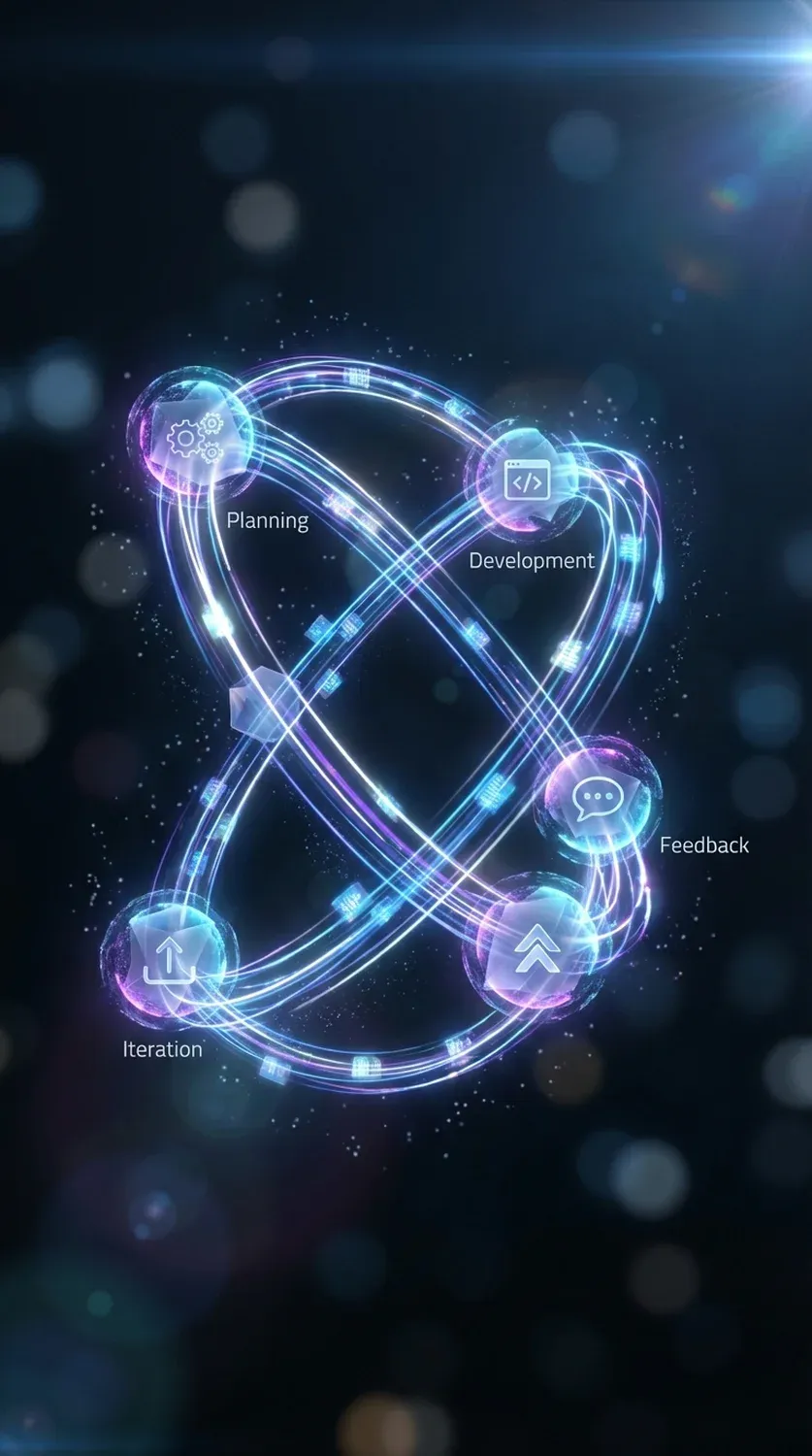
| Area | Key Insight |
|---|---|
| Core Concept | Agile is an iterative approach to project management and software development that values flexibility, customer collaboration, and delivering work in small, consumable increments. |
| Key Methodologies | Scrum is a framework for time-boxed iterations (Sprints), while Kanban focuses on continuous flow and visualizing workflow. Both aim to improve efficiency and predictability. |
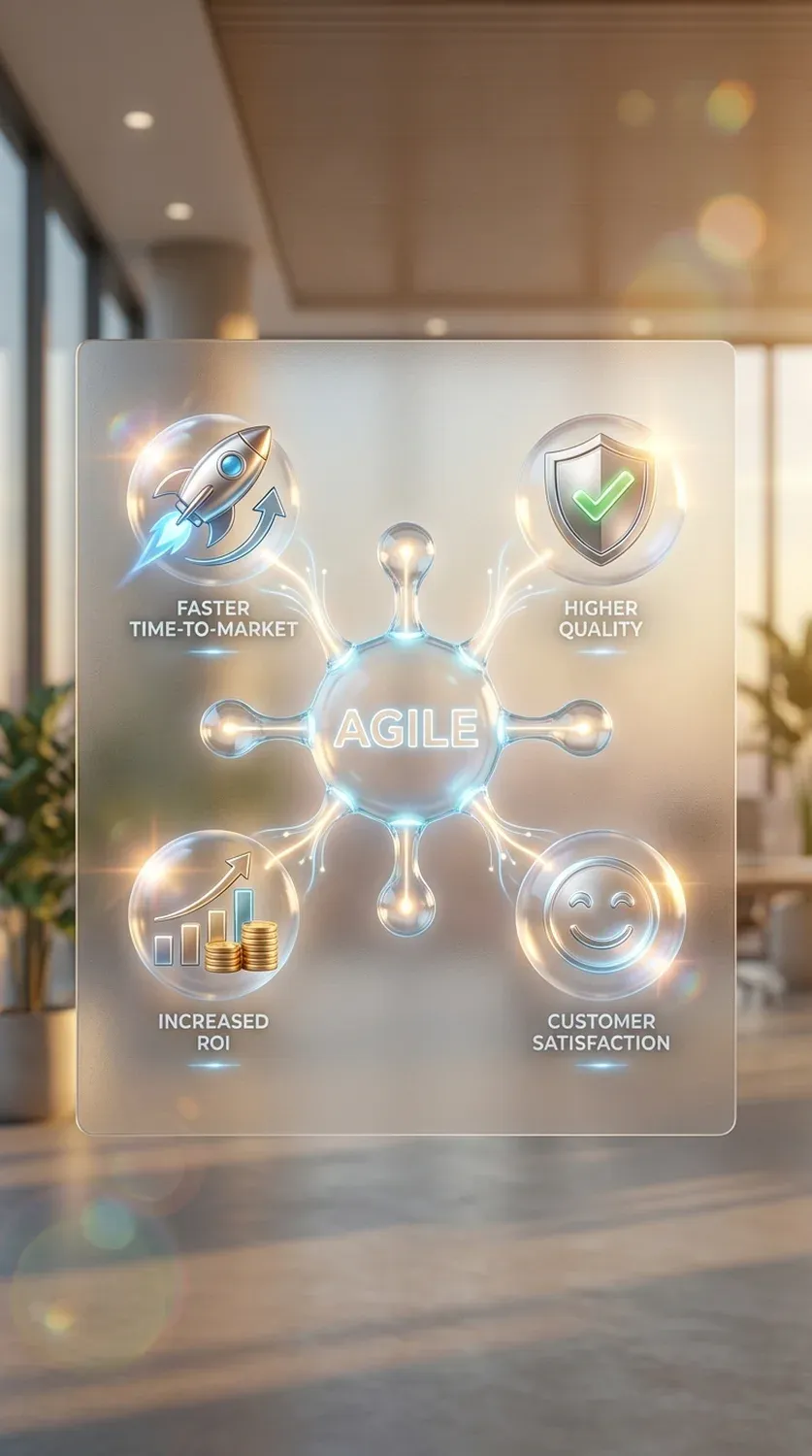
| Business Impact | Adopting Agile leads to faster time-to-market, reduced risk, increased project visibility, and products that better align with customer needs, boosting overall ROI. |
| Cultural Shift | Successful Agile transformation is less about tools and more about fostering a culture of trust, transparency, cross-functional collaboration, and continuous improvement. |
| Client Role | In Agile, the client is an active partner, providing regular feedback that directly shapes the final product, ensuring the outcome meets their evolving requirements. |
In the world of project management and software development, "Agile" is a term that has dominated conversations for over two decades. Yet, for many business leaders and stakeholders, it remains a fuzzy concept, often mistaken for just "moving fast." The reality is far more profound. With traditional project management approaches showing failure or challenge rates as high as 70% according to some industry reports, Agile emerged not just as an alternative, but as a necessary evolution. It's a mindset shift focused on adaptability, customer collaboration, and delivering value incrementally. While these principles apply to many industries, they are the cornerstone of modern, effective professional website creation, transforming how digital products are built and delivered.
This comprehensive guide will demystify Agile development. We will explore its core philosophy, contrast it with traditional methods, detail its most popular frameworks like Scrum and Kanban, and provide a practical roadmap for implementation. By the end, you'll understand not just what Agile is, but why it's the dominant methodology for successful project delivery in 2026 and the engine behind high-performing development teams. This approach ensures that complex projects, from building enterprise software to implementing custom automation solutions, stay on track and deliver real business value.
The Core Philosophy: The Agile Manifesto and its 12 Principles
To truly understand Agile, we must go back to its origin: the "Manifesto for Agile Software Development," created in 2001. This wasn't a dense rulebook but a concise declaration of core values. It was a reaction against the heavyweight, documentation-driven processes that were common at the time, which often led to projects being delivered late, over budget, and not meeting user needs. The Manifesto prioritizes four key values:
- Individuals and interactions over processes and tools.
- Working software over comprehensive documentation.
- Customer collaboration over contract negotiation.
- Responding to change over following a plan.
This doesn't mean processes, documentation, or plans are unimportant. Rather, it signifies a shift in priority. Agile values the elements on the left more than those on the right. For example, having a functional piece of software to show a client is more valuable than a 100-page specification document. This philosophy is supported by 12 guiding principles, which provide more specific guidance. Key principles include our highest priority being to satisfy the customer through early and continuous delivery of valuable software, welcoming changing requirements even late in development, and delivering working software frequently, from a couple of weeks to a couple of months. The best architectures, requirements, and designs emerge from self-organizing teams who reflect at regular intervals on how to become more effective.
These principles foster an environment of trust, transparency, and continuous improvement. They empower teams to make decisions, adapt to new information, and focus relentlessly on delivering what the customer truly needs. This is a fundamental departure from rigid, top-down management styles and is the secret behind the success of Agile in dynamic environments like technology and digital product development.
Traditional Waterfall vs. Agile: A Paradigm Shift in Project Management
The clearest way to understand Agile is to contrast it with its predecessor, the Waterfall model. Waterfall is a linear, sequential approach to development. A project moves through distinct phases—Requirements, Design, Implementation, Testing, and Deployment—and each phase must be fully completed before the next begins. It’s like building a house: you lay the foundation, then build the frame, then the walls, and so on. You can't put up the roof before the walls are finished.
This approach works well for projects where requirements are fully understood upfront and are unlikely to change, such as in physical engineering. However, in software and web development, this is rarely the case. Market needs shift, user feedback reveals new insights, and business priorities evolve. With Waterfall, a change requested late in the process can be catastrophic, often requiring a complete restart or a prohibitively expensive rework. This rigidity is a primary source of project failure. The end product, delivered months or years later, might perfectly match the original specification but be completely irrelevant to the current market.
Strategic Insight: The key difference is how each methodology handles risk and uncertainty. Waterfall attempts to eliminate risk by exhaustive upfront planning. Agile accepts that risk and uncertainty are inevitable and manages them through short, iterative cycles and continuous feedback, making it far more resilient to change.
Agile, on the other hand, embraces an iterative and incremental approach. The project is broken down into small, manageable chunks of work, often called "sprints" or iterations. Each sprint, typically lasting 2-4 weeks, goes through a mini-lifecycle of planning, design, development, and testing. At the end of each sprint, the team delivers a potentially shippable increment of the product. This allows stakeholders to see and interact with a working part of the project early and often, providing valuable feedback that guides the next iteration. This continuous feedback loop is central to Agile's power, ensuring the final product is precisely what the customer needs, not just what was specified months ago.

| Aspect | Waterfall Model | Agile Model |
|---|---|---|
| Planning | Upfront, exhaustive, and rigid. | Continuous and adaptive. Detailed planning only for the next iteration. |
| Delivery Cycle | One single delivery at the end of the project. | Incremental delivery of working software at the end of each short cycle. |
| Customer Feedback | Gathered at the beginning (requirements) and end (acceptance). | Continuous throughout the project via regular demos and collaboration. |
| Handling Change | Change is discouraged and expensive to implement. | Change is welcomed and incorporated into subsequent iterations. |
| Project Structure | Strict, sequential phases. | Iterative and cyclical sprints or continuous flow. |
Key Agile Methodologies Explored: Scrum, Kanban, and Beyond
Agile is a philosophy, not a specific method. To put this philosophy into practice, several frameworks and methodologies have been developed. The two most popular are Scrum and Kanban. While both are Agile, they have different approaches and are suited to different types of work.
The Scrum Framework
Scrum is the most widely adopted Agile framework. It's a structured but flexible approach centered around fixed-length iterations called Sprints. Scrum is defined by its specific roles, events, and artifacts, which work together to create a rhythm of delivery and improvement.
- Roles:
- Product Owner: Represents the stakeholders and the voice of the customer. They are responsible for managing the Product Backlog and maximizing the value of the product.
- Scrum Master: A servant-leader who ensures the team adheres to Scrum principles and practices. They facilitate events and remove impediments blocking the team's progress.
- Development Team: A cross-functional, self-organizing group of professionals who do the actual work of delivering a potentially releasable product increment at the end of each Sprint.
- Events:
- Sprint: A time-boxed period (usually 2-4 weeks) during which a specific product increment is created.
- Sprint Planning: A meeting at the start of the Sprint where the team selects work from the Product Backlog to complete.
- Daily Scrum (Stand-up): A short, 15-minute daily meeting for the team to synchronize activities and create a plan for the next 24 hours.
- Sprint Review: Held at the end of the Sprint to inspect the increment and adapt the Product Backlog if needed. This is a demo, not a status meeting.
- Sprint Retrospective: A meeting where the team reflects on the past Sprint to identify and plan improvements for the next one.
Scrum's structured nature provides a clear cadence that helps teams become highly predictable and efficient. It's particularly effective for complex product development where creativity and responsiveness are essential, like in a professional website creation project that involves multiple features and user feedback.
The Kanban Method
Kanban is a more fluid Agile method that focuses on visualizing work, limiting work in progress (WIP), and maximizing flow. Unlike Scrum's time-boxed sprints, Kanban is a continuous flow system. Its core principles are simple but powerful:
- Visualize the workflow: The team creates a visual board (a Kanban board) with columns representing the stages of their work (e.g., To Do, In Progress, Testing, Done). Work items (tasks) are represented as cards that move across the board.
- Limit Work in Progress (WIP): Each column has a limit on how many cards it can contain at one time. This is the crucial mechanism of Kanban. Limiting WIP prevents bottlenecks, improves focus, and forces the team to finish work before starting new tasks.
- Manage Flow: By visualizing the workflow and limiting WIP, the team can analyze and optimize the flow of work, identifying and resolving blockages to improve speed and predictability.
- Make Policies Explicit: The team defines clear rules for how work is done (e.g., what "Done" means for a task), ensuring everyone is on the same page.
Kanban is excellent for teams with a continuous stream of incoming tasks of varying sizes and priorities, such as support teams, operations, or even in contexts like managing a RAG AI chatbot's knowledge base updates. It provides flexibility and focuses on finishing work efficiently rather than committing to a fixed amount of work in a specific timeframe.
The Tangible Business Benefits of Adopting Agile
Adopting Agile is not just a trend for development teams; it's a strategic business decision that delivers concrete, measurable benefits. When implemented correctly, Agile transforms how an organization delivers value, moving from a high-risk, "big bang" release model to a more predictable, customer-centric approach. The impact is felt across the entire business, from finance to marketing.
One of the most significant advantages is accelerated time-to-market. By delivering functional product increments in short cycles, businesses can release a Minimum Viable Product (MVP) much faster than with a traditional approach. This allows them to capture market share, start generating revenue sooner, and gather real-world user feedback to guide future development. For a business investing in professional website creation, this means seeing a functional part of their site, like a core booking feature or product catalog, go live in weeks instead of waiting months for the entire project to be completed.
Pro Tip: Use the Sprint Review (in Scrum) as a strategic business meeting. Invite key stakeholders, not just managers. This is your regular opportunity to align the product direction with business goals and ensure the investment is paying off.
Another key benefit is enhanced quality and reduced risk. Continuous testing and integration are built into each iteration, meaning bugs are caught and fixed early when they are less costly to resolve. The transparency of the process, through tools like Kanban boards and daily stand-ups, means that problems are visible to everyone and can be addressed immediately. Furthermore, the risk of building the wrong product is dramatically reduced. Constant collaboration with stakeholders ensures that the team is always working on the highest-priority features that deliver the most value, preventing wasted effort on features nobody wants. This is equally true when developing sophisticated systems like an AI phone customer service, where early feedback on call flows and voice recognition is critical. Ultimately, Agile leads to higher customer satisfaction because the end product is a direct result of continuous conversation and adaptation to the customer's true needs.
Building the Agile Team: Roles, Responsibilities, and Culture
Agile is fundamentally about people and how they work together. You can have the best tools and processes, but without the right team structure and culture, an Agile transformation will fail. The ideal Agile team is a small, dedicated group of individuals with all the skills necessary to turn an idea into a finished product increment. This is known as a cross-functional team.
A cross-functional team focused on professional website creation would not just consist of developers. It would include a UX/UI designer, a quality assurance (QA) specialist, perhaps a content writer or a data analyst, all working together within the same team. This structure eliminates handoffs and delays between different departments. Instead of a designer finishing a mockup and "throwing it over the wall" to developers, they work in parallel, collaborating daily. This tight-knit collaboration fosters a shared sense of ownership and dramatically speeds up the development process.
Beyond its structure, the Agile team is self-organizing. This doesn't mean chaos; it means that the team has the autonomy to decide how best to accomplish its work. Management sets the "what" (the goals and priorities), but the team determines the "how" (the tasks, assignments, and technical approach). This empowerment is a powerful motivator. It gives team members a sense of purpose and accountability, leading to higher engagement and better problem-solving. A leader's role in an Agile environment shifts from being a commander to being a coach and facilitator, focused on removing obstacles and creating an environment where the team can thrive. This culture of trust and empowerment is the engine that drives high-performing Agile teams.
Implementing Agile in Your Organization: A Practical Step-by-Step Guide
Transitioning to Agile is a significant change that requires careful planning and execution. It's not about flipping a switch overnight but embarking on a journey of continuous improvement. For organizations looking to make the shift, a phased, pragmatic approach is most effective.
Step 1: Secure Leadership Buy-in & Educate Stakeholders
The first and most critical step is ensuring that senior leadership understands and champions the move to Agile. They need to appreciate that Agile is a cultural shift, not just a process change. This means providing them with education on Agile principles and benefits. Following this, educate all stakeholders—from marketing to sales—on how their interaction with development teams will change. They will need to be more involved, providing regular feedback and understanding that requirements can evolve.
Step 2: Start Small with a Pilot Project
Instead of a "big bang" adoption across the entire organization, select a single, non-critical but meaningful project for a pilot. This allows the team to learn and adapt in a lower-risk environment. A great pilot project could be a new landing page, a feature update, or an internal tool. This is a common starting point for teams specializing in tasks like professional website creation. The lessons learned from this pilot will be invaluable for a wider rollout.

Step 3: Choose the Right Methodology and Tools
Decide on an initial framework. For projects with complex development needs and a desire for a regular delivery cadence, Scrum is often a good starting point. For teams focused on continuous delivery and managing varied incoming requests, Kanban might be a better fit. Select simple, visual tools to support the process. This could be a physical whiteboard with sticky notes or a digital tool like Jira, Trello, or Asana. The tool should serve the team, not dictate the process.
Implementation Advice: Don't get dogmatic about a framework. Many successful teams use a hybrid approach, often called "Scrumban," combining the roles and events of Scrum with the visual workflow and WIP limits of Kanban. Adapt the methodology to fit your context.
Step 4: Embrace Continuous Improvement
Agile is not a destination but a journey. The most important practice to adopt is the retrospective. At the end of each sprint or a regular interval, the team must pause and reflect on what went well, what didn't, and what they will change in the next cycle. This commitment to inspection and adaptation is the core of becoming truly Agile. It ensures the process evolves and improves over time, tailored perfectly to the team and organization's needs, whether they are building websites or complex data processing AI agents.
Common Challenges and Pitfalls in Agile Transformation (And How to Avoid Them)
While the benefits of Agile are compelling, the path to adoption is often fraught with challenges. Being aware of these common pitfalls can help organizations navigate their transformation more successfully. One of the biggest hurdles is resistance to change. Agile requires a significant mindset shift from everyone involved. Managers may struggle with giving up direct control, and team members might be uncomfortable with the level of transparency and accountability required. Overcoming this requires strong leadership, clear communication about the "why" behind the change, and investing in coaching and training.
Another common issue is "Agile in name only," sometimes called "cargo cult Agile." This happens when organizations adopt the ceremonies and terminology of Agile (like daily stand-ups and sprints) without embracing the underlying principles of collaboration, empowerment, and continuous improvement. Stand-ups become tedious status reports, and sprint reviews turn into project manager presentations. To avoid this, focus on the Agile Manifesto's values first and the practices second. Ensure the Scrum Master or an Agile Coach is empowered to protect the team and guide the organization toward genuine agility.
Finally, a lack of discipline can derail Agile efforts. While Agile is flexible, it is not undisciplined. It requires rigorous adherence to practices like limiting work in progress, maintaining a well-prioritized backlog, and conducting effective retrospectives. Without this discipline, sprints can become chaotic, and the workflow can grind to a halt. The solution is to make processes explicit, hold everyone accountable to the agreed-upon rules, and use the retrospective as a mechanism to reinforce discipline and continuously refine the process. This disciplined approach is what makes agile the preferred methodology for delivering high-quality results in every professional website creation project we undertake.
Agile is more than a methodology; it's a competitive advantage. By embracing its principles, you can deliver better products faster, adapt to market changes with confidence, and build highly motivated, effective teams. This iterative, value-driven approach is the gold standard for modern development.
Build Your Next Project the Agile Way[Article generated by AiSolve AI Content System]
Frequently Asked Questions
What is the main difference between Agile and Scrum?
Agile is a broad philosophy or mindset described by the values and principles in the Agile Manifesto. Scrum is a specific, prescriptive framework for implementing the Agile philosophy. In short, Agile is the "what" (the guiding principles), while Scrum is one popular way of "how" (the specific roles, events, and rules to follow).
Is Agile only suitable for software development?
No, while Agile originated in software, its principles are now widely applied in various fields, including marketing, HR, product design, and even manufacturing. Any project that involves uncertainty, complexity, and a need for customer feedback can benefit from an Agile approach. The focus on iterative delivery and continuous improvement is universally applicable.
How do you handle budgets and deadlines in an Agile project?
Agile manages budgets and deadlines by fixing time and cost, but allowing scope to be flexible. A project might have a fixed budget for a certain number of sprints (e.g., 6 months of development). Within that timeframe, the team works to deliver the highest-priority features from the backlog. This ensures the most valuable work is completed within the constraints, providing a predictable cost model with a focus on delivering maximum value.
What is a 'user story' in Agile?
A user story is a simple, informal description of a feature written from the perspective of the end user. The typical format is: "As a [type of user], I want [some goal] so that [some reason]." User stories are used to capture requirements in a user-centric way. They are not detailed specifications but rather conversation starters that help the team understand the "why" behind a feature, leading to better implementation decisions.
Készen állsz a saját weboldaladra?
Ingyenes konzultáció során átbeszéljük, hogyan segíthetünk vállalkozásodnak növekedni egy modern, gyors és konverzióoptimalizált weboldallal. 14 nap alatt kész, 0 Ft induló költséggel.