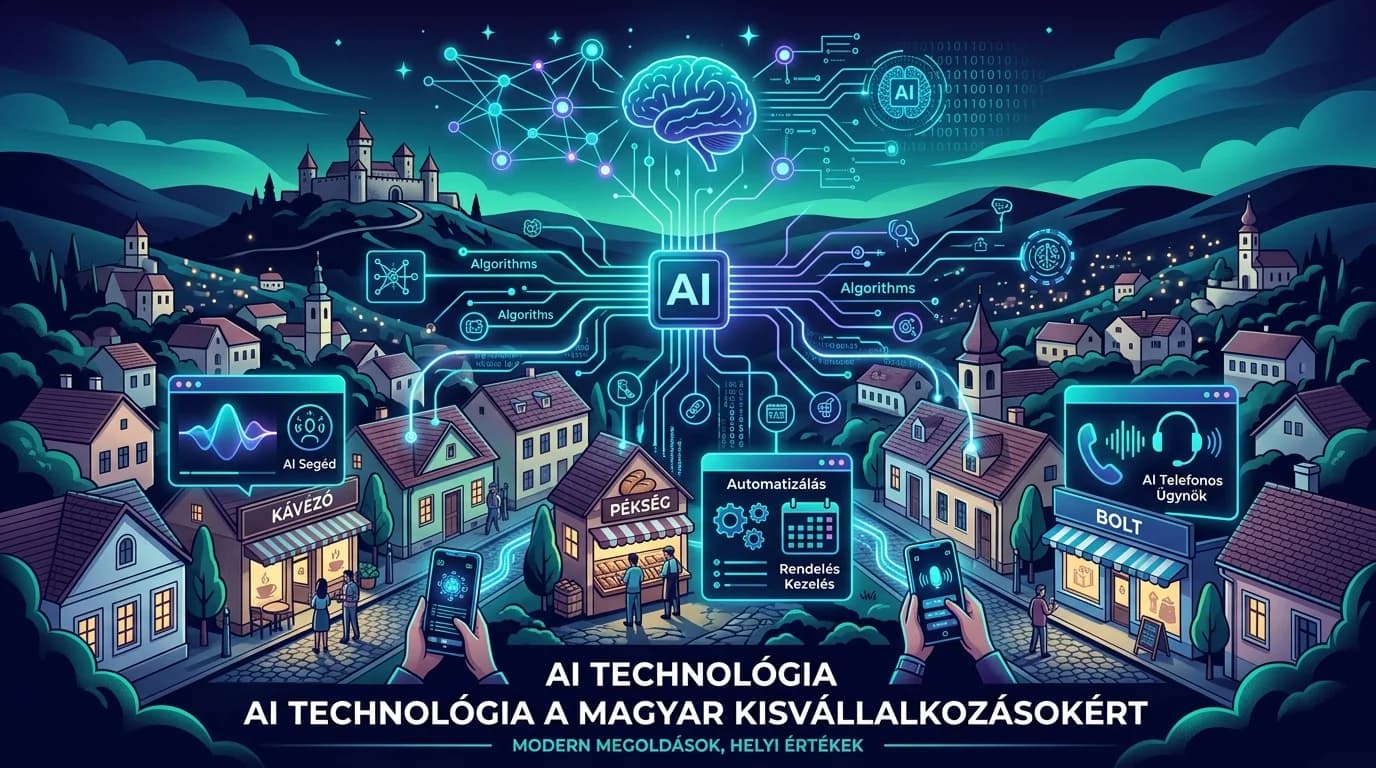

Artificial Intelligence (AI) is no longer a theme of science fiction novels but an indispensable element of modern business strategy. By 2026, companies that fail to integrate AI in some form will find themselves at a significant competitive disadvantage. According to a recent industry report, over 75% of enterprises are already actively investing in AI technologies, recognizing that the role of artificial intelligence in business extends far beyond simple automation. Today, AI is the engine driving decision-making, customer experience, and innovation.
This guide provides a detailed look at how artificial intelligence is transforming the business world, its specific application areas, and how to develop an effective AI strategy that ensures sustainable growth. A successful implementation requires a solid digital foundation, often established through professional website creation, as this interface serves as the gateway between AI-powered tools and customers.
Table of Contents
- What is Business AI? From Automation to Augmentation
- Key Applications of AI Across Business Functions
- The Strategic Benefits of AI Integration: Beyond Cost Cutting
- Developing Your AI Strategy: A Step-by-Step Framework
- The Foundational Role of Digital Infrastructure: Why Your Website Matters
- Navigating the Risks and Ethical Considerations of Business AI
- The Future of AI in Business: Trends to Watch in 2026 and Beyond
| Key Takeaway | Detailed Explanation |
|---|---|
| AI as a Strategic Tool | AI is no longer just an IT project but a core business strategy element that influences competitiveness, efficiency, and revenue growth. |
| Data-Centric Decision-Making | AI enables the real-time analysis of vast amounts of data, allowing companies to make informed, data-driven decisions instead of relying on intuition. |
| Personalized Customer Experience | Artificial intelligence can understand and predict customer behavior on an individual level, enabling hyper-personalized offers and communication. |
| Importance of Digital Foundations | Effective AI tools require a modern digital infrastructure, including a well-structured website, which is a central element of the professional website creation process. |
| Ethics and Responsibility | Implementing AI comes with responsibility. Issues of data privacy, algorithmic bias, and transparency must be proactively managed to maintain trust. |
What is Business AI? From Automation to Augmentation
When discussing the role of artificial intelligence in business, it's important to clarify what we mean. In a business context, AI refers to a collection of technologies that enable machines to learn from experience, adapt to new inputs, and perform human-like tasks. It's not a single technology but a toolkit, with key components like Machine Learning, Deep Learning, and Natural Language Processing (NLP).
Progress is moving in two main directions: automation and augmentation. Automation involves mechanizing repetitive, rule-based tasks, such as processing invoices or answering basic customer service queries. This leads to increased efficiency and cost savings. Augmentation goes further: AI here supplements and enhances human capabilities. For example, it can assist a doctor in making a diagnosis by analyzing vast amounts of medical data or suggest optimizations for a marketing campaign based on market trends. The future is not about machines versus humans, but about their collaboration.
The Most Important Technological Branches of AI
- Machine Learning: Algorithms learn patterns from large datasets without being explicitly programmed. It's the foundation of most predictive analytics and recommendation systems.
- Natural Language Processing (NLP): Enables computers to understand, interpret, and generate human language. NLP powers chatbots, voice assistants, and text analysis tools.
- Computer Vision: This technology allows machines to 'see' and interpret visual information from images or videos. It is used in quality control, facial recognition, and self-driving cars.
- Generative AI: Models capable of creating new, original content (text, images, music) based on the data they were trained on. It is revolutionizing content creation and product design.
Key Applications of AI Across Business Functions
The role of artificial intelligence in business is not confined to one area; it can make nearly every function of a company more efficient and intelligent. However, deploying AI-based tools requires rethinking existing digital platforms. A modern, API-driven professional website creation can be crucial for seamlessly integrating these diverse systems.
Marketing and Sales
AI is revolutionizing customer acquisition and retention. Machine learning algorithms analyze customer data to predict which leads are most likely to convert (lead scoring). Dynamic pricing optimizes prices in real-time based on demand, competition, and other market factors. Hyper-personalization allows for displaying unique product recommendations, emails, and website content to each customer, dramatically increasing conversion rates.
Customer Service
NLP-powered chatbots and virtual assistants can handle repetitive customer queries 24/7, freeing up human agents. More advanced systems can also analyze the sentiment of incoming emails and calls, prioritizing them to ensure that the most urgent or dissatisfied customers receive help first. This significantly improves customer satisfaction and reduces operational costs.
Strategic Insight: Start by implementing an AI chatbot on your customer service website, powered by an internal knowledge base. This is a low-risk, high-return first step that can deliver immediate results by reducing time spent on recurring questions.
Operations and Supply Chain
In operations, AI is synonymous with efficiency. Predictive maintenance analyzes sensor data to forecast machine failures, minimizing unplanned downtime. Demand forecasting models more accurately estimate future sales based on historical data and external factors (e.g., weather, holidays), optimizing inventory levels and avoiding excess storage costs. Route optimization algorithms reduce logistics costs and delivery times.

The Strategic Benefits of AI Integration: Beyond Cost Cutting
While cost reduction is often the primary motivation for adopting AI, its true value lies in strategic advantages. Artificial intelligence fundamentally changes a company's ability to create value. Companies that use AI merely for efficiency gains will fall behind those who see it as a driver of innovation and competitive advantage.
The most significant strategic benefit is better and faster decision-making. AI can uncover complex patterns and correlations in massive datasets that human analysts would be unable to spot. This enables proactive, data-driven decisions instead of reactive, intuition-based ones. Additionally, AI accelerates product development cycles by running simulations, automating testing, and analyzing customer feedback, allowing companies to respond more quickly to market demands.
| Traditional Approach | AI-Driven Approach | Business Impact |
|---|---|---|
| Manual Data Analysis | Automated, real-time analysis and prediction | Faster, more accurate decision-making |
| Segmented Marketing | Hyper-personalized, 1:1 customer experience | Higher conversion and customer loyalty |
| Reactive Maintenance | Predictive maintenance, fault prediction | Reduced downtime, lower costs |
| Fixed Pricing Models | Dynamic, real-time pricing | Maximized revenue and margins |
Developing Your AI Strategy: A Step-by-Step Framework
Successful AI implementation is a strategic challenge, not a technological one. Without a well-thought-out framework, projects can easily stall or fail to deliver the expected results. The following steps help create a solid foundation that ensures a return on investment.
- Identify the Business Problem: Don't start with the technology; start with the problem. Which business process is least efficient? Where are you losing revenue? Where can the customer experience be improved the most? Choose a specific, measurable problem whose solution creates real business value.
- Assess and Prepare Data: Data is the fuel for AI. You must assess whether the necessary data is available, its quality, and its accessibility. Cleaning, labeling, and structuring data is often the most time-consuming part of the project.
- Launch a Pilot Project: Start small. Choose a well-defined area for a pilot project. This allows you to test the technology, build internal competencies, and demonstrate quick wins without risking the entire company's operations.
- Measure and Evaluate: Define clear success metrics (KPIs) at the beginning of the pilot project. Measure performance against the set goals and evaluate the return on investment (ROI). Refine the model and process based on the lessons learned.
- Scale and Integrate: After a successful pilot, you can proceed with a broader implementation of the technology. This includes integrating the AI model into existing systems, training employees, and redesigning processes. Scaling often requires upgrading the digital infrastructure, which might involve a comprehensive professional website creation project.

The Foundational Role of Digital Infrastructure: Why Your Website Matters
A common misconception is that AI projects are solely about data scientists and complex algorithms. In reality, the business success of artificial intelligence heavily depends on the quality of the existing digital infrastructure. AI tools do not operate in a vacuum; they need to collect and process data and deliver the results to users—whether they are internal employees or external customers. This is where the fundamental role of modern web platforms, including the corporate website, comes into play.
Today, a website is much more than a digital business card. It is the primary data collection point, the hub of customer interactions, and the user interface for AI-based services (e.g., chatbots, personalized recommendation engines). An outdated, poorly structured website can hinder AI projects because it cannot collect the necessary data and does not allow for the seamless integration of new tools. In contrast, a professional website creation process results in a platform that:
- Collects Clean Data: With well-defined data structures and event tracking, it ensures that AI models can learn from reliable data.
- Enables API-Driven Integration: Through its modern architecture, it can easily connect with external AI services and internal systems (CRM, ERP).
- Provides an Excellent User Experience (UX): It ensures that AI-driven features are intuitive and easy for customers to use, increasing adoption and effectiveness.
- Is Scalable and Secure: It can handle increased data traffic and protect sensitive user data, which is essential for maintaining trust.
So, before investing millions in complex AI algorithms, it's worth reviewing your digital foundations. A skilled professional website creation is not an expense but an investment in your future AI capabilities.
Navigating the Risks and Ethical Considerations of Business AI
Artificial intelligence holds immense potential, but its implementation also comes with significant risks and ethical questions. Ignoring these can lead not only to legal and financial consequences but can also severely damage a company's reputation and customer trust. A responsible AI strategy proactively addresses these challenges.
Implementation Advice: Establish an internal AI ethics committee composed of representatives from various departments (legal, IT, business development). Their task is to review new AI projects from an ethical standpoint before implementation, ensuring compliance and responsible operation.
Data Privacy and Security
AI models require vast amounts of data, which often contain personal or sensitive information. It must be ensured that data collection, storage, and processing comply with data protection regulations like GDPR. Cybersecurity risks also increase, as AI systems become attractive targets for attackers.
Algorithmic Bias
AI models learn the patterns present in their training data. If this data contains historical prejudices or biases (e.g., a certain demographic group is underrepresented), the model will also make biased decisions. This can lead to discriminatory outcomes in areas like credit scoring or job interviews. Minimizing bias requires continuous monitoring and regular review of the models.
Transparency and Explainability
Many advanced AI models, especially deep learning networks, operate as 'black boxes,' meaning it's difficult to understand exactly how they reached a particular conclusion. This can be problematic in regulated industries where decisions must be justified. The field of 'Explainable AI' (XAI) aims to make these models more transparent and interpretable, which is essential for trust and accountability.

The Future of AI in Business: Trends to Watch in 2026 and Beyond
The development of artificial intelligence is progressing at an exponential rate. Technologies that are considered novel today will become basic business tools in a few years. Looking ahead, a few key trends will define the role of artificial intelligence in business.
- Generative AI in Business Processes: Generative AI is no longer just for content creation. It is increasingly being integrated into corporate software, where it will be able to write software code, prepare financial reports, or even draft product designs, drastically accelerating innovation cycles.
- Autonomous Agents: AI systems capable of independently executing complex, multi-step tasks to achieve a specific goal. For example, an autonomous procurement agent could find the best suppliers, negotiate prices, and place orders without human intervention.
- Hyperautomation: The combination of AI, Robotic Process Automation (RPA), and other technologies aimed at automating as many business processes as possible. This is a more holistic approach that seeks to optimize the entire value chain.
- AI-Powered Cybersecurity: As cyber threats become more sophisticated, AI will play a key role in defense. Anomaly detection algorithms can identify unusual network behavior in real-time and automatically isolate threats before they cause damage.
- AI Governance: As AI becomes more deeply embedded in corporate operations, there will be a growing need for formal governance frameworks to ensure its responsible, ethical, and compliant use.
These trends indicate that AI is increasingly becoming an invisible but indispensable infrastructure that permeates every aspect of the modern enterprise. Preparing for this requires not only technological but also organizational and cultural changes, and a modern digital presence—the end goal of professional website creation—is the first step on this journey.
The successful application of artificial intelligence rests on a solid digital foundation. A professionally built website or web application is the platform where AI-driven solutions can create real business value. Are you ready to lay the groundwork for the future?
Design Your AI-Ready Digital Platform[Article generated by AiSolve AI Content System]
Frequently Asked Questions
How much investment does it take to start an AI project?
Costs vary greatly depending on the complexity of the project. Implementing a simple chatbot can start from a few thousand dollars, while developing a complex predictive analytics system can cost hundreds of thousands. It is important to account for ongoing maintenance and data management costs in addition to the initial investment. The best strategy is to start with a small, well-defined pilot project to measure ROI.
Is it necessary for an SME to have its own data science team?
Not necessarily. Many AI solutions are now available as "Software as a Service" (SaaS) models, which do not require deep technical knowledge to use. For smaller companies, it is often more efficient to engage external experts or agencies for specific projects or to use pre-built, industry-specific AI tools. The most important thing is to ensure you have clean, high-quality data.
What is the difference between AI and automation?
Automation typically refers to the execution of rule-based, repetitive tasks (e.g., entering invoice data into a system). AI goes beyond this: it can learn, adapt, and make decisions. While automation follows a predefined script, AI can handle variability and uncertainty, such as recognizing a customer's sentiment in an email or forecasting market demand.
How does AI threaten data security?
AI systems centralize vast amounts of data, making them attractive targets for cyberattacks. Additionally, there are so-called "adversarial" attacks, where deliberately manipulated data is used to deceive the model. The key to defense is robust cybersecurity protocols, data encryption, strict access controls, and continuous monitoring of models to detect unusual behavior.
Készen állsz a saját weboldaladra?
Ingyenes konzultáció során átbeszéljük, hogyan segíthetünk vállalkozásodnak növekedni egy modern, gyors és konverzióoptimalizált weboldallal. 14 nap alatt kész, 0 Ft induló költséggel.