
The advancement of artificial intelligence opens a new chapter in technology every day. The latest and perhaps most spectacular example is the mission of NASA's Perseverance rover, which autonomously navigates the harsh and unknown surface of Mars with the help of an advanced AI model like Claude. This feat, where a machine makes complex decisions hundreds of millions of kilometers from Earth without real-time human intervention, perfectly illustrates the immense potential of custom automation. This article will show why this technology represents the next industrial revolution and how your business can apply the principles proven on Mars to achieve success on Earth.
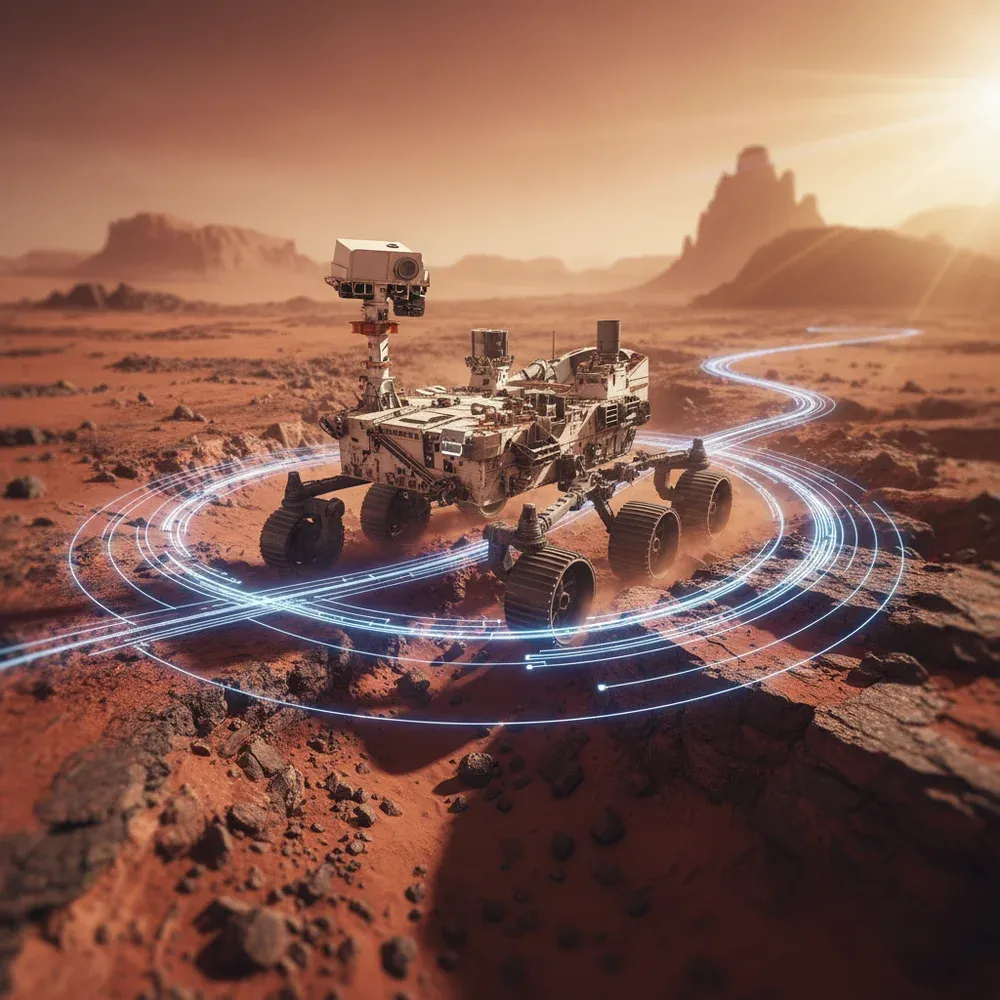
Introduction: The Mars Rover and AI's Pioneering Role in Exploration
Imagine a situation where decisions must be made in seconds, but commands take minutes, or even up to twenty minutes, to reach their destination. This is the reality of Mars exploration. Due to the vast distance between Earth and Mars, traditional remote control of the rover is impossible. Every rock, every crater could be a fatal obstacle if the rover had to wait hours for a simple "turn left" command.
This is where artificial intelligence comes in. Onboard Perseverance is a sophisticated AI system capable of processing data from stereo cameras and sensors in real-time, creating a three-dimensional map of its surroundings, and independently planning the safest and most efficient route. This isn't just following a pre-programmed path; it's genuine, autonomous decision-making in an unknown and dangerous world.
This mission clearly demonstrates that custom automation can solve problems that previously seemed unsolvable. Instead of sending a general-purpose robot to Mars, NASA engineers built an intelligent system specifically tailored to this environment and task. This approach—a deep understanding of the problem and the creation of a bespoke solution—is what can bring revolutionary changes to industries on Earth as well.
Fact: The Communication Delay
The communication delay between Earth and Mars varies from 5 to 20 minutes, depending on the relative positions of the planets. This makes autonomous navigation essential, as the rover cannot wait that long for instructions in a hazardous situation.
What is Custom Automation? Beyond Off-the-Shelf Solutions
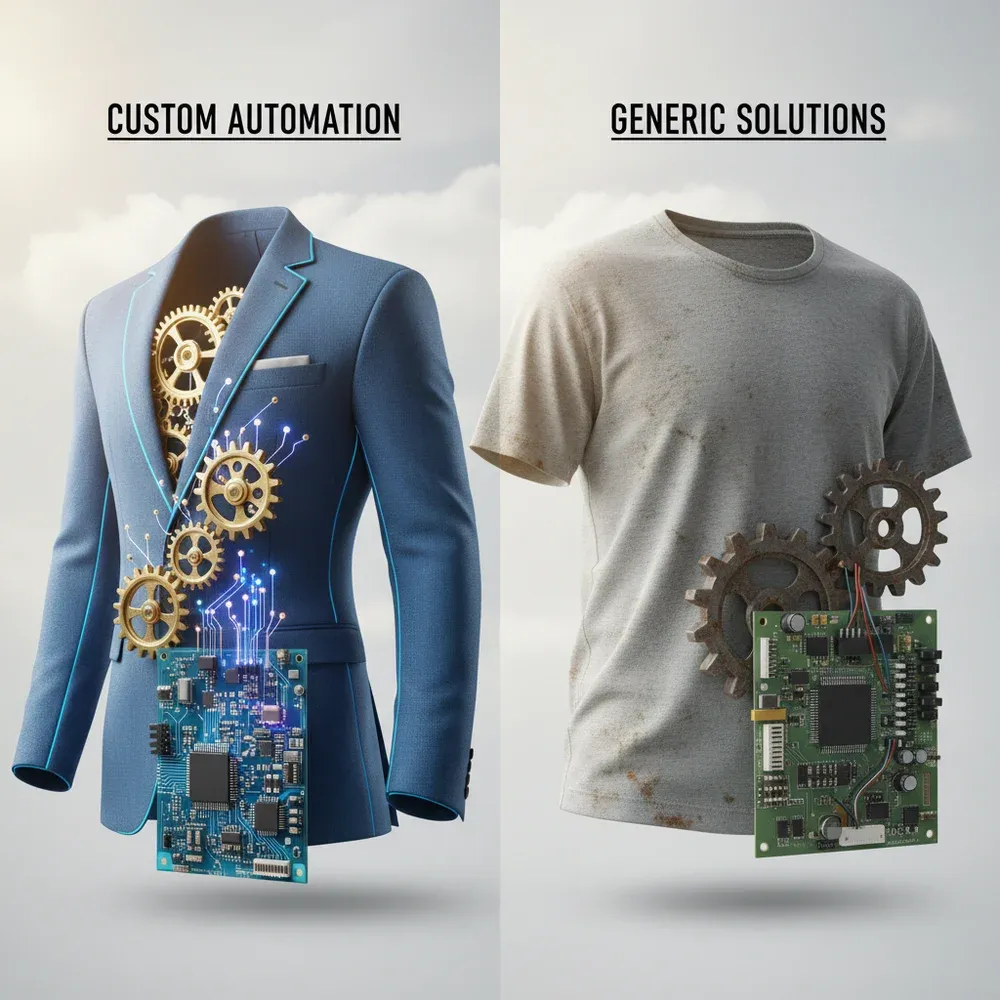
When we talk about automation, many people think of "off-the-shelf" software, one-size-fits-all CRM systems, or simple robotic arms performing repetitive tasks. While these have their place, custom automation represents a completely different level. It's not a "one-size-fits-all" solution but a tailor-made suit for a company's specific, often unique, challenges.
The essence of custom automation is that the development process begins with a thorough analysis of the problem. Instead of trying to force existing processes into the constraints of standard software, the goal is to create a system that perfectly fits the company's existing ecosystem, workflows, and strategic objectives. This could be a unique algorithm, a specialized data processing pipeline, or a complex intelligent agent communicating with multiple systems.
Definition: Custom Automation
Custom automation is the design and implementation of tailored systems, software, and workflows that meet the specific, unique operational needs of an organization. Unlike general-purpose, off-the-shelf solutions, custom automation adapts to existing processes and infrastructure, ensuring maximum efficiency and optimal performance.
Advantages of Custom Solutions: Flexibility, Optimization, and Competitive Edge
Standard solutions impose limits. Your company is forced to operate according to the software's logic, not the other way around. In contrast, custom automation offers several tangible benefits:
- Maximum Efficiency: Since the system is precisely tailored to your processes, there are no unnecessary features, complicated settings, or workflow-disrupting compromises. Every element serves to maximize performance and minimize human intervention.
- Seamless Integration: Custom solutions can communicate with a company's existing, even legacy, systems, bridging the gap between different technological islands. This allows for a unified data flow and centralized control.
- Scalability and Future-Proofing: A custom system can grow with your business. You don't have to wait for a software vendor's development schedule; the system can be expanded when and how market demands or internal strategies require.
- Sustainable Competitive Advantage: While your competitors use the same off-the-shelf software, you have an optimized, internal system that cannot be easily copied. This operational excellence provides a tangible advantage in the market. Implementing specialized AI agents delivers precisely this kind of differentiating capability.
AI-Powered Custom Automation: The Next Generation
If custom automation is a tailor-made suit, then AI-powered custom automation is a suit that adapts to its wearer's movements, predicts environmental changes, and can even repair itself. The inclusion of artificial intelligence transforms traditional automation into intelligent, adaptive systems.
This next-generation automation no longer operates solely on predefined rules. It can learn from past data, recognize patterns, and make decisions it was not explicitly programmed for. The Mars rover doesn't operate based on a giant "if-then" instruction set. Instead, it uses a model that understands the laws of physics, terrain conditions, and mission objectives to make the best decision at any given moment.
Key capabilities of AI-powered custom automation include:
- Predictive Analytics: The system can predict future events, such as machine failure, changes in market demand, or fraud attempts, enabling proactive intervention.
- Autonomous Decision-Making: In complex situations where human decision-making is too slow or involves too many variables, AI can make optimal decisions independently. This is the capability that allows the rover to avoid an unexpected rock.
- Adaptive Learning: The system continuously learns from its own operations and environmental feedback. It becomes more efficient over time without needing constant reprogramming.
- Natural Language Processing (NLP): It can understand and process human language, whether from emails, documents, or customer feedback, turning unstructured data into actionable knowledge.
Case Study: NASA's Perseverance Rover and Claude AI on Mars
The Perseverance mission is the perfect case study for the success of AI-powered custom automation. The challenges were extreme: the Martian surface is filled with sharp rocks, deep sand, and steep slopes. Due to the communication delay, the ground control center cannot provide real-time assistance. The rover had to manage entirely on its own.
NASA developed a custom system with an advanced AI model at its core. This model is responsible for the "AutoNav" (autonomous navigation) function. The process works as follows: the rover stops, takes multiple images of its surroundings with its stereo cameras, and the AI generates a 3D terrain map from them. On this map, it identifies hazardous areas (e.g., too steep a slope, sharp rocks) and safe zones.
The AI then simulates dozens of possible routes on the map, evaluating each for safety, distance, and energy consumption. Finally, it selects the optimal path for the next few meters, travels it, and the process begins again. This step-by-step, constantly replanning approach ensures that the rover proceeds as safely and efficiently as possible, even in a completely unknown landscape. This type of complex, multi-agent workflow—where image processing, mapping, and decision-making modules work in perfect harmony—represents the pinnacle of the technology.
Case Study Highlight
Perseverance's AutoNav system has enabled the rover to autonomously cover distances of hundreds of meters without human intervention, five times faster than previous, less autonomous rovers. This has dramatically increased the mission's scientific return by allowing it to explore more territory in less time.
Discover how you can bring the technology proven on Mars to your business! Learn more about our custom automation solutions!
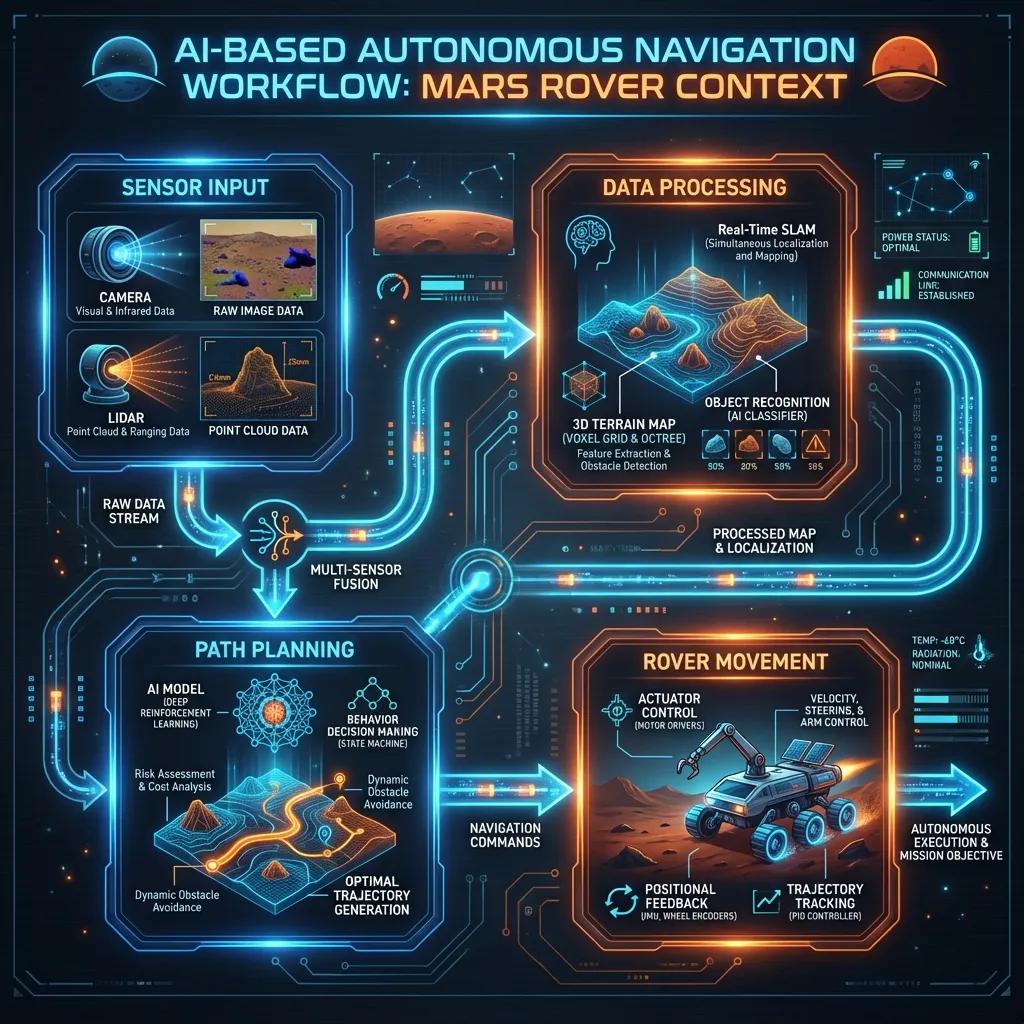
Technical Deep Dive: How Autonomous Pathfinding Works
Autonomous navigation may seem like magic, but it's actually the result of precise engineering and software development. Let's break down the process into its key technical components, using the rover as an example.
Sensor Data Processing and Real-time Mapping
Everything starts with data. The rover doesn't "see" in the traditional sense. Instead, it gathers information from a multitude of sensors (sensor fusion):
- Stereo Navigation Cameras (Navcams): From the images of two cameras placed apart, it calculates depth information, similar to our brain. This process, stereo vision, allows for the creation of a point cloud, where each point represents a real coordinate in space.
- LIDAR (Light Detection and Ranging): Although Perseverance primarily uses cameras, many autonomous systems (e.g., self-driving cars) also use LIDAR. It emits laser pulses and measures the reflection time, creating an extremely accurate 3D map.
- Inertial Measurement Unit (IMU): Consisting of gyroscopes and accelerometers, it continuously measures the rover's tilt, rotation, and movement. This helps to refine its position and stabilize the map.
This raw data is processed in real-time by a data processing AI agent and converted into a "cost map." This is a grid where each cell is assigned a value based on how "costly" (i.e., dangerous or difficult) it is to traverse. A smooth, flat area gets a low cost, while a steep slope full of sharp rocks gets a very high one.
AI Models and Decision-Making Algorithms in Navigation
Once the cost map is ready, the planning begins. This is not a single monolithic AI, but a combination of algorithms and models. The most commonly used pathfinding algorithms are graph search algorithms, such as:
- A* (A-star) algorithm: This is one of the most popular pathfinding algorithms. It considers the path already traveled and uses a heuristic to estimate the remaining distance to the goal. On the cost map, this means it searches for a path that minimizes the total cost of the cells while heading towards the destination.
- Dijkstra's algorithm: Similar to A*, but it doesn't use a heuristic, so it's guaranteed to find the shortest path, but can be slower.
In modern systems, these are often supplemented with deep learning models, such as Convolutional Neural Networks (CNNs), which can directly identify hazardous terrain types (e.g., deep sand) from raw camera images and incorporate this information into the cost map.
Feedback, Self-Learning, and Adaptation
A truly intelligent system doesn't stop at planning. Every move the rover makes is monitored. Wheel slippage, for example, is important feedback. If the AI plans to cross an area it thinks is easy, but the sensors indicate the wheels are spinning in loose soil, the system immediately updates its map. It marks that area as "higher cost" and will avoid it in the future.
This continuous feedback loop makes the system robust and adaptive. The most advanced systems also use Reinforcement Learning, where the AI receives a "reward" for successfully completed paths and a "penalty" for errors (e.g., getting stuck). Over time, the model learns the best navigation strategies without every single rule being pre-programmed. This capability is what makes such data processing agents indispensable in critical systems.
Applications of Custom Automation in the Business Sector
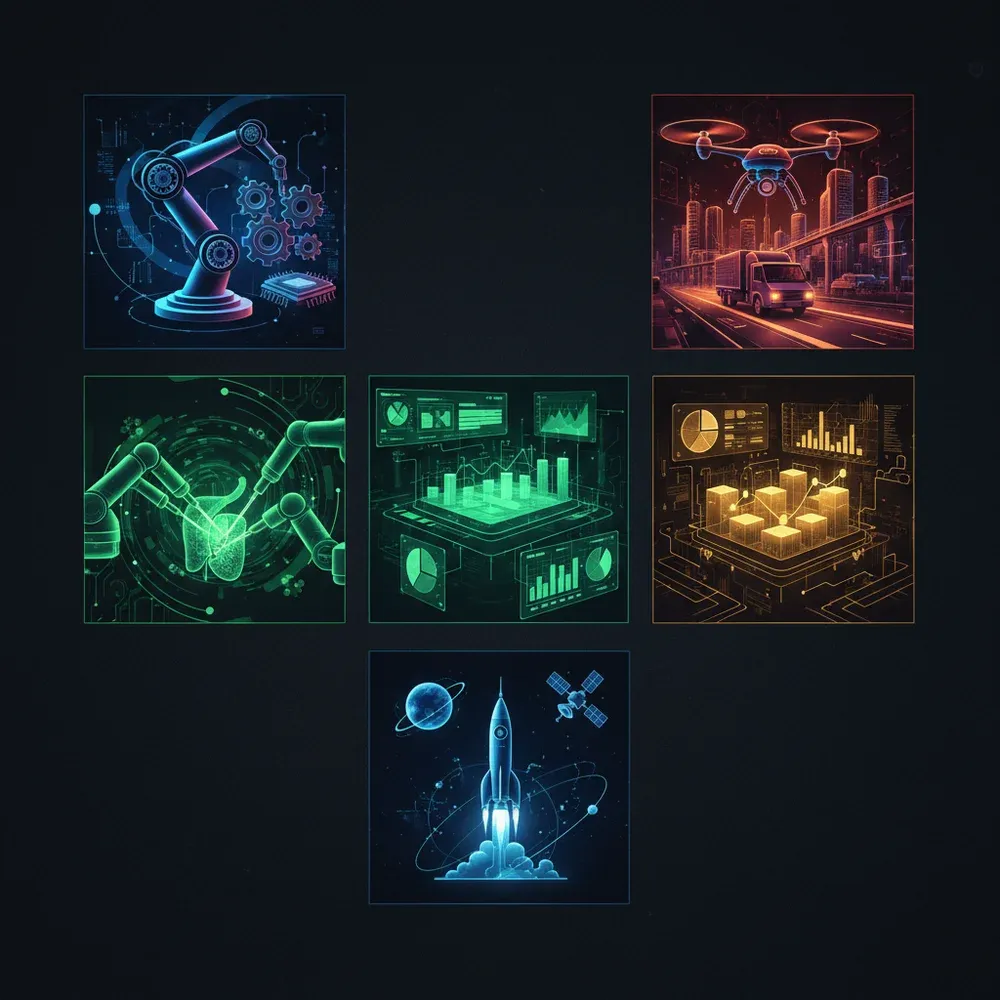
The principles and technologies proven on Mars are directly transferable to the business environment on Earth. Wherever complexity, variability, and high stakes are the norm, custom, AI-powered automation can create real value.
- Manufacturing and Industry 4.0: A custom visual inspection system using AI can detect microscopic defects on parts moving on a production line that the human eye would never notice. Another system can predict machine failures with predictive maintenance, minimizing costly downtime.
- Logistics and Supply Chain: Autonomous warehouse robots that navigate like the rover optimize picking and packing processes. Custom AI agents analyze traffic, weather, and demand data in real-time to dynamically reroute shipments, reducing fuel costs and delivery times.
- Healthcare: AI-powered diagnostic tools that analyze medical imaging (MRI, CT scans) and assist doctors in the early detection of tumors or other anomalies. Robotic surgery systems with custom software that help surgeons perform high-precision procedures.
- Financial Sector: Tailored fraud detection systems that analyze transaction patterns in real-time and identify suspicious activities with much higher accuracy than traditional rule-based systems. Algorithmic trading platforms that make independent investment decisions based on complex market data analysis.
- Agriculture: Autonomous drones and tractors that navigate fields based on sensor data, similar to the rover, and apply nutrients or pesticides only where they are actually needed, optimizing crop yields and minimizing environmental impact.
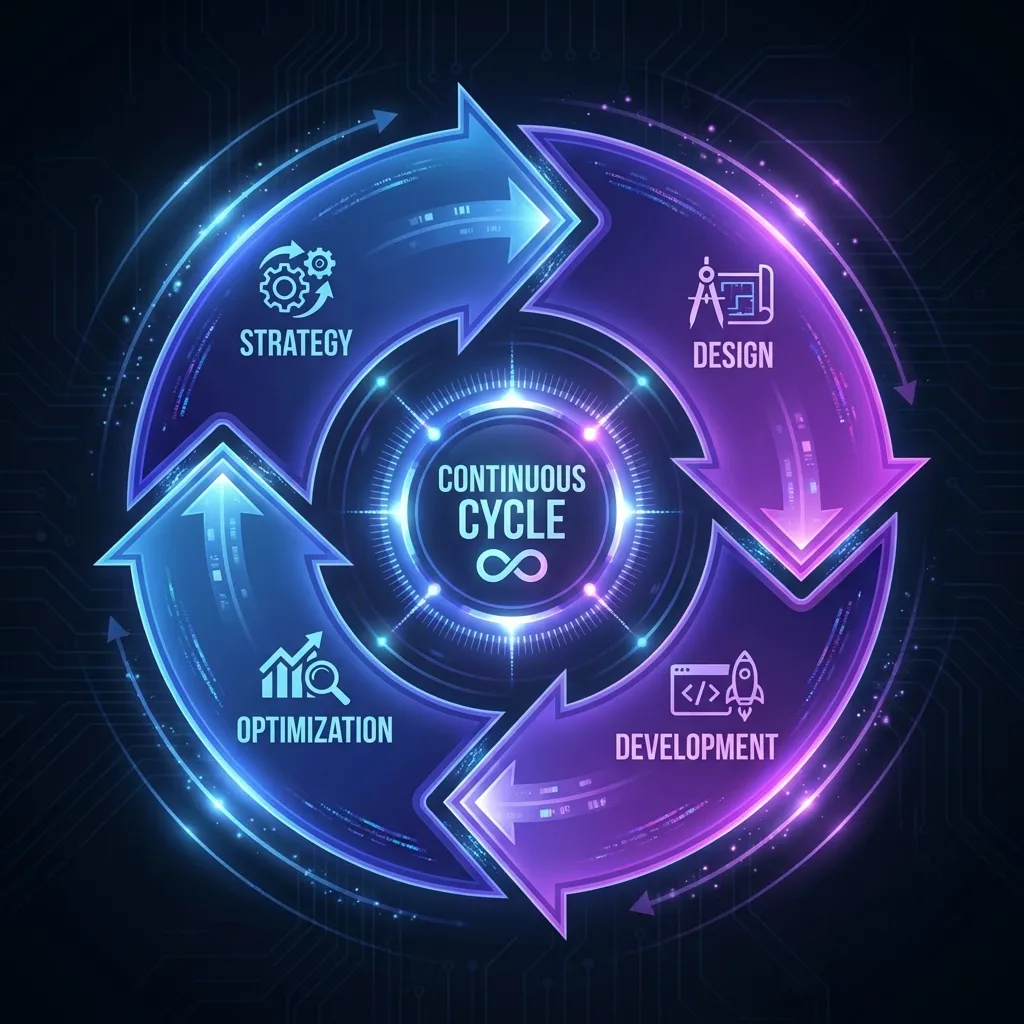
Designing and Implementing a Custom Automation Solution: Step-by-Step
A successful custom automation project is not just about coding. It's a strategic process that requires thorough planning, close collaboration, and iterative development. Below, we outline the most important steps.
The Process Steps
Implementing a robust custom automation solution is a well-structured, phased process that ensures the final result truly meets business expectations and generates a measurable ROI.
1. Needs Assessment and Strategic Planning
Everything begins with "why." In this phase, the goal is to precisely define the business problem to be solved. Which process is the slowest, most expensive, or most prone to error? What key performance indicators (KPIs) do we want to improve? We hold workshops with key stakeholders to understand current workflows, pain points, and long-term business goals. This is where we determine if the project is viable and what its expected return on investment (ROI) will be.
2. System Design and Prototyping
Once the goals are clear, engineers and developers design the system's architecture. What technologies will we use? How will the system communicate with existing software? What data will be needed, and where will it come from? In this phase, a clickable prototype or a Proof of Concept (PoC) is often created to demonstrate the system's basic functionality, allowing for early feedback and concept validation before committing significant development resources.
3. Development, Testing, and Deployment
This is the most intensive phase of the project. Using agile development methodologies (e.g., Scrum), the project is broken down into smaller, manageable parts called sprints. At the end of each sprint, a working piece of software is delivered, which can be immediately tested and evaluated. Testing is critical: from unit tests and integration tests to user acceptance testing (UAT), the system's reliability and bug-free operation must be ensured at every level. Deployment can be gradual (e.g., to one department) or a "big bang" launch, depending on the project's nature.
4. Continuous Optimization and Maintenance
Custom automation is not a one-time project but a living, evolving system. Even after deployment, its performance must be continuously monitored, user feedback collected, and algorithms fine-tuned. The business environment changes, new needs may arise, so the system must be able to adapt. Maintenance includes bug fixes, security updates, and optimizing system performance.
Ready for the next step? Contact us for a free consultation and let's design your company's automation strategy together!
Challenges and Considerations in Custom Automation Implementation
While custom automation offers huge advantages, it's important to be aware of the potential challenges. A successful project requires proactive planning and risk management.
- Data Quality and Availability: AI-based systems are only as good as their training data. If the data is incomplete, inaccurate, or biased, the system will also make poor decisions. Data collection, cleaning, and preparation are often the most time-consuming parts of the project.
- Integration with Legacy Systems: Connecting to old, poorly documented legacy systems can be a major technical challenge. The lack of APIs or compatibility issues can complicate seamless integration.
- Scalability: A system that works well in the prototype phase must be able to handle real-world production loads, which can be orders of magnitude larger. The architecture must be designed with scalability in mind from the outset.
- Cybersecurity: An automated system that controls a company's critical processes can become an attractive target. Security aspects must be considered in every phase of design, from access control to data encryption. The security of the web interfaces used to manage the system is particularly important.
- Change Management: Automation affects human workflows. It's important to involve employees early, provide training, and address their fears. The success of the new system largely depends on whether users accept and can use it effectively.
- Need for Expertise: Developing custom AI solutions requires highly skilled professionals in data science, software development, and DevOps. Assembling the right team or engaging an experienced partner is crucial.
The Strategic Value and Future of Custom Automation
Custom automation is not just an operational efficiency tool; it's a strategic investment in the company's future. Beyond short-term cost savings and productivity gains, it creates a sustainable competitive advantage in the long run.
The future is increasingly moving towards hyperautomation, where companies automate not just individual tasks but entire, complex business processes using a combination of AI, machine learning, and robotic process automation (RPA). In this environment, the winners will be the companies that can build the most customized, intelligent, and adaptive systems. The automation agents of the future, like Google's SIMA, will enable even closer human-machine collaboration.
Trend Forecast
In the future, custom automation will increasingly shift towards symbiotic human-AI collaboration. AI will not replace humans but will augment their capabilities. AI will perform data-intensive analysis and repetitive tasks, while humans focus on strategic decision-making, creativity, and empathy. The key to success will be the seamless integration of these two worlds.
What the Data and Experts Say (E-E-A-T)
The value of custom automation is not just theoretical. Data from leading research firms and experts also supports its importance:
- A McKinsey study suggests that automation could boost global productivity by 0.8 to 1.4 percent annually, representing enormous economic value. They highlight that the greatest potential lies in processes requiring data analysis and complex decision-making—the domain of custom AI solutions.
- Gartner has identified "hyperautomation" as one of the top strategic technology trends, stating that organizations must move beyond automating simple tasks and build integrated, intelligent systems.
- Official publications from the NASA Jet Propulsion Laboratory (JPL) detail the development and success of the AutoNav system, proving that autonomous, AI-driven systems are the solution even in critical environments requiring the highest reliability.
These sources unanimously show that AI-powered, custom automation is not a passing fad but a fundamental driver of digital transformation.
Conclusion: Is Your Business Ready for the Future?
The Perseverance rover on Mars has proven that the impossible becomes possible when the right technology is applied to the right problem. Custom, AI-powered automation gives companies precisely this capability: the opportunity to solve their own unique "Mars mission," whether it's optimizing manufacturing processes, revolutionizing the logistics network, or creating an entirely new, data-driven business model.
The era of off-the-shelf solutions is coming to an end. The future belongs to companies that are not afraid to invest in tailored, intelligent systems that provide a real, inimitable competitive advantage. The question is no longer whether to embark on custom automation, but whether you can afford to be left behind.
Don't wait for your competitors to make the first move! Take the first step towards a future-proof operation. Request a personalized strategic consultation today!
Frequently Asked Questions
How much does it cost to develop a custom automation solution, and what factors influence its price?
The price is highly variable, ranging from a few thousand euros to projects costing hundreds of thousands. The cost is primarily influenced by the system's complexity, the number of integrations (how many existing systems it needs to communicate with), the complexity of the AI model (a simpler predictive model vs. a complex real-time decision-making system), the extent of data preparation required, and the development time. A custom quote is always prepared after a thorough needs assessment.
Which industries benefit most from AI-powered custom automation, and why?
While almost every industry can benefit, it is most effective in sectors where large volumes of data are generated, processes are complex, and decisions are high-stakes. These include manufacturing (quality control, predictive maintenance), logistics (route optimization, warehouse automation), finance (fraud detection, algorithmic trading), and healthcare (diagnostics, drug discovery). In these areas, AI can uncover patterns and correlations that would remain invisible to human analysts.
What technologies are typically used in AI-powered custom automation systems?
The technology stack is diverse. On the backend, Python (with libraries like TensorFlow, PyTorch, scikit-learn), Java, or Go are common. Databases can be SQL (e.g., PostgreSQL) or NoSQL (e.g., MongoDB). The frontend, or user interface, is often built with modern JavaScript frameworks (React, Vue.js). The systems are typically run on cloud platforms (AWS, Azure, Google Cloud), using containerization technologies (Docker, Kubernetes) for scalability and reliability.
What challenges should be anticipated when implementing a complex custom automation project?
The most common challenges are: 1) Poor quality or incomplete data, which makes training AI models difficult. 2) Clunky integration with existing, legacy systems. 3) Inadequate definition of project goals and expectations in the initial phase. 4) Internal resistance within the organization and a lack of change management. 5) A lack of the right expertise in the development team. These risks can be minimized with thorough planning and the involvement of an experienced partner.
How long does it take to design and implement a tailored automation system?
The timeline depends on the project's complexity. A simpler system automating a well-defined process can be completed in as little as 2-3 months. A more complex solution integrating multiple systems and using advanced AI models could take 6-12 months or more. Applying agile methodologies helps to deliver working, usable parts early in the development process, so value creation doesn't only begin at the end of the project.
How can the scalability and future-proofing of custom automation solutions be ensured?
The key to future-proofing is a modern software architecture. A microservices-based design allows individual components of the system to be developed, scaled, and replaced independently. Using cloud-native technologies (e.g., Kubernetes) ensures flexible scalability based on load. Clean, well-documented code and an API-first approach are also important, as they facilitate future integrations and expansions.
What ethical considerations arise when applying AI-powered custom automation?
Several important ethical questions arise. One of the most critical is data bias. If an AI is trained on historical data that reflects human prejudices, the system may also make discriminatory decisions (e.g., in credit scoring). Another is transparency and explainability (Explainable AI, XAI): can we understand and explain why the AI made a particular decision? This is especially important in critical areas like healthcare or law. Finally, data privacy (GDPR) and the responsible handling of user data are also fundamental ethical and legal requirements.
Készen állsz a saját weboldaladra?
Ingyenes konzultáció során átbeszéljük, hogyan segíthetünk vállalkozásodnak növekedni egy modern, gyors és konverzióoptimalizált weboldallal. 14 nap alatt kész, 0 Ft induló költséggel.