
Introduction: The Limits of Enterprise Automation and the Promise of AI
The historic 2026 announcement by Cloudflare and OpenAI, marking the deep integration of GPT-5.4 and Cloudflare Agent Cloud, signifies the dawn of a new era in enterprise IT. Modern enterprises face unprecedented complexity during their digital transformation journeys.
Traditional automation solutions, such as static rule-based RPA (Robotic Process Automation) or rigid integration platforms (iPaaS), have reached their performance limits. These systems excel at predictive, repetitive tasks but fail the moment input data becomes unstructured or the environment changes dynamically.
For enterprise decision-makers and CTOs, the biggest challenges are the lack of scalability, continuous maintenance requirements, and silos between systems. When a process changes, traditional automation requires reprogramming, consuming weeks of development cycles and significant costs.
The Problem: The Bottleneck of Centralized AI
When using traditional, cloud-based AI APIs, network latency and data privacy risks hinder the automation of real-time, critical enterprise processes. Transporting data across continents is not only slow but also poses a severe compliance risk for large enterprises in light of GDPR and other regulations.
The promise of AI has always been to bridge this gap by introducing cognitive flexibility. However, early AI implementations often appeared merely as "smart chatbots" incapable of deep integration into the enterprise's core databases and transactional systems. The true breakthrough is custom automation, which goes beyond superficial solutions.
What is Custom Automation in the AI Era? Beyond Off-the-Shelf Solutions
Custom automation in the AI era is a fundamental paradigm shift. It's not about embedding an AI assistant into existing software, but about building the entire business logic around autonomous, intelligent agents. These systems can understand context, weigh options, and execute complex tasks independently.
Unlike off-the-shelf software, which forces the enterprise to adapt its processes to the software's limitations, custom AI automation molds exactly to the enterprise's unique DNA. It communicates with custom API endpoints, understands internal jargon, and acts according to the company's specific security protocols.
This approach enables the full digitization of processes previously thought unautomatable—such as analyzing complex contracts, dynamic supply chain optimization, or multi-channel, context-dependent customer communication. The result is an agile infrastructure that scales and evolves with the enterprise.
The Rise of AI Agents: The Backbone of Enterprise Custom Automation
The engine of modern custom automation is powered by what is known as Agentic AI. But what exactly are these AI agents? Essentially, they are software entities built on advanced Large Language Models (LLMs) endowed with the ability to act. They don't just generate text; they execute code, query databases, and interact with external systems.
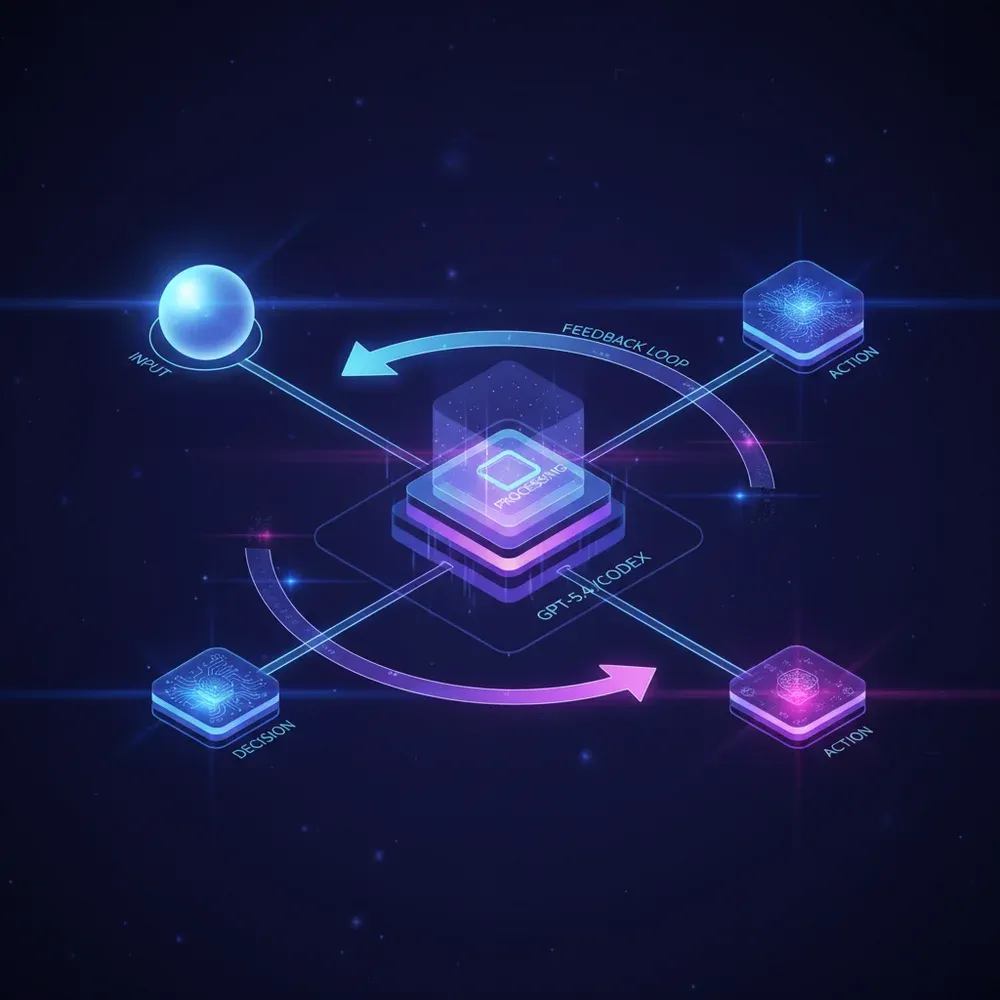
A typical AI agent's workflow consists of four main stages: Perception, Planning, Action, and Feedback. When an agent receives a complex task, it first breaks it down into smaller, executable steps. This "Chain of Thought" or "ReAct" (Reasoning and Acting) methodology enables fault-tolerant and logical problem-solving.
Key Concept: Autonomous AI Agents (Agentic AI)
AI agents are software entities capable of perceiving their environment, making autonomous decisions to achieve specified goals, and using tools (APIs, databases, code execution) to perform tasks without human intervention. They can learn from mistakes and dynamically reconstruct their plans.
In an enterprise environment, these agents fulfill specialized roles. There are data processing AI agents responsible for cleaning and analyzing gigantic datasets, and customer relationship agents managing front-end communication. These agents can also communicate with each other (Multi-Agent Systems), forming an intelligent, self-operating enterprise ecosystem.
Challenges of Traditional AI Deployments: Latency, Security, and Scalability
Although the concept of AI agents is revolutionary, running them on traditional cloud architectures faces serious technical hurdles. The first and most critical problem is latency. When a European company calls an AI model running in an American server center, the network round-trip time combined with the model's processing time can cause delays of several seconds.
This latency is unacceptable for real-time applications, such as algorithmic trading, production line quality control, or even an advanced AI phone customer service, where the dynamics of natural human conversation demand a response time of 200-300 milliseconds.
The second major challenge is data security and compliance. During traditional API calls, companies send sensitive internal data (PII - Personally Identifiable Information) to third-party servers. In industries strictly regulated by GDPR and HIPAA (finance, healthcare), this often presents an insurmountable barrier to using public LLMs.
Finally, the issue of scalability and costs arises. Centralized APIs often have strict rate limits, and token-based pricing can result in astronomical costs for high-volume data processing. Enterprises need an infrastructure that can handle thousands of agent interactions per second at predictable costs.
The Turning Point: GPT-5.4, Codex, and Cloudflare Agent Cloud Integration
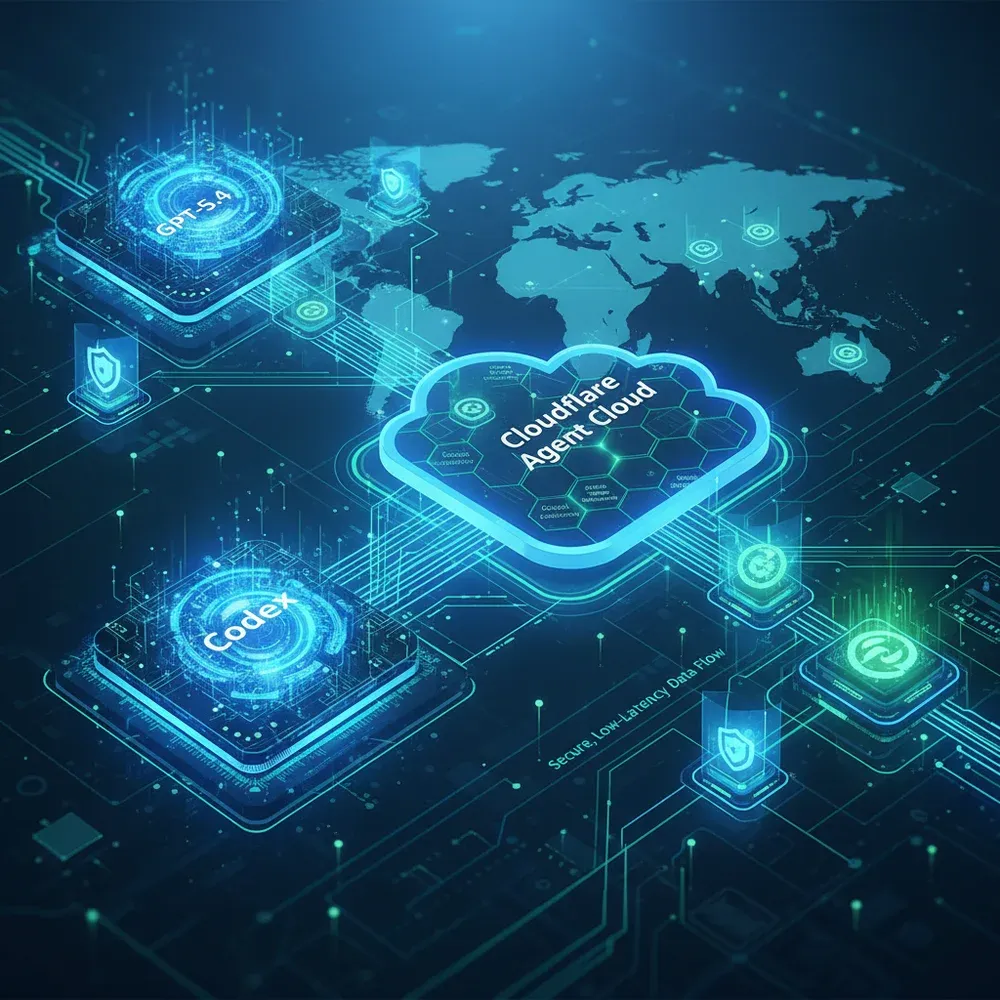
The tech industry's major breakthrough in 2026 directly addresses these challenges. The native integration of OpenAI's GPT-5.4 model and the enhanced Codex code generation engine into the Cloudflare Agent Cloud infrastructure has created a new paradigm: Edge AI.
GPT-5.4 is not just a larger language model; it is architecturally optimized for real-time tool-calling and complex logical reasoning. It can understand the most intricate enterprise database schemas and, with the help of Codex, instantly generate executable SQL queries or Python scripts with flawless syntax.
Technology Spotlight: GPT-5.4 and Cloudflare Edge
The GPT-5.4 model introduces native, ultra-fast inference, while Cloudflare Agent Cloud allows these models to run on the server closest to the user, across an edge network in over 300 cities worldwide. Combined with V8 Isolate technology, this results in 0ms cold starts and local data processing.
The brilliance of Cloudflare Agent Cloud lies in pushing compute capacity and AI models to the edge of the network. Instead of data traveling to a central server, the AI agent runs in the data center closest to the user or data source. Cloudflare Vectorize (vector database) and Durable Objects (state management) technologies ensure that agents have long-term memory and remain in context despite global distribution.
Key Benefits of Edge-Powered Custom AI Automation for Enterprises
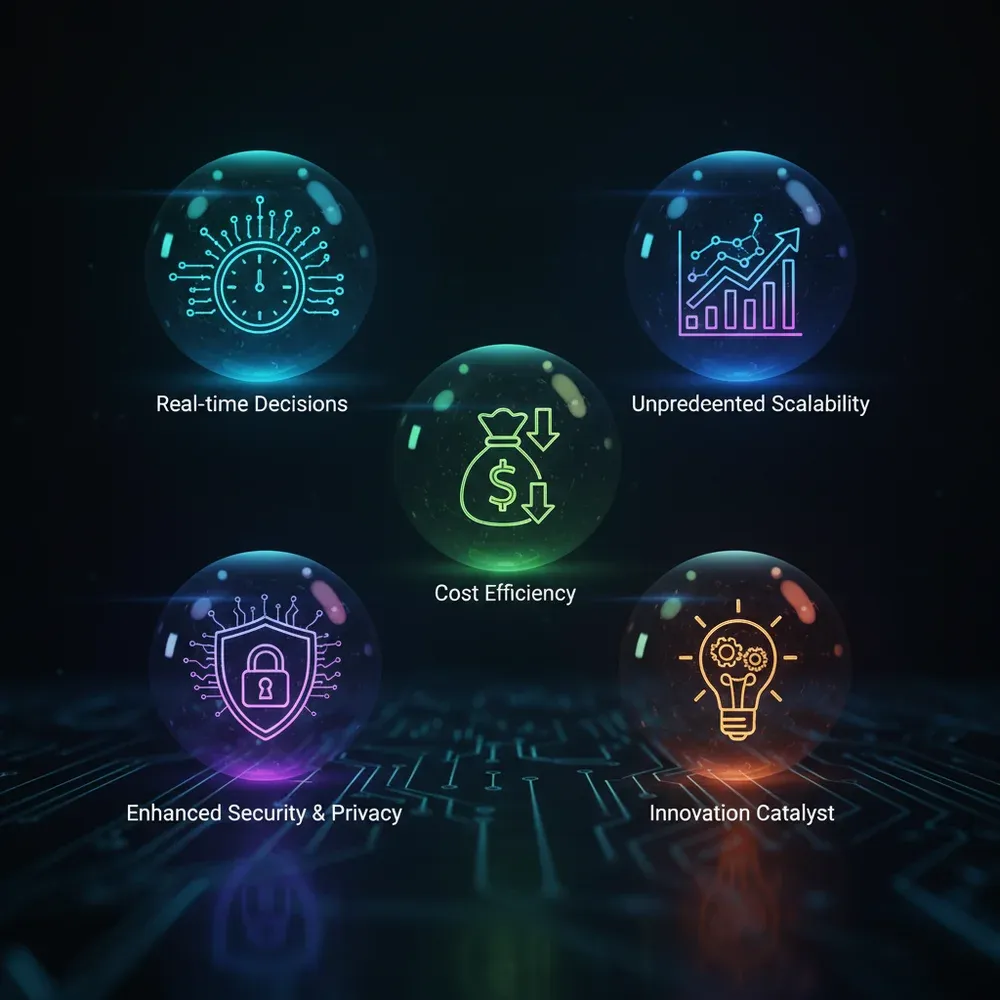
This technological fusion provides tangible, drastic business benefits for enterprises. The most important is the capability for real-time decision-making. Because AI agents react in milliseconds at the edge, companies can instantly intervene in critical processes, whether it's thwarting a cyberattack or preventing e-commerce cart abandonment.
The second massive advantage is unparalleled data privacy. Since processing occurs locally, within the borders of a specific region (e.g., the EU), sensitive data never leaves the secure zone. Cloudflare's Zero Trust network architecture guarantees that AI agents only access databases they are strictly authorized for, minimizing internal and external threats.
In terms of cost-efficiency, edge-based execution eliminates the need for expensive, continuously running cloud servers (idle compute). Companies only pay for the actual compute time used, which, thanks to serverless architectures, is a fraction of maintaining traditional infrastructure. Furthermore, scaling is automatic: in the event of a sudden traffic spike, the system can instantly instantiate thousands of agents without performance degradation.
Ready for Real-Time Automation?
Discover how edge-powered AI can transform your enterprise processes. Our experts will help you design and implement solutions to put you ahead of the market.
Request a Free ConsultationReal-World Business Cases: Where Custom AI Automation Transforms Enterprises?
Beyond theory, edge-based custom AI automation is already reshaping industries today. In manufacturing, predictive maintenance has reached a new level. IoT sensor data no longer needs to be sent to the cloud; AI agents running on the edge at the factory floor analyze vibration and temperature data in real-time. If an anomaly is detected, GPT-5.4 instantly generates a maintenance work order and shuts down the machine before a critical failure.
In retail and e-commerce, dynamic pricing has become hyper-personalized. AI agents analyze competitors' prices, inventory levels, current demand, and the user's browsing history in milliseconds to display the most optimal price and custom offer at the exact moment of adding to the cart.
In the financial sector, fraud detection benefits the most. During credit card transaction authorization, edge AI agents can instantly cross-reference the transaction with global threat databases and user behavioral patterns, preventing fraud without slowing down the payment process. Meanwhile, AI Chatbot (RAG) systems provide instant, hallucination-free support to agents based on internal knowledge bases.
Building Your Own Custom AI Automation Solution: A Strategic Framework
Implementing such a robust system requires careful strategic planning. Unlike off-the-shelf software, this is not a "plug-and-play" solution, but a rebuilding of the enterprise's digital nervous system. The first step is always a comprehensive process audit. Bottlenecks where manual data processing or a lack of integration between systems causes the greatest loss must be identified.
The second step is designing the architecture and workflows of the AI agents. This determines what data the agents can access, what tools (APIs) they can use, and what the success criteria are. It is crucial to incorporate "Human-in-the-Loop" (HITL) mechanisms at critical decision points to maintain human oversight.
Framework: The 4 Steps of Implementation
- Audit and Discovery: Mapping current bottlenecks, data flows, and ROI-positive automation points.
- Architecture Design: Defining agent roles, RAG (Retrieval-Augmented Generation) databases, and Zero Trust permissions.
- Development and Integration: Native, secure integration of Cloudflare Workers, Vectorize, and the GPT-5.4 API with existing ERP/CRM systems.
- Deployment and Monitoring: Phased (Canary) rollout, real-time telemetry analysis, and continuous fine-tuning of models based on feedback.
Selecting the right tools is critical. The combination of Cloudflare Agent Cloud and GPT-5.4 is currently the most advanced technology stack for this purpose. During development, AiSolve's expert team ensures seamless integration, guaranteeing that the new AI infrastructure fits perfectly into the enterprise's existing IT ecosystem, whether it's SAP, Salesforce, or custom-built systems.
Maximize the Value of Your Data!
Don't let unstructured data slow down your growth. Discover our autonomous data processing solutions.
View Data Processing AI AgentsSecurity, Privacy, and Governance: The Pillars of Enterprise AI Automation
Historically, the biggest barrier to enterprise-grade AI adoption has been security. "Shadow AI" (when employees use unauthorized AI tools with company data) poses a serious vulnerability. Custom, edge-based automation, on the other hand, gives full control to CTOs. Cloudflare's infrastructure allows for data geofencing, meaning data physically cannot leave the designated geographic region.
Applying the Zero Trust security model is essential. Every single AI agent has its own strictly limited identity. They can only access database tables and API endpoints that are absolutely necessary to perform their tasks (Principle of Least Privilege). All their actions are cryptographically signed and logged (audit log), ensuring full transparency during compliance audits.
AI Governance is not just a technological issue, but an ethical one as well. Enterprises must ensure that the decisions made by AI agents are free from bias and comply with corporate guidelines. GPT-5.4's built-in guardrails and Cloudflare WAF (Web Application Firewall) together form an impenetrable line of defense against prompt injection and other AI-specific attacks.

The Future: Beyond Generic Solutions to Real-time, Adaptive Enterprise AI
As technology matures, custom automation will no longer be just a competitive advantage, but a condition for survival. The enterprise of the future is a hyper-responsive entity where AI agents not only execute tasks but proactively identify new business opportunities and optimization points. The infrastructure becomes invisible, and the focus shifts to pure business value creation.
The integration of Cloudflare and GPT-5.4 is just the beginning. In the future, multimodal agents (which interpret text, image, audio, and video simultaneously) will integrate even more deeply into the physical world. Augmented Reality (AR) and IoT devices will communicate directly with AI running on the edge, creating a real-time feedback loop that was previously unimaginable.
Companies that invest in this architectural shift today are building a scalable, future-proof foundation that will be able to integrate tomorrow's technological breakthroughs (such as quantum computing-supported AI models) without having to rewrite the entire system.
Conclusion: Move Beyond Experimentation – Real-time AI Automation in Your Enterprise
The time for experimentation is over. The technologies of GPT-5.4 and Cloudflare Agent Cloud prove that AI is ready to handle even the most critical enterprise-grade tasks. Custom automation is not a future promise, but the smartest IT investment today, drastically reducing operational costs, minimizing error margins, and freeing up human workforce for creative, strategic tasks.
The question is no longer whether your enterprise will adopt autonomous AI agents, but when, and on what infrastructure. Instead of the compromises of off-the-shelf software, choose uncompromising performance, security, and scalability.
Transform Your Enterprise with AiSolve's Expertise!
Don't miss out on the technological revolution. Contact us today, and let's build your enterprise's custom, edge-based AI automation system together.
Let's Start Working TogetherFrequently Asked Questions (FAQ)
How does custom AI automation differ from standard AI solutions?
Standard AI solutions (e.g., ChatGPT, out-of-the-box SaaS AI features) are general-purpose, requiring the enterprise to adapt its processes to the software. Custom AI Automation, on the other hand, is built on the enterprise's unique databases, internal APIs, and specific business logic. It utilizes autonomous agents that execute complex, multi-step workflows in the background without human intervention, ensuring maximum security and customizability.
How does Cloudflare Agent Cloud enhance AI agent performance and security?
Cloudflare Agent Cloud shifts computational tasks to the edge of the network, to the data center closest to the user or data source. This drastically reduces network latency, even down to 0ms. From a security standpoint, the built-in Zero Trust architecture and geofencing ensure that sensitive data does not leave the designated region, and agents only access strictly authorized resources.
What are the typical costs associated with implementing a custom AI automation solution?
Costs can be divided into two parts: a one-time development/integration fee, which depends on the system's complexity (usually including design, API integration, and testing), and the ongoing, pay-as-you-go infrastructure cost. Thanks to Cloudflare's serverless model, operational costs are extremely low, as you only pay for actual compute time and tokens used, eliminating the cost of expensive, continuously running servers.
Can custom AI agents integrate with existing enterprise systems?
Yes, this is one of the biggest advantages of custom automation. AI agents can seamlessly integrate with any modern ERP (e.g., SAP), CRM (e.g., Salesforce), or custom-built internal system via standard REST APIs, GraphQL, or even custom webhooks. Through GPT-5.4's advanced tool-calling capabilities, agents can autonomously generate structured API calls and interpret the received responses.
What data privacy and security measures are in place for AI agents deployed at the edge?
Agents running on the edge employ the highest level of enterprise security protocols. Data travels with end-to-end encryption (E2EE), access is managed by Cloudflare Access (Zero Trust), and data processing occurs in-memory, within isolated V8 environments. Additionally, the systems comply with strict GDPR and HIPAA requirements, as data residency can be precisely controlled.
How long does it take to deploy and implement a custom AI automation solution?
Deployment time depends on the project's complexity. Implementing a simpler data processing agent focusing on a specific task can take as little as 2-4 weeks using AiSolve's agile methodology (Proof of Concept phase). A full enterprise rollout of complex, multi-agent architectures affecting multiple systems typically takes 2-3 months, which includes rigorous security audits and staff training.
What role do GPT-5.4 and Codex play in enterprise custom automation?
GPT-5.4 acts as the "brain" of the AI agents, providing advanced logical reasoning, context understanding, and decision-making. Codex (the code-generation optimized version of GPT models) allows agents to write and execute syntactically flawless code (e.g., Python, SQL) in real-time to solve tasks. Together, they form an autonomous system that not only understands the problem but instantly generates and executes a software solution for it.
Készen állsz a saját weboldaladra?
Ingyenes konzultáció során átbeszéljük, hogyan segíthetünk vállalkozásodnak növekedni egy modern, gyors és konverzióoptimalizált weboldallal. 14 nap alatt kész, 0 Ft induló költséggel.