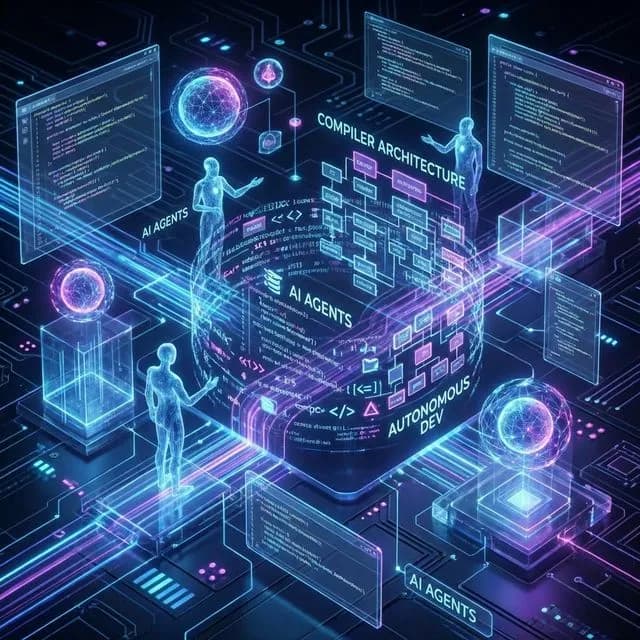

The era of the solitary coder typing strictly structured syntax is fading. Boris Cherny, the creator of Claude Code at Anthropic, recently unveiled a development methodology that fundamentally shifts the paradigm of software engineering and professional website creation. By leveraging parallel AI instances and automated verification loops, developers are transitioning from mere code writers to architects of intelligent systems. This article explores how these advanced workflows are redefining productivity in 2026.
| Area | Key Insight |
|---|---|
| Parallel Execution | Running multiple AI instances simultaneously to explore diverse solutions for a single problem. |
| Verification | Shifting human effort from writing code to rigorously verifying AI-generated outputs against requirements. |
| Automation | Automating the prompting process itself to reduce human error and increase consistency. |
| Knowledge Sharing | Implementing systems where AI agents "learn" from past sessions to compound efficiency over time. |
The Evolution: From Syntax to Semantics
The traditional model of software development has always been linear: a developer thinks of logic, translates it into syntax, and debugs the result. However, as Boris Cherny's recent insights reveal, the modern workflow is becoming increasingly asynchronous and agentic. In this new era, the developer's role is elevating to that of a technical product manager who oversees a team of AI agents. This shift is particularly visible in complex projects like professional website creation, where the integration of frontend, backend, and database layers can now be orchestrated simultaneously.
Cherny emphasizes that the bottleneck is no longer typing speed or syntax knowledge, but the ability to clearly define the problem and verify the solution. By "automating prompting," developers can create repeatable templates that guide AI agents through complex tasks without manual intervention at every step. This moves the focus from "how to build" to "what to build," allowing for rapid prototyping and iteration that was previously impossible.
Strategic Insight: Treat your AI coding tools not as fancy typewriters, but as junior developers. Give them context, constraints, and success criteria, then review their work.
Parallel Intelligence: The Multi-Agent Approach
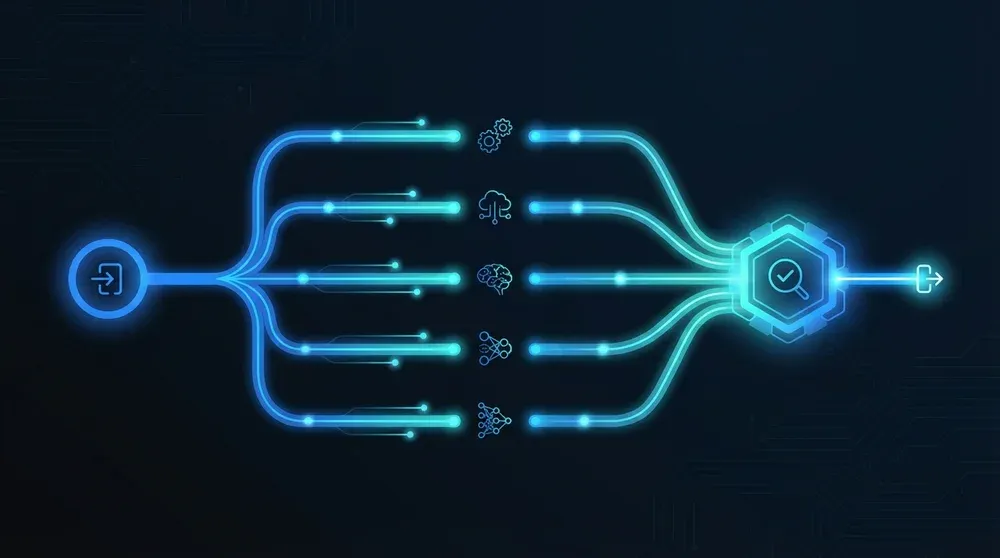
One of the most groundbreaking practices highlighted in the Claude Code workflow is the use of parallel instances. Instead of asking a single AI model to solve a problem and hoping for the best, advanced developers now spin up multiple instances of an agent to tackle the same task from different angles. This "swarm intelligence" approach drastically reduces the time spent on debugging, as it allows the human orchestrator to compare different architectural decisions instantly.
For example, in high-end professional website creation, one agent might be tasked with optimizing the database schema, while another simultaneously refactors the React components for better performance. A third agent could be generating integration tests. This parallelism ensures that no single part of the development process blocks the others, creating a fluid and highly efficient workflow.
The Benefit of Divergent Thinking
Running parallel instances isn't just about speed; it's about quality. Different AI instances, even with the same prompt, can produce slightly different solutions due to the non-deterministic nature of LLMs. By reviewing three or four variations of a function or a UI component, a senior developer can cherry-pick the most elegant solution or combine the best parts of each. This practice essentially automates the "code review" and "brainstorming" phases, compressing days of work into minutes.
Automated Verification Loops
With the ability to generate vast amounts of code comes the responsibility to verify it. Cherny points out that "rigorously verifying results" is the cornerstone of trust in AI-assisted development. Without automated testing, the speed gain from AI generation is lost to manual debugging. Modern professional website creation workflows now include "verifier agents"—specialized AI prompts designed solely to critique and test the code generated by "builder agents."
These verification loops run unit tests, check for security vulnerabilities, and ensure accessibility compliance before the code is ever presented to the human developer. This creates a safety net that allows developers to move fast without breaking things. It transforms the definition of "done" from "I wrote the code" to "The system has verified the code passes all constraints."
| Workflow Component | Traditional Development | Agentic Development |
|---|---|---|
| Code Generation | Manual typing, snippets | Parallel AI generation |
| Testing | Post-implementation (often delayed) | Continuous, automated verification |
| Iteration Speed | Hours/Days per feature | Minutes per feature iteration |
Compounding Knowledge & Productivity
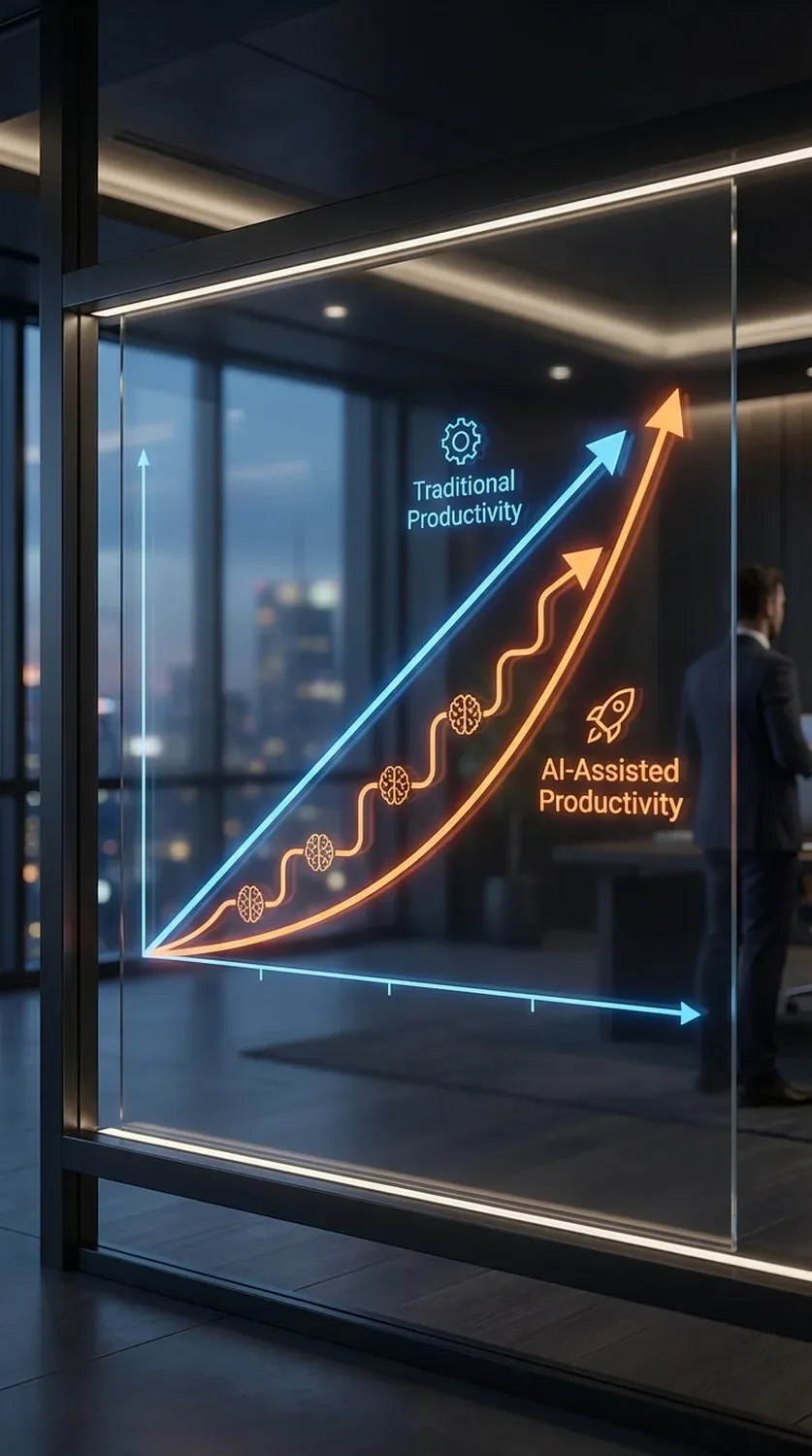
One of the most profound insights from the InfoQ report is the concept of "compounding productivity." In traditional development, knowledge is often siloed or lost when a developer switches context. In an AI-augmented workflow, "sharing learnings" becomes a system feature. Developers can feed the successful patterns and debugged solutions back into the context of the AI, effectively "training" the session to be smarter next time.
This means that the AI agent assisting you on Monday is less capable than the one assisting you on Friday, because the Friday agent has access to the accumulated context of the week's decisions. For agencies focused on custom automation solutions, this memory effect is invaluable. It ensures that specific coding standards, architectural preferences, and business logic nuances are consistently applied across all projects.
Impact on Professional Website Creation
How does this translate specifically to professional website creation? The implications are massive. Web development often involves repetitive boilerplate tasks—setting up routing, configuring state management, or styling components. An agentic workflow automates 90% of this foundational work, allowing developers to focus on unique user experiences and complex business logic.
Furthermore, the integration of RAG AI chatbot interfaces directly into the IDE allows developers to query their own documentation or codebase instantly. This reduces context switching (Alt-Tab fatigue) and keeps the developer in a state of flow. In the context of professional website creation, this means faster delivery times, higher code quality, and the ability to offer more sophisticated features to clients within the same budget.
Pro Tip: Use AI to generate the documentation for your website projects simultaneously with the code. This ensures your "professional website creation" process is always well-documented for future maintenance.
Risks and Governance in AI Coding
Despite the enthusiasm, implementing these workflows is not without risk. The primary concern in professional website creation using AI is the potential for "hallucinations"—plausible-looking but functionally incorrect code. Boris Cherny's emphasis on "rigorous verification" cannot be overstated. An unverified AI agent might introduce subtle security flaws, such as SQL injection vulnerabilities or inefficient data fetching loops, that a human might overlook in a quick glance.
Enterprise governance models must evolve to address this. Code reviews become even more critical, but they change in nature. Reviewers are no longer looking for syntax errors (the AI handles that); they are looking for architectural soundness and business logic alignment. Additionally, data privacy remains a concern when using cloud-based LLMs for data processing tasks within the development pipeline.

Strategic Implementation for Enterprise
For CTOs and technical leads, the path forward involves a measured adoption of these tools. Start by identifying the "toil"—the repetitive, low-value tasks in your professional website creation pipeline. Implement AI agents to handle test generation, documentation, and basic refactoring first.
- Standardize Prompts: Create a library of "golden prompts" that your team uses for common tasks to ensure consistent output.
- Enforce Verification: Mandate that every AI-generated pull request includes an automated test plan generated by a separate agent.
- Continuous Learning: Schedule weekly "AI retrospective" sessions where developers share which prompts worked and which didn't, compounding the team's collective intelligence.
Implementation Advice: Don't try to replace your developers. Equip them with AI agents to amplify their output. The goal of professional website creation is value delivery, not just code volume.
Ready to modernize your digital presence with enterprise-grade development standards? Our team leverages the latest agentic workflows for superior results.
Start Your Web ProjectFrequently Asked Questions
What is "agentic workflow" in software development?
An agentic workflow involves using AI "agents"—autonomous software programs driven by Large Language Models (LLMs)—to perform specific development tasks such as writing code, testing, or debugging. Unlike simple autocomplete, these agents can plan, execute multiple steps, and verify their own work, effectively acting as digital teammates.
How does this improve professional website creation?
AI agents significantly accelerate professional website creation by automating repetitive coding tasks, generating boilerplate code, and creating unit tests. This allows developers to focus on high-level architecture, user experience, and business logic, resulting in faster project delivery and more robust, feature-rich websites.
What are the risks of using AI for coding?
The main risks include "hallucinations" (code that looks correct but is flawed), potential security vulnerabilities if not properly vetted, and intellectual property concerns. Boris Cherny emphasizes that rigorous automated verification and human-in-the-loop review processes are essential to mitigate these risks effectively.
Does this replace human developers?
No, it shifts their role. Instead of typing every line of code, developers become "AI orchestrators" or architects. They define the problems, evaluate the AI's solutions, and ensure the final product meets quality standards. The human element remains crucial for creativity, complex problem-solving, and ethical judgment.
Recommended
- Advanced RAG Chatbot Solutions
- Enterprise Workflow Automation
- Original Article: Inside the Development Workflow of Claude Code's Creator
[Article generated by AiSolve AI Content System]
Készen állsz a saját weboldaladra?
Ingyenes konzultáció során átbeszéljük, hogyan segíthetünk vállalkozásodnak növekedni egy modern, gyors és konverzióoptimalizált weboldallal. 14 nap alatt kész, 0 Ft induló költséggel.