Introduction: The Explosion of AI Compute Demand and Terrestrial Limitations
Blue Origin's fresh plan to launch 51,600 AI data center satellites is not just another aerospace announcement, but a desperate and simultaneously brilliant response to the greatest technological crisis of our time. The evolution of artificial intelligence is accelerating at an unprecedented pace, and in parallel, we are witnessing an explosive growth in the demand for AI compute power worldwide.
Training and running the latest large language models (LLMs) and complex data processing AI agents consume staggering amounts of energy. Terrestrial data centers are increasingly struggling to keep up with this insatiable demand, resulting in severe infrastructural bottlenecks.
Physical constraints in power supply, massive cooling requirements, and the lack of suitable geographical locations are all hindering further scaling. Maintaining a traditional, gigawatt-scale data center today is no longer just an economic challenge, but a very serious ecological one for the planet.
This is the critical point where Blue Origin's revolutionary announcement enters the picture, aiming to bridge terrestrial limitations with the infinite possibilities of space. The plan for a network of 51,600 satellites is not science fiction, but a very real, multi-billion-dollar engineering response to the computing needs of the future.
The Concept of Space-Based AI Data Processing Infrastructure
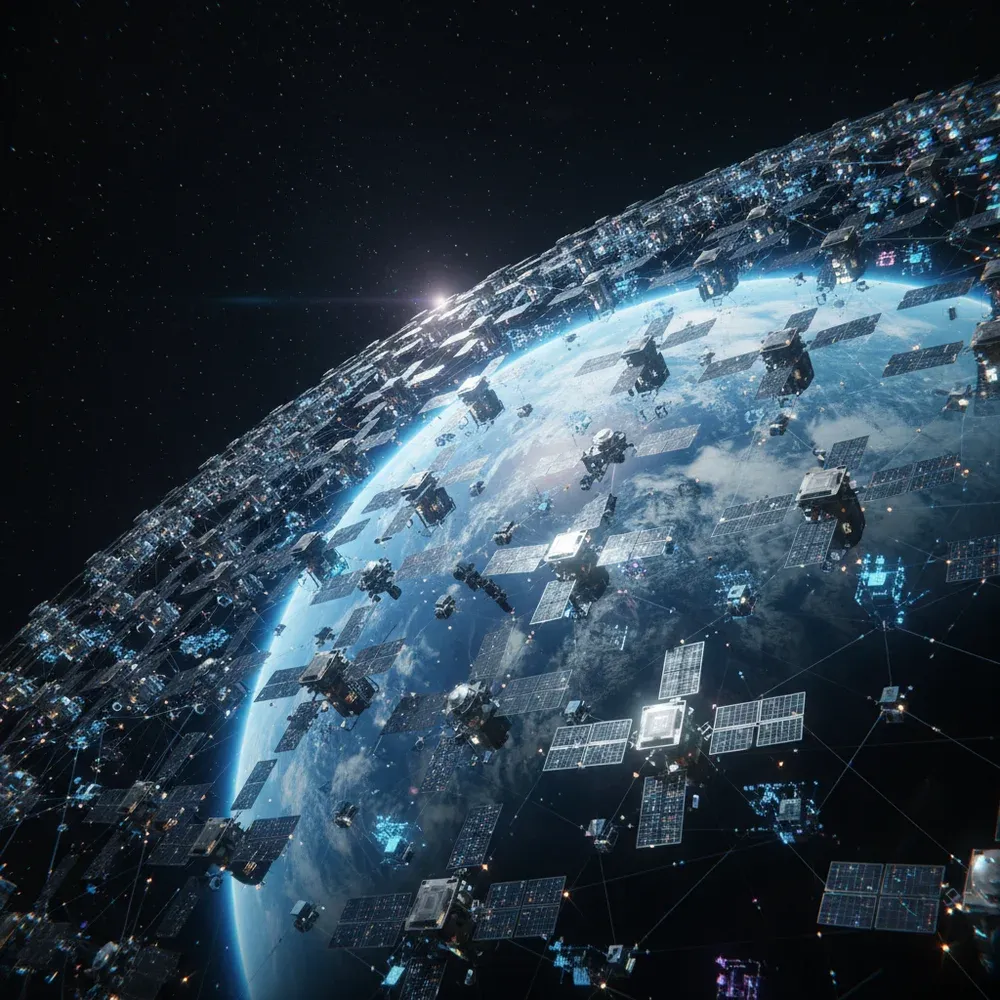
The concept of space-based AI data processing infrastructure represents a radical paradigm shift in modern computing. At its core, it involves placing massive server farms not on the Earth's surface, but in low Earth orbit (LEO), operating as a distributed network.
These specialized satellites do more than just transmit data like traditional telecommunications equipment; they perform complex calculations themselves. Running machine learning models, instantly analyzing data, and making decisions all happen in orbital space.
This approach offers several theoretical and practical advantages over terrestrial systems. In space, solar energy is continuously available and free from atmospheric interference, which could solve the burning issue of power supply in the long term.
Furthermore, the cold vacuum of space provides a natural and highly efficient cooling medium for continuously overheating, high-performance processors. Such an AI infrastructure could serve the most complex enterprise requests globally in a fraction of a second.
Definition: Orbital AI Data Center
A satellite network orbiting in low Earth orbit whose primary function is not communication, but performing high-performance artificial intelligence computations (training and inference) in space, utilizing unlimited solar energy and natural cooling.
Blue Origin's Audacious Vision: 51,600 AI Data Center Satellites in Orbit
Blue Origin's recently submitted official documents to the Federal Communications Commission (FCC) outline a future that fundamentally rewrites global technological power dynamics. The company plans to build a constellation of an astonishing size, consisting of 51,600 satellites.
This network does not target traditional internet service like SpaceX's Starlink system, but is specifically optimized for AI data processing and sharing compute capacity. The goal is to create a cohesive, global supercomputer in space.
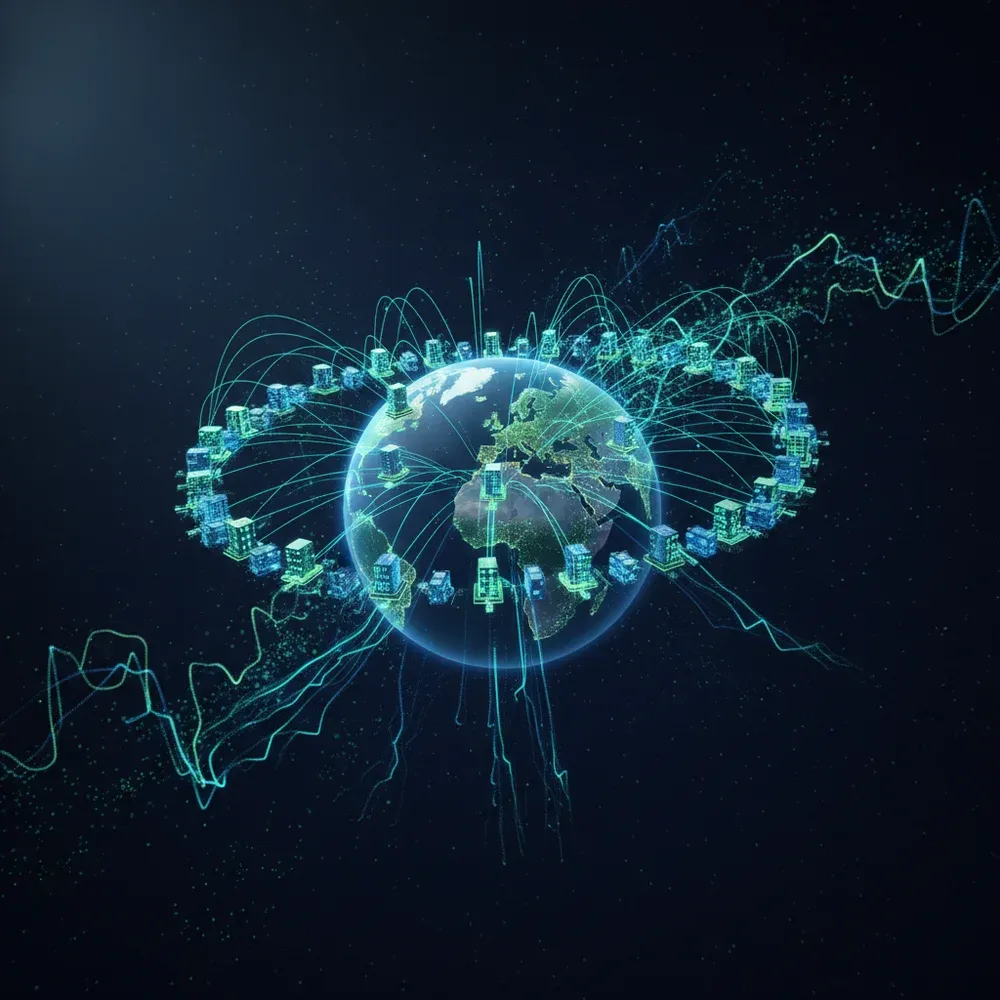
Each individual satellite would function as an independent, high-performance server, interconnected by ultra-fast laser communication channels. This gigantic network would be capable of instantly executing distributed computing tasks, drastically reducing the load on terrestrial networks.
According to Blue Origin's plan, this infrastructure would serve the custom automation solutions of the future and the ever-growing AI needs of global enterprises. The scale of the project clearly shows that the new frontier of the space race is the ownership of data and compute capacity.
The Advantages of Space: Power, Cooling, and Ultra-Low Latency
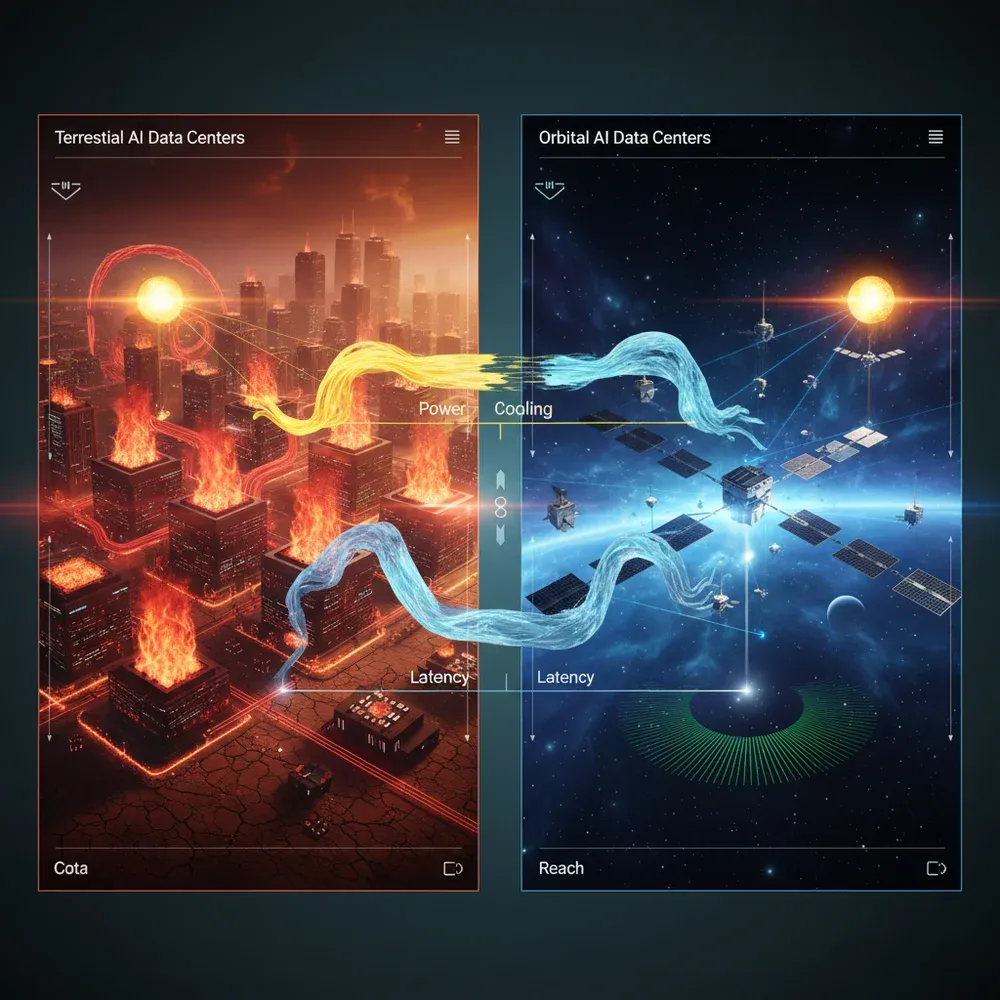
The greatest appeal of orbital data centers lies in their physical environment and the unique characteristics of Earth's orbit. A significant portion of the operating costs and energy consumption of terrestrial server farms goes toward continuous cooling.
In space, where temperatures in the shaded areas drop near absolute zero, passive cooling solutions can be far more efficient. Although heat dissipation in a vacuum presents an engineering challenge, processors can be kept at optimal temperatures with appropriate radiators.
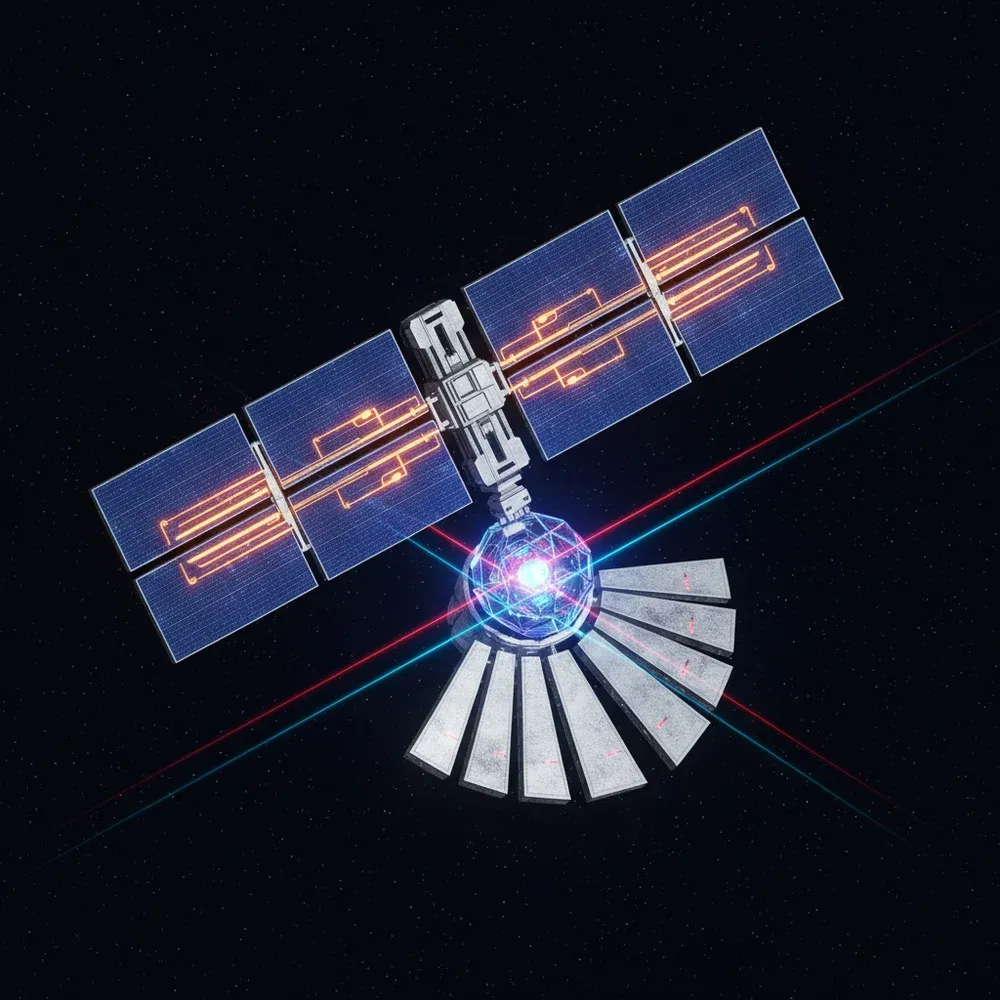
When it comes to power supply, space also offers unbeatable advantages. Due to the lack of atmosphere, the efficiency of solar panels is much higher, and depending on their orbit, satellites can bathe in sunlight almost continuously, without interruption.
This continuous irradiation provides unlimited, clean energy for highly compute-intensive AI models. There is no need for fossil fuels or complex terrestrial grids, drastically reducing the ecological footprint.
The Ultra-Low Latency Revolution
The third, and perhaps most important critical factor is network latency. A global satellite network connected by laser links can transmit data at the speed of light in a vacuum.
This physical fact means that data transmission is faster than through terrestrial fiber-optic cables, where the speed of light slows down due to the medium. This ultra-low latency is essential for real-time data processing AI agents.
Key Benefits
- Unlimited Solar Energy: 24/7 available, high-efficiency clean energy without atmospheric interference.
- Natural Cooling: The cold environment of space drastically reduces the energy needs of active cooling systems.
- Light-Speed Data Transfer: Laser communication propagating in a vacuum surpasses the speed of terrestrial fiber optics.
- Global Coverage: Instant compute capacity anywhere on the planet, without geographical limitations.
How It Works in Practice: Data Transmission and Processing in an Orbital Network
The foundation of the system's operation is state-of-the-art, advanced optical (laser) communication. When a terrestrial user or an enterprise AI phone customer service system initiates a complex request, the process begins immediately.
The data is beamed up by a ground station or a direct terminal to the nearest passing satellite. The inter-satellite laser links allow for the transfer of multiple terabits of data per second in space.
Thanks to this, the task reaches the least loaded orbital server in the network in an instant, optimizing global resource allocation. The processing takes place on the satellite itself, using AI accelerator chips specifically designed for space conditions.
Once the calculation is complete, the result returns to Earth via the same lightning-fast laser network. This decentralized, distributed architecture is extremely robust: if one satellite fails, the network immediately reroutes traffic.
Accelerating the Next Generation of Autonomous AI Agents
The gigantic infrastructure planned by Blue Origin could provide the biggest boost to the development of autonomous AI agents. These systems are no longer just passive responders, but proactive, independent decision-making entities.
A global, low-latency network allows them to process massive amounts of sensor data from anywhere in the world in real-time. This is a fundamental requirement for true autonomy.
Imagine a global logistics network managed by AI agents that receive unlimited compute power from space. They can instantly react to sudden weather changes, traffic obstacles, or global supply chain disruptions.
This revolutionary technology will be indispensable for the seamless and reliable operation of future smart cities, safe autonomous vehicles, and complex enterprise AI chatbot (RAG) systems worldwide.
Ready for the Autonomous Systems of the Future?
AI agents are already transforming business processes today. Don't wait for the future, automate your business with cutting-edge technologies!
Discover Our Custom Automation Solutions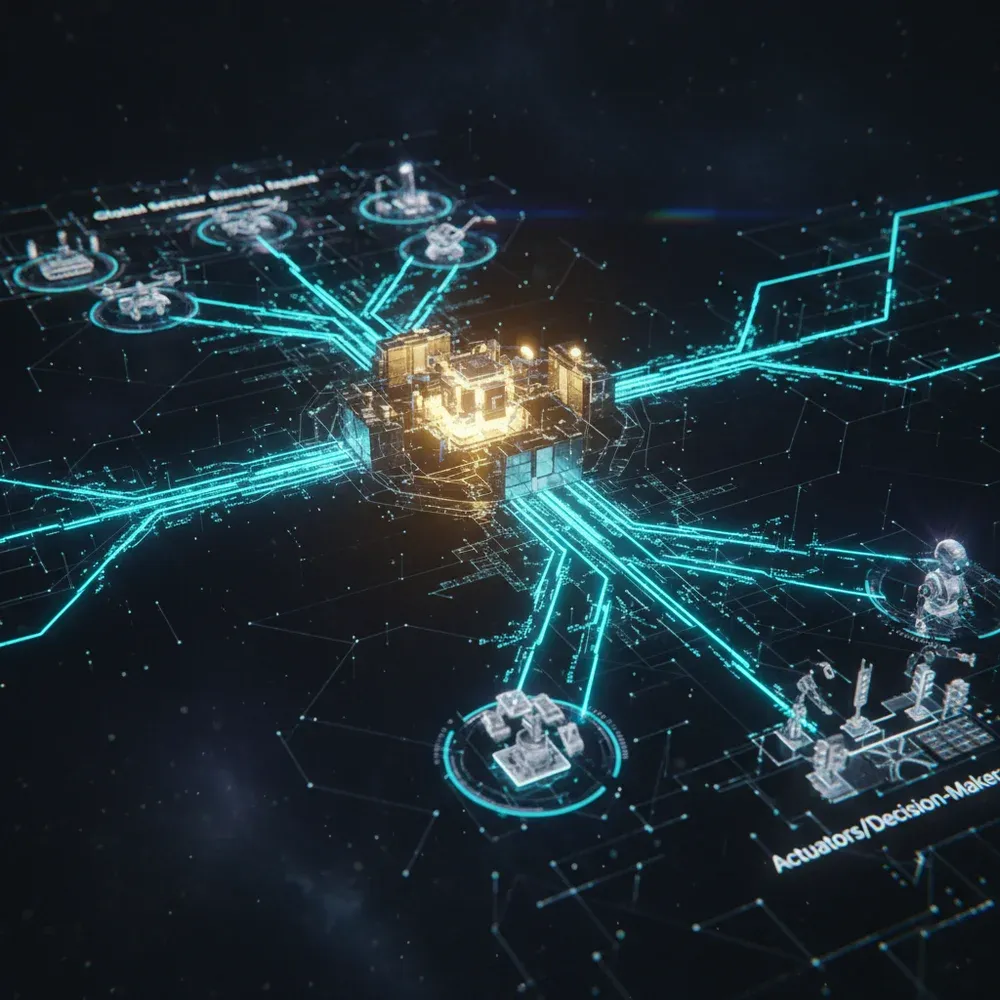
Challenges and Solutions: Technological, Regulatory, and Economic Hurdles
While Blue Origin's vision is fascinating, its implementation faces massive, unprecedented hurdles. The first and most obvious challenge is the astronomical cost of the project. Building and launching 51,600 satellites requires staggering resources.
Even with Blue Origin's own reusable New Glenn rockets, deploying a constellation of this size is a decade-long task. Furthermore, the hardware must withstand destructive cosmic radiation and extreme temperature fluctuations, making manufacturing more expensive.
The worsening issue of space debris is also a serious and valid concern. A network of this size significantly increases the risk of collisions in the already crowded low Earth orbit.
Managing this will require strict international regulations, continuous tracking, and advanced, AI-driven autonomous evasive maneuvers. Cybersecurity is another critical point: applying the most advanced quantum encryption methods is inevitable to protect the network.
Terrestrial vs. Space-Based Infrastructure: A Complementary or Competing Future?
Experts rightly question whether orbital data centers will eventually completely replace traditional terrestrial server farms. The most likely and reasonable scenario is the emergence of a hybrid, complementary model.
Terrestrial data centers will remain for the long-term, cost-effective storage of massive data volumes (big data) and the execution of less time-sensitive, asynchronous tasks. Their role in archiving will remain unquestionable.
In contrast, space-based infrastructure will specialize in premium, ultra-low latency, real-time AI computations. This synergy allows companies to optimize their costs and performance.
During modern website development, for example, static content could be served from terrestrial CDN servers, while complex, AI-driven personalization algorithms could be powered from space, ensuring maximum user experience.
What the Data Says: Blue Origin's Filing and Industry Implications
Blue Origin's massive FCC filing is not an isolated event but the culmination of a much broader, global industry trend. As the hardware war between Cerebras and Nvidia demonstrates, the battle for compute capacity is becoming increasingly fierce.
The announcement sharply highlights that the biggest tech giants have already recognized the physical and energy limitations of terrestrial infrastructure. Future growth simply cannot be sustained within current terrestrial frameworks.
This bold move puts immense pressure on competitors, especially SpaceX and major cloud providers (AWS, Google Cloud, Azure), to expand their presence into space as well, lest they fall behind in the new gold rush.
Industry analysts and futurists predict that the market for space-based data processing will grow exponentially over the next decade, fundamentally realigning global technological and geopolitical power dynamics.
Industry Insight
Blue Origin's 51,600-satellite plan is not just a challenger to SpaceX's Starlink, but an open declaration of war against traditional cloud providers. The company that first manages to provide stable, low-latency AI compute capacity from space will gain an insurmountable competitive advantage in the technological revolution of the next decade.
Future Outlook: A New Era for AI Data Processing
Blue Origin's 51,600-satellite plan marks the dawn of an entirely new era in the history of humanity and computing. If this stunning engineering vision becomes a reality, AI compute capacity will become globally and instantly accessible.
This unprecedented democratization means that access to the most advanced AI models will no longer be tied to geographical location or local infrastructure. Anyone, anywhere in the world, can benefit from the technology.
This could trigger an unprecedented wave of innovation in all fields of science, from medicine and drug discovery to climate modeling and the optimization of the global financial sector.
The era of data processing AI agents can truly flourish in space. An intelligent network enveloping our planet will not only accelerate technological progress but also help manage Earth's resources more sustainably.
Is Your Organization Ready for the AI Future? Contact Us!
The evolution of AI technology waits for no one, and to maintain a competitive edge, companies must prepare for the infrastructure of the future today. Procrastination now means losing market share.
Whether it's integrating advanced data processing AI agents, intelligent enterprise automation, or building a future-proof, AI-driven web presence, our expert team is ready to help.
Don't miss out on the impending AI revolution! Contact us today, and let's explore the possibilities together. With a personalized strategy, we help optimize your company's processes using the latest artificial intelligence solutions.
Start Your AI Transformation Today!
Request a free consultation with our experts and find out how you can increase your company's efficiency with the latest AI technologies.
Request a ConsultationFrequently Asked Questions
What would be the estimated cost of building and maintaining such a space-based AI data center infrastructure?
Although Blue Origin has not released exact figures, expert estimates suggest that building and deploying a constellation of 51,600 satellites could require an investment in the tens or even hundreds of billions of dollars. Maintenance costs, due to continuous satellite replacements and operating ground control centers, could also amount to billions of dollars annually, which they plan to cover by selling global AI services.
What are the security risks associated with sensitive AI data stored and processed in space?
Space-based data centers present unique cybersecurity challenges. Since physical access is almost impossible, attacks may primarily target communication channels (ground-to-satellite, satellite-to-satellite). For protection, the most advanced quantum-resistant encryption algorithms and continuously evolving, AI-driven security protocols must be applied to prevent signal interception and data breaches.
How would Blue Origin's plan impact the issue of space debris?
Adding over 50,000 new satellites would drastically increase congestion in low Earth orbit (LEO), raising serious concerns about space debris (Kessler syndrome). Blue Origin must prove to the FCC that the satellites are equipped with reliable autonomous collision avoidance systems and are capable of safely destroying themselves by burning up in the atmosphere at the end of their lifespan.
What types of AI applications would benefit most from ultra-low latency space-based processing?
The main beneficiaries would be systems where millisecond reaction times are critical. These include global navigation and decision-making networks for autonomous vehicles, real-time high-frequency financial trading algorithms, traffic management systems for global smart cities, and complex military and defense AI systems coordinating multiple agents.
How would this orbital network integrate with existing terrestrial cloud services and infrastructure?
Experts predict a seamless, hybrid cloud architecture. Terrestrial data centers (AWS, Azure) would continue to handle massive data storage and asynchronous training processes, while the orbital network would provide real-time inference and global distribution. Data transfer would occur through dedicated, high-bandwidth ground receiving stations, integrated into existing enterprise systems via APIs.
What regulatory challenges would a global, space-based AI data processing network face?
The regulatory environment is highly complex. Not only are frequency licenses required from the FCC and international telecommunications authorities (ITU), but compliance with global data protection laws (e.g., GDPR) is also necessary. Since the data physically resides above international waters in space, jurisdictional issues must be clarified, and guarantees must be made that data sovereignty laws are not violated during global processing.
Készen állsz a saját weboldaladra?
Ingyenes konzultáció során átbeszéljük, hogyan segíthetünk vállalkozásodnak növekedni egy modern, gyors és konverzióoptimalizált weboldallal. 14 nap alatt kész, 0 Ft induló költséggel.