TL;DR: The Era of Autonomous Software Engineering Agents
We have reached one of the most significant moments in the history of software development. OpenAI recently officially unveiled the GPT-5.5 Codex model, which immediately set a record of 82.7% on industry agentic coding benchmarks.
This event is not just another software update; it is a true technological earthquake. It fundamentally rewrites everything we thought about coding, system design, and the software development life cycle (SDLC).
Unlike previous models, GPT-5.5 Codex no longer requires continuous human micromanagement. It can independently interpret complex business requirements and turn them into working, tested code.
Introduction: The New Dawn of Custom Automation in the GPT-5.5 Era
In previous stages of digital transformation, companies primarily focused on digitizing their existing processes. However, with the emergence of GPT-5.5 Codex, custom automation has reached a completely new level.
We are no longer talking about a developer writing a function faster with the help of an AI assistant. We are talking about an autonomous agent doing weeks of work in minutes, without human intervention.
This level of autonomy was previously unimaginable. The secret lies in the model's "agentic" capabilities, which allow it to proactively solve problems and execute multi-step tasks.
When a company integrates these data processing AI agents, development velocity increases exponentially. Technical debt decreases as the AI continuously refactors and optimizes the codebase.
The pace of innovation accelerates because engineers can focus on high-level architecture design and fine-tuning business logic instead of monotonous coding. This is the real competitive advantage in today's market.
"GPT-5.5 Codex doesn't replace software engineers; it gives them superpowers. Companies that are the first to adopt this agentic technology will gain an insurmountable advantage." - Industry Expert
Understanding the Shift: From Copilots to Codex-Based Autonomous Agents
To understand the significance of GPT-5.5 Codex, we must clarify the difference between traditional AI assistants and autonomous agents. Copilot-like tools are reactive.
These tools live in the developer's IDE and suggest code completions based on the currently typed context. They are useful but limited. They do not oversee the entire system architecture.
In contrast, GPT-5.5 Codex is a proactive, autonomous software engineering agent. Built on the concept of the Agentic OS, it can navigate the codebase independently.
It can read Jira tickets, plan the necessary changes, modify files, run tests, and if an error occurs, autonomously debug and fix it before opening a pull request.
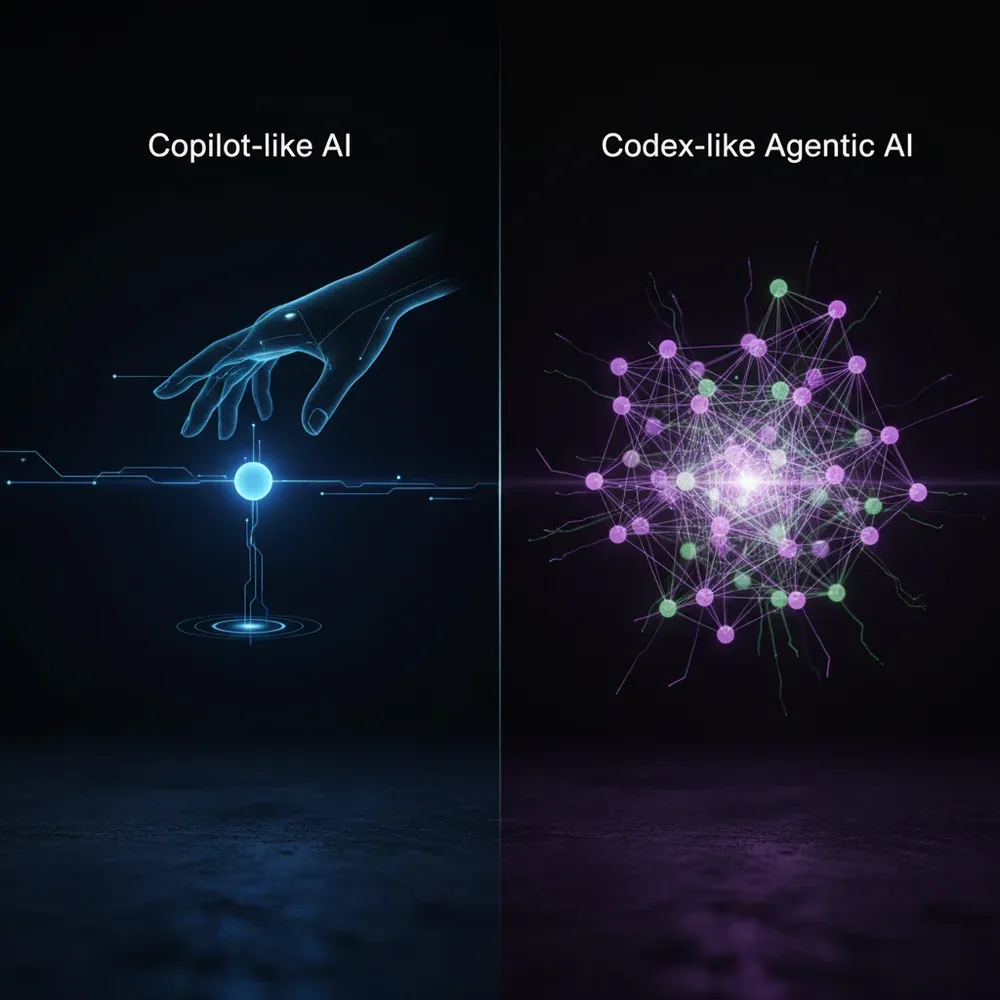
Comparison Chart: Copilot vs. Autonomous Agent
- Operation Mode: Copilot: Reactive (waits for prompt) | Agent: Proactive (acts autonomously)
- Context: Copilot: Local file | Agent: Entire enterprise repository
- Debugging: Copilot: Requires developer intervention | Agent: Autonomous iterative debugging
- Output: Copilot: Code snippets | Agent: Complete, tested Pull Requests
This paradigm shift means that the bottleneck in software development is no longer writing code. The focus shifts to creating precise specifications and robust testing frameworks.
How GPT-5.5 Codex Works: Architecture and NVIDIA Optimization
Behind the impressive performance of GPT-5.5 Codex lies a highly sophisticated multi-agent architecture. It's not a single monolithic model, but a coordinated system of specialized subnetworks.
Following the principles of the three-agent AI architecture, the system has a Planner, a Generator, and an Evaluator module. The Planner breaks down the complex task, the Generator codes, and the Evaluator tests.
This internal "debate" mechanism drastically reduces the chance of hallucinations. If the Generator writes faulty code, the Evaluator immediately sends it back for correction before the user even sees the result.
However, this continuous internal iteration requires massive computational capacity. This is where the NVIDIA GB200 NVL72 rack-scale system comes in, for which GPT-5.5 Codex is natively optimized.
- Grace Blackwell Superchips: The GB200 architecture provides unprecedented AI performance, allowing the model to process massive parallel data.
- NVLink Switch System: The 72 GPUs act as a single, gigantic unit with 130 TB/s bandwidth, eliminating network bottlenecks.
- Massive Context Window: Thanks to hardware optimization, the model can hold millions of tokens (an entire enterprise codebase) in its memory simultaneously.
This hardware-software synergy allows GPT-5.5 Codex to execute complex refactoring tasks in real-time, without latency, which would take a human team weeks to plan.
Strategic Advantages of Custom Automation with Autonomous Agents
For technology leaders, the most important question is always Return on Investment (ROI). Implementing GPT-5.5 Codex-based autonomous agents in custom automation brings immediate and measurable business benefits.
The first and most obvious advantage is a drastic increase in development velocity. Routine tasks, such as writing boilerplate code, connecting API endpoints, or generating CRUD operations, are fully automated.
These repetitive tasks can consume up to 40-50% of an average development team's time. By having agents take over, this time is freed up, allowing the team to focus on true innovation.
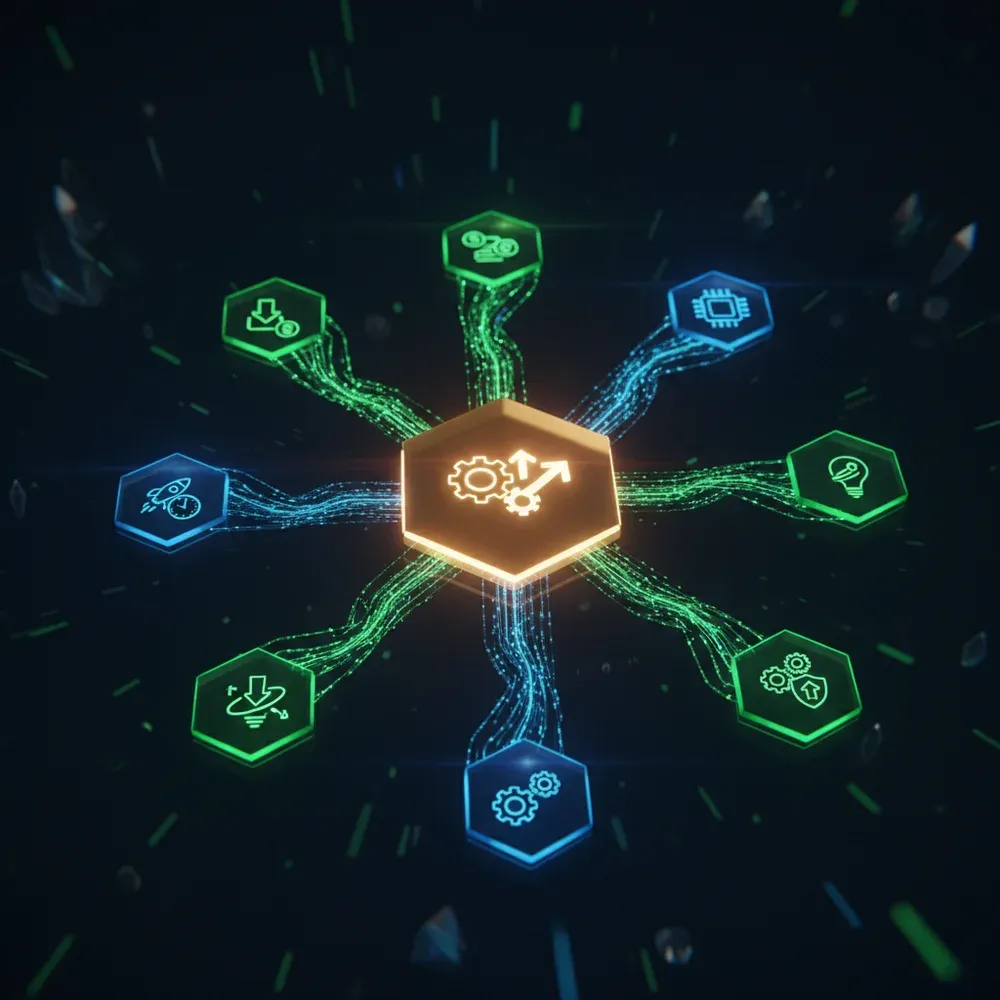
The second critical advantage is the reduction of technical debt. Maintaining legacy systems is a huge cost. Codex agents can analyze old code, identify security vulnerabilities, and rewrite it according to modern standards.
Furthermore, software quality improves. AI doesn't get tired, doesn't skip tests, and strictly adheres to coding conventions. This results in fewer production bugs and more stable systems.
Finally, the cost savings are significant. Although building the AI infrastructure requires investment, the increased efficiency and shortened Time-to-Market multiply the return on investment.
Real-World Applications: Where Autonomous Software Engineering Agents Excel?
After theory, let's look at practice. In what specific scenarios do GPT-5.5 Codex-based autonomous agents provide the most value in an enterprise environment?
One of the most common use cases is legacy system modernization. Imagine a decade-old monolithic Java application that needs to be broken down into microservices.
For a human team, this is a risky, months-long project. A Codex agent can map dependencies, draw logical boundaries, and automatically generate modern, containerized microservices.
Another excellent area is API integration. When a company brings in new external services, the agent can read the provider's API documentation and independently write a robust integration layer.
Automated testing is also revolutionized. Instead of developers manually writing unit and end-to-end tests, the agent generates them based on the code, ensuring 100% coverage.
These applications are not the music of the future, but the reality of the present. If you want to experience this efficiency, learn about our custom automation services.
Implementation Strategy: A Roadmap for Integrating Autonomous Agents
Introducing such a profound technology requires careful planning. CTOs and IT leaders must follow a structured, phased strategy for successful implementation.
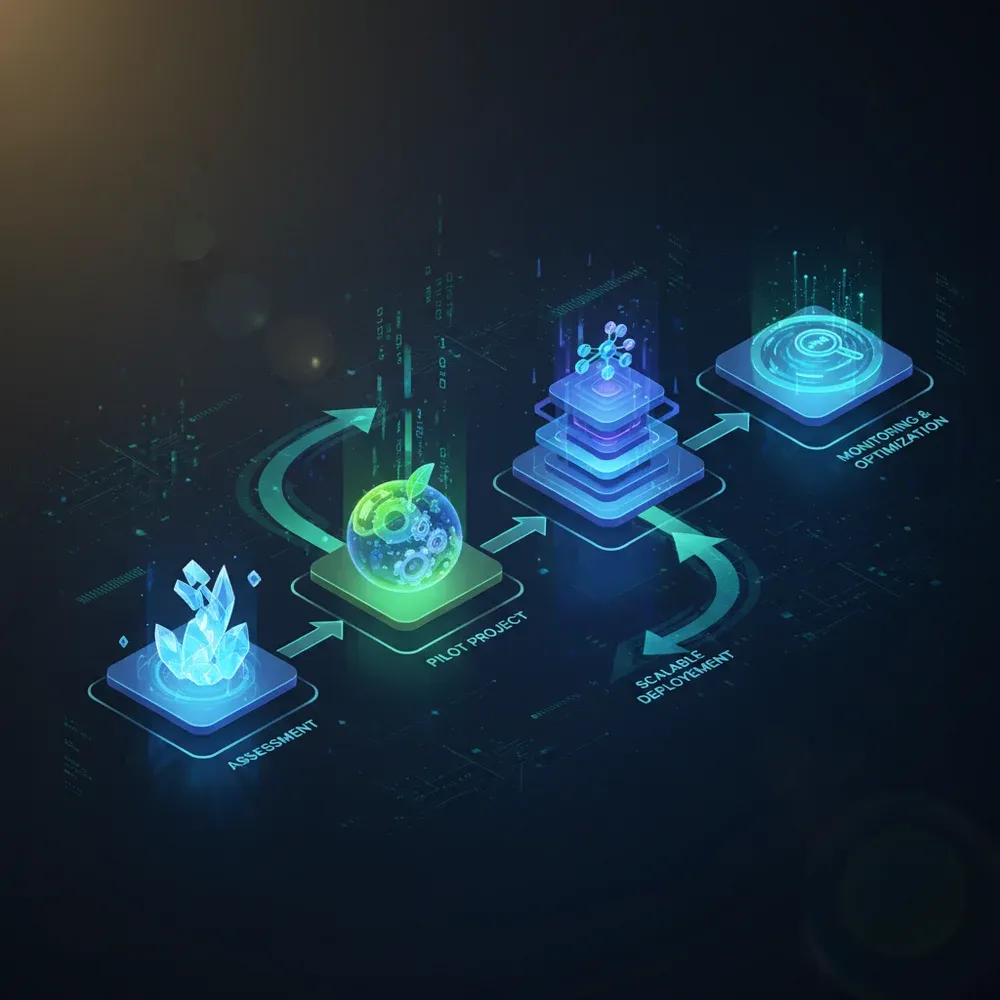
The first step is assessing the infrastructure and processes (Assessment). Is the CI/CD pipeline ready to automatically receive and test AI-generated code? What security protocols are in place?
The second phase is the Pilot project. Never start with the most critical system. Choose a low-risk, well-defined internal tool or service and let the Codex agent loose in a supervised environment.
Implementation Checklist
- ✓ Infrastructure audit: Preparing CI/CD pipelines, version control, and test environments.
- ✓ Security framework: Setting up Zero Trust architecture and RBAC (Role-Based Access Control) for agents.
- ✓ Team training: Educating developers on supervising AI agents and higher-level "prompt engineering".
- ✓ Success metrics (KPIs): Measuring development time, bug count, and code quality before and after implementation.
The third phase is scaling and fine-tuning. As trust in the system grows, increasingly complex and critical tasks can be entrusted to autonomous agents, with continuous human-in-the-loop supervision.
Challenges and Solutions in AI-Driven Custom Automation
Like any disruptive technology, implementing GPT-5.5 Codex comes with challenges. The most common concern from companies is data security and Intellectual Property (IP) protection.
It is critical for companies to run AI models in private, isolated environments. Cloud providers (like Azure or AWS) now offer dedicated, secure AI enclaves where data never leaves the corporate network.
Another challenge is integration with existing CI/CD pipelines. Autonomous agents generate code extremely fast, which can overwhelm traditional code review processes.
The solution is to strengthen automated testing and security scanning (SAST/DAST) tools. AI-written code must be subjected to the same, or even stricter, quality gates as human code.
Finally, the psychological reaction of development teams must be addressed. It's important to clarify that AI doesn't take jobs; it transforms them. Developers become "code architects" and "AI supervisors," which is higher value-added work.
Benchmarks and Industry Validation: What the Data Says?
Technological claims must always be backed by solid data. At the official OpenAI launch, GPT-5.5 Codex achieved a staggering 82.7% score on agentic coding benchmarks (like SWE-bench).
But what does this number mean in practice? These benchmarks are not simple syntax tests. They contain real, complex GitHub issues from open-source projects (e.g., Django, React).
The model must autonomously download the codebase, understand the bug report, find the root cause among thousands of files, write the fix, and successfully run the tests.

Data Highlight: The 82.7% Milestone
An 82.7% success rate means that out of 10 complex, enterprise-grade software bugs, the AI agent can solve more than 8 completely autonomously, without human intervention.
For comparison: previous generation models (GPT-4) barely reached a 20-25% score on this specific autonomy test. This massive leap proves the technology's maturity for use in production environments.
This industry validation confirms that the technology has moved beyond the experimental phase. Leading tech companies are already rapidly integrating these solutions into their daily workflows to maintain competitiveness.
The Future of Custom Automation: What's Next Beyond GPT-5.5?
Although GPT-5.5 Codex is revolutionary, progress doesn't stop. Next-generation breakthroughs are already taking shape on the technological horizon, further shaping the future of custom automation.
In the future, autonomous agents won't just write code; they will proactively optimize infrastructure. They will be able to analyze server loads in real-time and dynamically rewrite algorithms causing bottlenecks.
Additionally, deeper integration of multimodal capabilities is expected. Agents will be able to directly convert visual UI/UX designs (e.g., Figma files) into pixel-perfect, responsive frontend code with complex business logic in the background.
Human-machine collaboration will also reach a new level. Developers will function more like "conductors," giving high-level strategic instructions to an entire army of agents (agent swarms).
As we move closer to AGI (Artificial General Intelligence), software development will increasingly be about problem-solving and creativity, rather than adhering to syntax rules.
Partnering for Innovation: Start Your Autonomous Custom Automation Journey with Us
The era of GPT-5.5 Codex and autonomous software engineering agents has arrived. The question is no longer whether the technology works, but when your company will start leveraging its potential.
At AiSolve, we don't just follow trends; we shape them. Our expert team has deep experience in AI-driven custom automation and complex LLM integrations.
We help assess your company's current infrastructure, identify automation points that provide the highest ROI, and securely integrate autonomous agents into your existing processes.
Don't fall behind your competitors. Whether it's modernizing legacy systems, developing intelligent RAG AI chatbots, or fully automating CI/CD pipelines, we provide the technological foundation.
Level up your software development! Request a free consultation today and discover how you can transform your business with the power of autonomous AI.
Frequently Asked Questions (FAQ)
How secure is GPT-5.5 Codex-based custom automation for sensitive enterprise data?
Security can be guaranteed by designing the right architecture. In an enterprise environment, GPT-5.5 Codex models are run in private, isolated cloud enclaves (VPC) or on dedicated hardware (e.g., on-premise NVIDIA servers). Zero Trust network access and strict RBAC (Role-Based Access Control) ensure that the AI agent only accesses authorized repositories, and data never leaves the company's secure perimeter.
What is the impact of implementing autonomous software engineering agents on existing developer teams?
Agents do not replace developers; they complement them. By automating monotonous, repetitive coding tasks (boilerplate, basic tests, simple bug fixes), developers' time is freed up. They can spend this time on complex system architecture design, business logic optimization, and innovation. The role of developers transforms: they evolve from "code writers" to "system engineers" who manage and supervise AI agents.
Can GPT-5.5 Codex be integrated with our current CI/CD pipelines and development tools?
Yes, modern autonomous agents are API-driven and can be natively integrated with the most popular version control systems (GitHub, GitLab, Bitbucket) and CI/CD tools (Jenkins, GitHub Actions). The agent can autonomously create branches, commit, run tests, and open Pull Requests, exactly as a human developer would, fitting seamlessly into existing workflows.
What initial investment is required to adopt autonomous custom automation?
The scale of the initial investment depends on the project's scope and the chosen infrastructure. For cloud-based (via API) use, costs are token-based and highly scalable. The main investment is the initial integration, security audit, and optimizing processes for AI. However, due to drastically reduced development time and fewer bugs, the ROI (Return on Investment) is typically extremely fast, often measured in months.
How can code quality and maintainability be ensured when using Codex-generated code?
Ensuring code quality happens on multiple levels. First, GPT-5.5 Codex's internal "Evaluator" agents check the code during generation. Second, the generated code must pass the company's existing automated tests (Unit, E2E, SAST). Finally, for critical systems, the "Human-in-the-Loop" approach remains, where a senior developer approves the Pull Request before it goes live.
What types of custom automation projects benefit most from GPT-5.5 Codex?
The highest ROI comes from large-scale, complex projects, such as legacy system modernization (e.g., converting old monolithic applications into microservices), developing complex API integrations, building large-volume data processing pipelines, and generating comprehensive, automated testing frameworks. These are areas where AI's speed and scalability provide an insurmountable advantage over human labor.
Készen állsz a saját weboldaladra?
Ingyenes konzultáció során átbeszéljük, hogyan segíthetünk vállalkozásodnak növekedni egy modern, gyors és konverzióoptimalizált weboldallal. 14 nap alatt kész, 0 Ft induló költséggel.