

| Area | Key Insight |
|---|---|
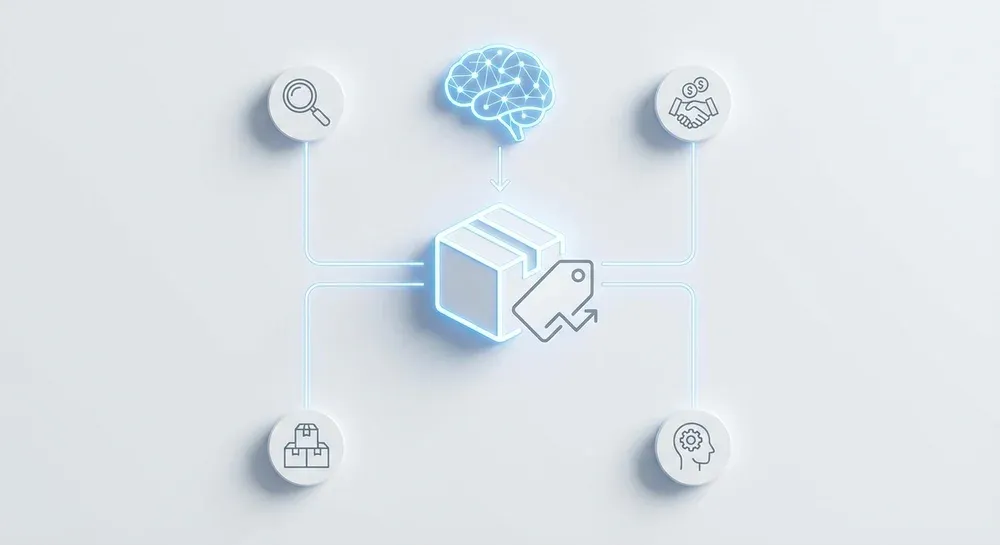
| Core Principle | AI drives revenue through three main vectors: process optimization, hyper-personalization, and data-driven predictive decision-making. |
| Dynamic Pricing | AI algorithms can adjust prices in real-time based on demand, competitor pricing, and inventory levels, maximizing profit margins per transaction. |
| Sales Automation | AI tools automate lead scoring and initial outreach, allowing sales teams to focus on high-potential prospects, increasing conversion rates by over 30%. |
| Implementation | A successful AI strategy requires a phased approach, starting with a clear business objective, a data audit, a pilot project, and followed by scalable deployment. |
| Measurement | The ROI of AI is measured through specific KPIs like Customer Lifetime Value (LTV), Customer Acquisition Cost (CAC), and conversion rate improvements. |
In today's competitive digital landscape, static business strategies are falling short. Companies are increasingly turning to Artificial Intelligence (AI) not just for operational efficiency, but as a primary driver of revenue growth. Industry reports from late 2025 indicate that companies actively deploying AI for sales and marketing are seeing an average revenue uplift of 15-20% within the first two years. This isn't about futuristic concepts; it's about applying practical, data-driven tools to enhance pricing, personalization, and sales processes. This guide will move beyond the buzzwords to provide a clear framework for how your business can leverage AI to create tangible, measurable increases in revenue. We will explore specific strategies, from dynamic pricing models to predictive lead scoring, that transform data into profit. The key is understanding that AI-powered growth is achieved through well-planned custom automation solutions that align directly with core business objectives.
The Core Principles of AI-Driven Revenue Growth
At its core, AI accelerates revenue growth by enhancing three fundamental business activities: optimization, personalization, and prediction. It’s not a single magic bullet, but rather a technological layer that amplifies the effectiveness of existing commercial strategies. Firstly, AI brings unparalleled optimization capabilities. Whether it's adjusting supply chain logistics to reduce costs or refining digital ad spend in real-time to maximize conversions, machine learning models can analyze millions of variables simultaneously to find the most profitable configuration. This is a level of complexity far beyond human capability, turning marginal gains into significant bottom-line impact.
Secondly, AI enables hyper-personalization at scale. Traditional marketing relies on broad customer segments. AI, however, can analyze an individual user's behavior—clicks, time-on-page, purchase history—to deliver unique product recommendations, tailored content, and personalized offers. This one-to-one marketing dramatically increases engagement and conversion rates, directly boosting sales. Lastly, AI's predictive power transforms reactive business models into proactive ones. By analyzing historical data and identifying subtle market patterns, AI can forecast future demand, predict customer churn, and identify emerging sales opportunities. This foresight allows businesses to make smarter, data-informed decisions that pre-empt market shifts and capitalize on trends before competitors, securing a crucial advantage. Integrating these principles often requires developing custom automation solutions that can execute these complex tasks reliably and at scale.
Dynamic Pricing and Promotion Optimization
One of the most direct ways AI impacts revenue is through dynamic pricing. Static, one-size-fits-all pricing leaves money on the table. AI-powered pricing engines, in contrast, continuously adjust the price of products or services based on a multitude of real-time factors. These algorithms can process data on competitor pricing, current market demand, inventory levels, customer purchase history, and even external factors like weather or local events. For example, an e-commerce store can automatically lower the price of an item that has high stock and low demand, while slightly increasing the price of a best-seller during peak shopping hours. This ensures that the price is always optimized for the maximum possible profit margin on every single transaction.
Beyond pricing, AI also optimizes promotional strategies. Instead of offering a generic 10% discount to all customers, machine learning models can predict which specific offer is most likely to convert a particular user. For one customer, a "free shipping" offer might be the key to completing a purchase, while for another, a "buy one, get one 50% off" deal is more compelling. The AI analyzes the user's past behavior and sensitivity to different types of promotions to deploy the most effective incentive, maximizing conversion rates while minimizing the cost of discounts. This level of granular optimization is impossible to manage manually but is a core strength of targeted, intelligent automation systems.
Hyper-Personalization: From Customer Segments to Individual Journeys
Hyper-personalization is where AI transforms the customer experience from generic to uniquely relevant, directly impacting conversion rates and customer lifetime value (LTV). While traditional marketing segments customers into broad groups (e.g., "new visitors," "repeat buyers"), AI allows for true one-to-one marketing. Recommendation engines, powered by collaborative filtering and deep learning models, analyze a user's browsing history, past purchases, and even items they've viewed and ignored to suggest products they are most likely to buy next. This is why platforms like Netflix and Amazon are so effective; their AI-driven suggestions account for a significant portion of their revenue.
Implementation Advice: Start with a simple recommendation engine on your highest-traffic product pages. Even a basic "customers who bought this also bought" feature, powered by AI, can increase average order value by 5-10%.
This personalization extends beyond product recommendations. AI can tailor the entire user journey. For example, the content, imagery, and calls-to-action on a website can change dynamically based on the visitor's inferred interests or demographic data. This level of customization makes the user feel understood and valued, fostering loyalty and encouraging repeat business. The foundation for delivering these dynamic experiences is a robust, well-structured user interface. This highlights the importance of professional professional website creation, as the website serves as the canvas where AI-driven personalization strategies are executed. Without a flexible and modern web platform, even the most intelligent AI will fail to deliver its intended impact.
| Feature | Traditional Personalization | AI-Powered Hyper-Personalization |
|---|---|---|
| Basis | Broad segments (e.g., age, location) | Individual behavior (clicks, view time) |
| Timing | Pre-defined campaign schedules | Real-time, triggered by user actions |
| Scale | Limited to a few dozen segments | Scales to millions of unique individuals |
| Recommendation | Static "Top Sellers" lists | Dynamic, predictive product suggestions |
AI-Powered Sales Automation and Lead Scoring
For B2B and high-value B2C businesses, the sales process is a critical area for AI-driven revenue enhancement. Sales teams often spend a significant portion of their time on administrative tasks and pursuing leads that will never convert. AI addresses this inefficiency head-on with predictive lead scoring. Instead of relying on simple demographic data, AI models analyze thousands of data points—including website engagement, social media activity, company size, and job titles—to assign a score to each lead, predicting their likelihood to purchase. This allows the sales team to focus their efforts exclusively on the hottest prospects, dramatically increasing their efficiency and conversion rates.
Furthermore, AI can automate the initial stages of sales outreach. AI-powered tools can send personalized follow-up emails, schedule meetings, and even handle initial discovery questions through an intelligent RAG AI chatbot on the company website. This frees up salespeople to do what they do best: build relationships and close deals. By automating the top of the sales funnel, businesses can handle a much larger volume of leads without increasing headcount. Implementing these workflows is a prime example of where custom automation solutions provide a clear and rapid return on investment, directly contributing to revenue growth by making the entire sales process more efficient and effective.

Predictive Analytics for Market Trends and Demand Forecasting
Beyond direct customer interaction, AI provides a powerful strategic advantage by enabling businesses to anticipate the future with greater accuracy. Predictive analytics models can sift through vast amounts of historical sales data, market indicators, and even unstructured data like social media sentiment to forecast future demand for products. This is crucial for inventory management. Overstocking ties up capital and increases storage costs, while understocking leads to lost sales and frustrated customers. AI-driven demand forecasting helps businesses maintain optimal inventory levels, maximizing sales while minimizing waste.
Strategic Insight: Connect your AI forecasting model to your marketing automation platform. If the model predicts a dip in demand for a product, it can automatically trigger a promotional campaign to stimulate sales and maintain revenue velocity.
This predictive capability also extends to identifying new market opportunities. AI algorithms can detect emerging trends and shifts in consumer behavior long before they become mainstream. By analyzing conversations online or spotting correlations between seemingly unrelated product purchases, AI can flag potential new product categories, feature requests, or untapped market segments. This allows businesses to be proactive innovators rather than reactive followers, creating new revenue streams and capturing market share. The ability to process this information is where specialized data processing AI agents become essential, turning raw data into actionable strategic intelligence.
Implementing Your AI Revenue Growth Strategy: A Phased Approach
Adopting AI for revenue growth is not an overnight switch but a strategic journey. A successful implementation follows a clear, phased approach to manage risk and ensure alignment with business goals. The first phase is **Strategy and Data Audit**. This begins with identifying a specific, high-impact business problem to solve—for example, "increase average order value by 15%." Then, an audit of available data is crucial. AI is only as good as the data it's trained on, so organizations must assess the quality, quantity, and accessibility of their customer, sales, and operational data.
The second phase is the **Pilot Project**. Instead of attempting a company-wide overhaul, it's best to start with a small, controlled pilot. This could be implementing a product recommendation engine on a single product category or using an AI lead scoring model for one sales team. This allows the business to test the technology, measure its impact, and learn valuable lessons in a low-risk environment. The final phase is **Scaling and Integration**. Once the pilot project has demonstrated a clear positive ROI, the solution can be scaled across the organization. This involves deeper integration with existing systems like CRMs and ERPs and requires ongoing monitoring and refinement of the AI models to ensure they adapt to changing market conditions. This structured implementation is the hallmark of effective custom automation solutions that deliver long-term value.

Measuring ROI: Key Metrics for AI Initiatives
To justify investment in AI, businesses must be able to measure its return on investment (ROI) with clear, quantifiable metrics. The specific key performance indicators (KPIs) will depend on the application, but they should always be tied directly to financial outcomes. For AI-driven personalization and recommendation engines, key metrics include **Average Order Value (AOV)**, **Conversion Rate**, and **Customer Lifetime Value (LTV)**. A successful implementation should show a measurable increase in these areas compared to the pre-AI baseline.
Pro Tip: Use A/B testing to isolate the impact of your AI tools. Run the AI-powered feature for 50% of your audience and the traditional method for the other 50%. This provides undeniable data on its direct impact on revenue.
When implementing AI for sales automation and lead scoring, the most important metrics are **Lead-to-Opportunity Conversion Rate**, **Sales Cycle Length**, and **Customer Acquisition Cost (CAC)**. An effective AI system will increase the conversion rate of leads, shorten the time it takes to close a deal, and lower the cost of acquiring new customers by improving sales team efficiency. By tracking these specific KPIs before and after implementation, businesses can build a powerful business case for further investment in custom automation solutions and demonstrate the tangible value AI brings to the bottom line.
| AI Application | Primary KPI | Secondary KPIs |
|---|---|---|
| Dynamic Pricing | Profit Margin per Sale | Total Revenue, Conversion Rate |
| Personalization Engine | Average Order Value (AOV) | Customer Lifetime Value (LTV), Bounce Rate |
| Sales Lead Scoring | Lead-to-Opportunity Conversion Rate | Sales Cycle Length, CAC |
| Demand Forecasting | Inventory Turnover Ratio | Stockout Rate, Storage Costs |
Risks and Ethical Considerations
While the potential for revenue growth is immense, deploying AI also comes with significant risks and ethical responsibilities. One of the primary concerns is **data privacy**. AI models, especially those for personalization, rely on vast amounts of user data. Businesses must ensure they are compliant with regulations like GDPR and are transparent with customers about what data is being collected and how it is used. A data breach or misuse of personal information can lead to severe financial penalties and irreparable damage to brand trust.
Another critical issue is **algorithmic bias**. If the historical data used to train an AI model contains biases, the AI will learn and amplify them. For example, a pricing algorithm could inadvertently learn to offer higher prices to users in certain zip codes, leading to discriminatory practices. Similarly, a lead-scoring model could be biased against certain demographics. It is essential to audit AI models regularly for fairness and to have human oversight to correct for any biases that may emerge. Building ethical AI is not just a compliance issue; it's a prerequisite for sustainable, long-term business success. Responsible implementation of custom automation solutions must include a strong ethical framework from the outset.
Ready to transform your data into a powerful revenue engine? By implementing AI-driven strategies, you can unlock new levels of personalization, efficiency, and predictive insight that directly boost your bottom line.
Discover Custom Automation Solutions[Article generated by AiSolve AI Content System]
Frequently Asked Questions
What is the first step to using AI for revenue growth?
The first step is to identify a specific, high-impact business problem. Don't start with the technology; start with the goal. Whether it's reducing customer churn, increasing order value, or improving lead conversion, a clear objective will guide your entire AI strategy and ensure you're solving a real-world problem that has a direct impact on revenue.
How much data do I need to get started with AI?
It's less about quantity and more about quality and relevance. You need clean, well-structured data that is relevant to the problem you're trying to solve. For a product recommendation engine, you might need thousands of transaction records. For lead scoring, a few hundred examples of converted and lost leads can be enough to start building a predictive model. A data audit is a critical first step.
What is the difference between AI and standard automation?
Standard automation follows pre-programmed, rule-based instructions (e.g., "if a user fills out a form, send them email X"). AI-powered automation, on the other hand, can make decisions and adapt. An AI system can analyze a user's behavior and decide in real-time whether to send email X, Y, or Z, or perhaps offer a specific discount, to maximize the chance of conversion. It learns and optimizes over time.
Can small businesses use AI for revenue growth?
Absolutely. The rise of AI-as-a-Service (AIaaS) platforms means that small businesses can access powerful AI capabilities without massive upfront investment in infrastructure or research. Many CRM and e-commerce platforms now have built-in AI features for tasks like product recommendations or email optimization. The key is to start with a clear, focused goal and leverage these accessible tools.
What is the biggest risk of implementing AI for sales?
The biggest risk is losing the human touch. Over-automation can lead to a sterile, impersonal customer experience. AI should be used to empower sales and marketing teams, not replace them. It should handle the repetitive, data-heavy tasks, freeing up human employees to focus on building relationships, understanding complex customer needs, and providing creative solutions—areas where humans still excel.
Készen állsz a saját weboldaladra?
Ingyenes konzultáció során átbeszéljük, hogyan segíthetünk vállalkozásodnak növekedni egy modern, gyors és konverzióoptimalizált weboldallal. 14 nap alatt kész, 0 Ft induló költséggel.